《火星救援》

Search documents
外星人成最佳搭档,《挽救计划》为何如此诗意浪漫?
第一财经· 2026-03-23 13:35
Core Viewpoint - The article discusses the success of the film "The Rescue Plan," highlighting its unique approach to the sci-fi genre and its impressive box office performance, indicating a potential resurgence of original storytelling in Hollywood [3][19]. Box Office Performance - As of March 23, the film has grossed over 53.32 million yuan in China, achieving 33.4% of the box office despite a lower screening ratio of 13.1% [3]. - The film has surpassed $153 million globally, marking it as the highest opening for a Hollywood film this year [5]. - It has set a record for Amazon MGM, becoming the best opening film since the company's acquisition in 2022 for $8.45 billion [5]. Critical Reception - The film received a 95% freshness rating on Rotten Tomatoes and a CinemaScore rating of A, indicating strong positive reception from both critics and audiences [5]. - It has been noted for its originality, being one of the few non-sequel, non-IP films to achieve significant box office success in recent years [19]. Themes and Storyline - "The Rescue Plan" is based on Andy Weir's novel, featuring a narrative where scientists and an alien engineer collaborate to save Earth from an impending crisis [7][10]. - The film explores themes of empathy and cooperation between civilizations, emphasizing the importance of emotional connections over traditional heroism [10][12]. Visual and Technical Aspects - Directed by Phil Lord and Christopher Miller, the film utilizes practical effects and real sets, minimizing reliance on green screens, which enhances the visual experience [14][16]. - The character of the alien engineer, Loki, is portrayed through a puppet operated by a skilled puppeteer, adding depth to the interactions with the human lead [16]. Industry Impact - The film's success amidst a landscape dominated by sequels and franchises suggests a potential shift back towards original storytelling in Hollywood [19][20]. - It serves as a reminder that cinema can still evoke human emotions and imagination, providing hope and warmth to audiences [20].

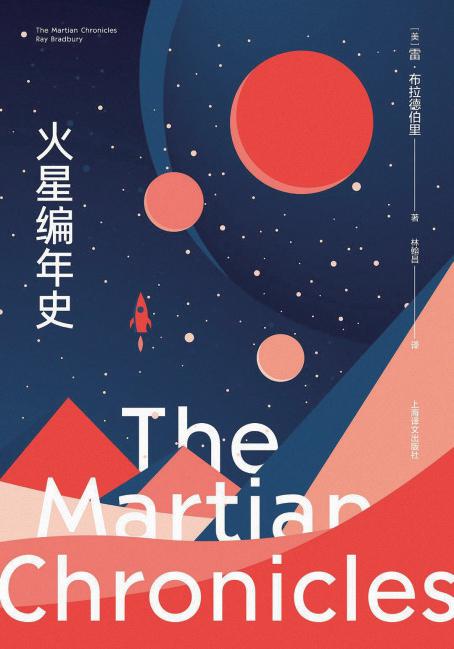
《火星编年史》阴影中的诗意恐惧
Xin Lang Cai Jing· 2026-01-29 18:46
Core Insights - "The Martian Chronicles" by Ray Bradbury serves as a thematic collection reflecting the imagined history of human colonization of Mars from 1999 to 2026, showcasing Bradbury's unique writing style and the influence of the socio-political environment of the 1950s [1][2] Group 1: Themes and Influences - The collection illustrates the deep-seated fears within humanity, tracing back to early human existence and the primal fear of the unknown, which has evolved into various forms of horror literature [2][5] - The historical context of the 1950s, including concerns over nuclear war, McCarthyism, and racial tensions, significantly influenced Bradbury's creative process and thematic choices [1][2] Group 2: Evolution of Horror Literature - The transition from Gothic novels, which depicted fears associated with rural settings and ancestral homes, to modern horror reflects societal changes as urbanization replaced rural life [3][4] - The emergence of new horror forms, such as Lovecraft's Cthulhu mythos, represents humanity's confrontation with the incomprehensible unknown, paralleling the technological advancements of the time [6][7] Group 3: The Martian Context - Bradbury's Martian setting serves as a mirror for human desires and fears, with Martians reflecting the inner thoughts and aspirations of Earth explorers, thus shifting the focus from external threats to internal human psychology [10][11] - The narrative progresses to depict the transformation of Mars from an unknown frontier to a familiar habitat, symbolizing the diminishing presence of fear as humanity conquers the unknown [11][12] Group 4: Science Fiction and Its Boundaries - The evolution of science fiction parallels advancements in scientific understanding, with earlier Martian narratives giving way to more realistic portrayals as knowledge of Mars expanded [12][13] - The ongoing migration of horror and science fiction themes to more distant realms illustrates the dynamic relationship between human imagination and scientific progress, highlighting the role of speculative fiction in driving human ambition [13]