《空王冠》

Search documents
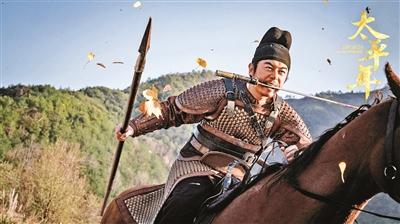
以“文心”铸史魂 《太平年》开辟历史正剧新叙事
Xin Lang Cai Jing· 2026-02-14 03:00
Core Insights - The article discusses the current state of Chinese historical drama, highlighting three main imbalances: uneven representation of historical dynasties, a significant decline in creative output since the early 2000s, and varying quality of productions [1] - The recent series "Tai Ping Nian" is noted as a high-quality historical drama, marking a significant achievement in the genre over the past decade [1] Group 1: Historical Context and Trends - Chinese historical dramas predominantly focus on the Han, Tang, Ming, and Qing dynasties, with a particular emphasis on Qing palace dramas [1] - The peak of historical drama creation occurred from the 1990s to the early 2000s, followed by a notable decline in the subsequent decade [1] - Quality varies widely, with some series like "Da Ming Wang Chao 1566" receiving high ratings (9.8 on Douban), while many others fail to meet basic standards [1] Group 2: Underrepresented Historical Periods - The article identifies the Two Jin and Northern and Southern Dynasties, as well as the Five Dynasties and Ten Kingdoms period, as chaotic yet narratively rich periods in Chinese history that remain underexplored in drama [3] - The lack of well-known heroic figures from these periods contributes to their neglect in historical drama adaptations [3] Group 3: "Tai Ping Nian" as a Case Study - "Tai Ping Nian" uniquely portrays the Five Dynasties and Ten Kingdoms period through the character Qian Hongchi, showcasing governance and societal issues during a time of turmoil [4] - The series emphasizes Qian's personal growth from a reckless prince to a responsible ruler, breaking traditional character molds in historical dramas [4] Group 4: Themes and Philosophical Depth - Unlike typical entertainment-focused dramas, "Tai Ping Nian" serves as a serious historical narrative reflecting on national and ethnic spirit through character choices in dire circumstances [6] - The series respects historical complexity, allowing for nuanced character portrayals rather than binary moral judgments [6] Group 5: Cultural Significance and Audience Engagement - The article argues that the essence of Chinese historical dramas lies in their ability to evoke a sense of duty and moral responsibility, which resonates deeply with audiences [9] - "Tai Ping Nian" encourages viewers to engage with history actively, fostering a culture of historical inquiry and discussion [11]