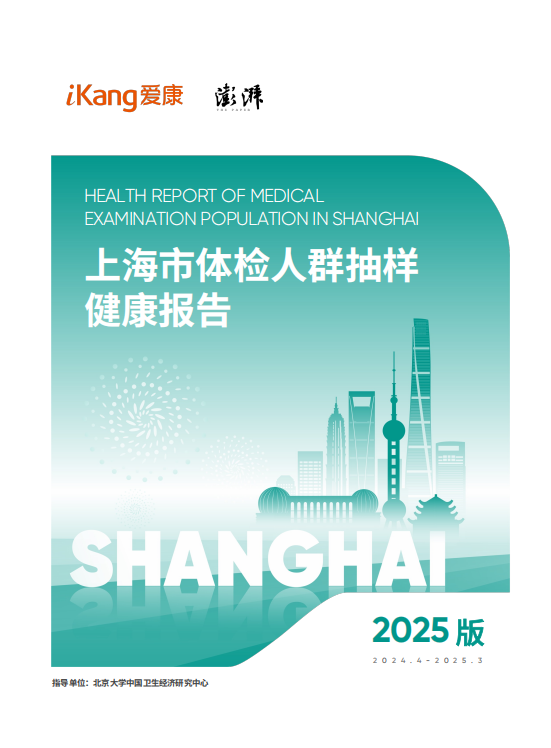
《2025版上海市体检人群抽样健康报告》

Search documents
上海体检人群健康“成绩单”出炉
Xin Lang Cai Jing· 2025-12-27 07:24
Core Insights - The report highlights a concerning trend in health indicators among the Shanghai population, with seven key metrics showing a continuous increase over five years, signaling a need for individuals to take responsibility for their health [10][13]. Group 1: Health Trends and Findings - The report is based on health data from 673,700 individuals in Shanghai, covering nine statistical dimensions and 23 specific abnormal indicators [10]. - The cancer detection rate in the Shanghai screening population exceeds 2.20‰, indicating the effectiveness of systematic health checks in early cancer detection [11]. - Among the confirmed cancer cases, thyroid cancer is the most prevalent, followed by lung, cervical, breast, and prostate cancers, with a notable trend of younger individuals being diagnosed [11][15]. - The detection rate of lung nodules is 70.93%, with a significant majority being benign, emphasizing the importance of regular follow-ups for early malignant changes [12]. - The overall detection rate of bone density issues is 52.24%, with a concerning 42.02% in the 20-29 age group, indicating a need for early intervention in bone health [13]. Group 2: Gender-Specific Health Issues - For men, common health issues include lung nodules, fatty liver, increased BMI, prostate abnormalities, and reduced bone mass, with detection rates exceeding 50% [14]. - The detection rate of increased BMI among men is 61.28%, highlighting obesity as a significant health challenge that can lead to various diseases [14]. - In women, prevalent health issues include lung nodules, thyroid nodules, breast nodules, reduced bone mass, and fatty liver, with breast nodule detection rates at 43.15% [15]. - The detection rate of high-risk HPV among women aged 20-29 is 14.80%, underscoring the importance of regular screenings for cervical cancer prevention [15]. Group 3: Innovations in Health Management - The introduction of AI and big data in health management is transforming the approach to personalized health advice, with the AI health manager system serving over 1.65 million users [16]. - The shift from traditional health checks to personalized management strategies is emphasized, with a focus on tailored health recommendations based on individual health data [16]. - Experts stress the need for a balance between technological innovation and human care in health management, particularly in cancer screening methods [17]. Group 4: Comprehensive Health Management Strategies - The report advocates for the integration of various health management solutions, including specialized screening packages for high-risk populations [18]. - Simple health indicators like waist circumference and waist-to-height ratio are recommended for routine checks to assess metabolic risks effectively [18]. - The report serves as a basis for targeted health promotion strategies, particularly for the working population, emphasizing the need for continuous health management rather than annual check-ups [19].

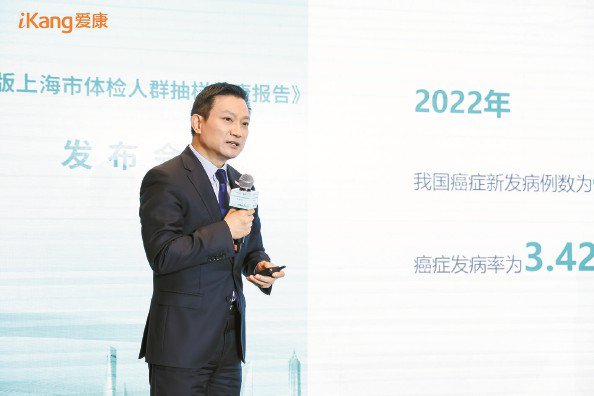
爱康集团第三次发布上海市体检人群“成绩单” 七项指标五年间持续上升
Zheng Quan Ri Bao Wang· 2025-12-18 07:48
Core Insights - The report aims to reveal the health status and potential risks of Shanghai residents through scientific data, emphasizing the importance of health awareness and disease prevention [1][2] Group 1: Health Report Findings - The "Shanghai Health Report" is based on health data from 673,700 individuals who underwent health check-ups at various Aikang centers in Shanghai from April 1, 2024, to March 31, 2025 [1] - Seven health abnormalities, including prostate issues, thyroid nodules, fatty liver, increased BMI, breast nodules, carotid artery abnormalities, and elevated total cholesterol, have shown a continuous upward trend for five consecutive years [1] - The cancer detection rate among the health check-up population is at least 2.20‰, indicating that over two individuals per 1,000 are diagnosed with cancer, surpassing the national average [2] Group 2: Public Health Implications - Chronic diseases are now the primary factors affecting the health and quality of life of Shanghai residents, necessitating a shift from a disease-centered to a health-centered public health system [2] - The report serves as a "compass" for public health policy, a "weather vane" for health industry development, and a "manual" for public self-health management [2] - The CEO of Aikang emphasized the importance of continuous health data tracking to help individuals identify risks earlier and promote the idea that individuals are the primary responsible parties for their health [2]
最新!爱康第三次发布上海市体检人群“成绩单”,七项指标五年间持续上升,体检能够有效发现癌症线索
Jin Rong Jie· 2025-12-18 03:42
Core Insights - The 2025 Shanghai Health Report, released by iKang Group and The Paper, aims to reveal the health status and potential risks of Shanghai residents through scientific data, emphasizing the importance of timely health awareness and disease prevention [4][11][21]. Group 1: Health Status and Trends - The report is based on health data from 673,700 individuals who underwent health check-ups at iKang's centers in Shanghai from April 1, 2024, to March 31, 2025, focusing on various statistical dimensions including gender, age distribution, and cancer follow-up statistics [4][11]. - Seven health abnormalities, including prostate issues, thyroid nodules, fatty liver, increased BMI, breast nodules, carotid artery abnormalities, and elevated total cholesterol, have shown a continuous upward trend over the past five years [4][36]. Group 2: Cancer Detection Rates - The cancer detection rate among the health check-up population in Shanghai is at least 2.20‰, indicating that over 2 individuals per 1,000 check-ups are diagnosed with cancer, surpassing the national average [8][27]. - Thyroid cancer is the most frequently diagnosed, with 668 cases, followed by lung cancer, cervical cancer, breast cancer, and prostate cancer [27][30]. Group 3: Specific Health Issues - The report highlights alarming trends in health issues among different demographics, with lung nodules having a detection rate of 70.93%, indicating that over 70% of individuals tested show signs of this condition [36][41]. - Among men, the detection rates for increased BMI and fatty liver are notably high, with 61.28% and 62.15% respectively, indicating significant health risks associated with obesity [43][46]. Group 4: Women's Health Concerns - The report indicates a rising trend in breast and thyroid nodules among women, with breast nodule detection rates reaching 43.15%, and thyroid nodules at 56.04%, particularly concerning for younger women [51][56]. - High-risk HPV positivity rates among women aged 20-29 are the highest across all age groups, emphasizing the need for increased awareness and screening for cervical cancer [58]. Group 5: Expert Insights and Recommendations - Experts emphasize the importance of early detection through regular health check-ups and the integration of AI in health management to enhance diagnostic accuracy and personalized care [59][69]. - The report serves as a critical tool for public health policy, health industry development, and personal health management, advocating for a shift from disease-centered to health-centered approaches in public health [14][11].