
健康管理

Search documents
中聚投资(01959) - 自愿公告 - 战略合作备忘录
2026-03-27 14:56
香港交易及結算所有限公司及香港聯合交易所有限公司對本公告的內容概不負責,對其準確 性或完整性亦不發表任何聲明,並明確表示概不就因本公告全部或任何部分內容而產生或因 倚賴該等內容而引致的任何損失承擔任何責任。 ZHONG JU INVESTMENT GROUP LIMITED 中聚投資集團有限公司 (前稱世紀聯合控股有限公司) (於開曼群島註冊成立的有限公司) (股份代號:1959) 自願公告 戰略合作備忘錄 本公告乃由中聚投資集團有限公司(「本公司」,連同其附屬公司統稱「本集團」) 自願作出,旨在知會本公司股東及潛在投資者有關本集團之最新業務發展。 戰略合作備忘錄 本公司董事(「董事」)會(「董事會」)欣然宣佈,於二零二六年三月二十七日,本 公司與中美國際控股集團有限公司(「中美」)訂立一份不具法律效力及約束力 的戰略合作備忘錄(「戰略合作備忘錄」),據此,雙方同意就健康管理、人工智 能(「AI」)應用、平台生態建設及其他相關領域(「合作業務」)進行合作。 本公司為一家投資控股公司。其附屬公司主要在中華人民共和國(「中國」)從 事機動車銷售及提供服務。 中美為一間於香港註冊成立的有限公司,其為一個全球性人工智 ...
美年健康官宣合作蚂蚁阿福,股价大涨!AI重构体检服务逻辑
新浪财经· 2026-03-24 09:50
Core Viewpoint - The collaboration between Meinian Health and Ant Group's Aifu aims to transform health management by utilizing AI to interpret health check reports, making them more accessible and actionable for users [2][4][12]. Group 1: AI Integration in Health Management - AI can translate complex medical terminology into simple language, significantly lowering the understanding barrier for users [7][9]. - The AI tool in the Aifu App will categorize health indicators using a traffic light system (red, yellow, blue, green) and provide actionable medical advice based on key abnormalities [7][9]. - This partnership marks a shift from merely completing health checks to ongoing health management, establishing a foundation for more personalized health services [4][10]. Group 2: Continuous Health Monitoring - Traditional health checks often lack continuity, making it difficult for users to track health changes over time [11]. - Future upgrades to the Aifu App will allow users to compare historical health data, enabling them to observe trends in key health indicators [11]. - This approach broadens health awareness from merely identifying issues to understanding their progression, particularly for chronic conditions like diabetes and fatty liver [11]. Group 3: Strategic Partnership Benefits - Meinian Health has established a robust offline service network with nearly 600 health check centers and an annual reception of around 30 million users, providing essential infrastructure for health management [13][14]. - Ant Group's Aifu brings advanced AI capabilities and a vast user base, enhancing the integration of health services [13][14]. - The collaboration aligns with national health policies aimed at promoting preventive care and chronic disease management, reflecting a broader industry trend towards integrated health solutions [14]. Group 4: Future of Health Services - As AI capabilities evolve, the nature of health services will continue to change, making them more personalized and effective [16]. - Real-world applications of AI have already shown positive outcomes, such as identifying potential drug allergies based on historical health data [16]. - The ongoing exploration of comprehensive service paths by Meinian Health and Ant Group aims to make health management increasingly understandable and participatory for the general public [16].



破解基层医疗人才荒:行政帮扶之外还能做什么
经济观察报· 2026-03-17 10:43
Core Viewpoint - The core issue in grassroots healthcare is the lack of effective definition and incentives for its core value, leading to a talent shortage. The solution lies in differentiating from hospitals by shifting focus from disease treatment to health management and preventive care [1][3]. Group 1: Current Challenges in Grassroots Healthcare - There is a significant shortage of medical personnel in grassroots healthcare, as highlighted by Wang Guangfa, who stated that there are simply no people available [2]. - The current model of pushing medical talent down to grassroots levels through administrative orders is unsustainable, as many doctors view it as a stepping stone for career advancement rather than a commitment to grassroots healthcare [2][3]. - The mismatch between supply and demand in grassroots healthcare is evident, with specialists often finding themselves underutilized in these settings [2]. Group 2: Proposed Solutions for Talent Shortage - To address the talent shortage, grassroots healthcare must redefine its role as "health gatekeepers" and cultivate a team of general practitioners [3][4]. - The current medical education and promotion systems are overly specialized, leading to a lack of appeal for general practitioners, which contributes to a cycle of low value and talent loss in grassroots healthcare [4]. - The "14th Five-Year Plan" sets goals for increasing healthcare personnel per thousand people, but simply adding staff without changing the traditional treatment model will not solve the talent crisis [4]. Group 3: Sustainable Expert Engagement - A market-based contractual mechanism for expert engagement is necessary to foster long-term cooperation between experts and grassroots healthcare [5]. - An example from a mountainous county in Fujian shows that formal labor agreements can incentivize experts to improve quality and train local staff, which could serve as a model for broader implementation [5]. - For this model to be sustainable, it must align with reforms in payment systems that favor preventive care, allowing grassroots healthcare to compensate experts adequately [5]. Group 4: Financial Support and Incentives - Financial, insurance, and commercial payers need to support grassroots healthcare personnel in transitioning to a health-centered approach [6]. - The integration of performance-based incentives linked to service quality and patient satisfaction is essential for motivating grassroots healthcare workers [6][7]. - Additional incentives, such as increased payment rates for services in remote areas, are necessary to attract high-quality medical personnel to underserved regions [7].

开放之门越开越大,拜耳中国用144年投出在华信任票
Sou Hu Wang· 2026-03-09 09:48
Core Viewpoint - The article emphasizes Bayer's long-term commitment to the Chinese market, highlighting its strategic investments and innovations that align with China's economic policies and development goals [1][2][3]. Group 1: Bayer's Historical Commitment to China - Bayer has been rooted in China for 144 years, marking its presence as one of the earliest multinational companies in the country [2]. - The establishment of Bayer China Limited in 1994 signified a systematic and comprehensive approach to its operations in China, evolving from trade to a full ecosystem of manufacturing, research, and innovation [2]. - Over the past three decades, Bayer has continuously increased its investment in China, including modern pharmaceutical production facilities and research centers [3]. Group 2: Recent Developments and Investments - In 2024, Bayer will launch two major research and innovation platforms in Shanghai, and by 2025, it will open a manufacturing center for crop protection products in Hangzhou with an investment exceeding 300 million RMB [3]. - As of March 2026, Bayer is expected to employ around 7,000 people in China and has established multiple supply and research centers [3]. Group 3: Alignment with Chinese Policies - Bayer's mission of "shared health and eliminating hunger" aligns with China's emphasis on biomedicine as a new pillar industry and its initiatives for rural revitalization and agricultural modernization [6][8]. - The company has successfully launched 19 innovative prescription drugs in China, reflecting its ability to synchronize with the country's drug approval processes [6]. Group 4: Innovation and Collaboration - Bayer is transitioning from merely introducing global innovations to enabling Chinese innovations to reach the world, exemplified by its partnerships with top Chinese universities and local biotech firms [11][12]. - The Bayer Co.Lab in China supports startups by providing funding, technical empowerment, and global networking opportunities, facilitating their entry into international markets [12]. Group 5: Future Outlook - Bayer aims to continue collaborating with Chinese innovation partners to build a community that benefits both China and the global market, contributing to sustainable development and national strategic goals [12].

蚂蚁阿福春节用户破亿可喜可贺,但不要高兴得太早了
Sou Hu Cai Jing· 2026-02-26 18:15
Core Insights - Ant Group's independent AI health application, Ant Afu, has gained significant attention during the Spring Festival, achieving over 100 million users and becoming the world's largest health AI app [2] - The rapid user growth is attributed more to aggressive marketing strategies rather than the product's inherent value [2][3] User Growth and Demographics - Ant Afu's user base surpassed 100 million, with 52% of new users during the Spring Festival coming from third-tier cities and below [2] - The app topped the Apple App Store download charts for several consecutive days during the holiday period [2] Product Features and Limitations - Ant Afu offers three main functions: health companionship, health Q&A, and health services, with health companionship being a newly added feature [5] - The health companionship feature allows users to sync health data from various smart devices and provides personalized health plans and reminders [5] - However, the product's unique value proposition is questioned as it lacks significant differentiation from existing health apps offered by hardware manufacturers [5][6] Health Q&A Functionality - The health Q&A feature has been enhanced to understand voice, text, and images, allowing users to ask questions about health conditions and receive explanations [5] - Despite its advancements, users have reported issues with the app's contextual memory and response accuracy, indicating a need for improvement in its AI capabilities [6] Online Health Services - Ant Afu connects users with 300,000 real doctors for online consultations and facilitates appointment scheduling and medication purchases [6] - The app's conservative approach to medical advice, emphasizing that it does not replace real doctors, may limit its effectiveness in guiding users through critical health decisions [6][8] Challenges and Future Outlook - Ant Afu faces challenges in establishing trust and user retention beyond initial marketing success, as long-term user engagement relies on product quality and service [8][9] - The app's recommendations for hospital visits may contradict the principle of tiered medical care, potentially straining resources at top-tier hospitals [8] - The platform lacks compelling use cases that foster user loyalty, and its health plans are criticized for being generic and lacking actionable personalization [9]

从头部险企健康险理赔“结构”,看实际保障力度被低估
Xin Lang Cai Jing· 2026-02-26 10:27
Core Insights - The article discusses the current state and challenges of commercial health insurance in China, highlighting the impact of policy and technology on the industry's growth and the perception of its value [1][2]. Group 1: Business Growth and Challenges - In 2025, the total premium for commercial health insurance reached 997.3 billion yuan, with a year-on-year growth of 2.04%, falling short of the expected trillion-yuan mark [2][13]. - The decline in health insurance premiums from life insurance companies, which saw a 5.9% drop in December 2025, has contributed to the overall negative growth in the sector [2][14]. - Life insurance companies reported a slight decrease in health insurance premiums for the entire year of 2025, totaling 769.9 billion yuan, down 0.41% from the previous year [2][14]. Group 2: Claims and Payouts - Despite the challenges faced by life insurance companies, the value of health insurance claims remains significant, with "medical + critical illness" claims accounting for about 80% of total payouts among leading insurers [5][16]. - For instance, China Life reported over 788 billion yuan in health insurance claims, representing 78.5% of its total claims in 2025 [6][17]. - The trend shows that medical insurance continues to have the highest number of claims, while critical illness insurance has the highest payout amounts [7][18]. Group 3: Underestimated Actual Payout Rates - There is a prevailing belief that the payout rate for commercial health insurance in China is low, around 40%, which is significantly below the 70%-85% range seen in developed countries [8][19]. - Recent analyses suggest that this perception is misleading, as the payout rate for medical insurance, excluding critical illness insurance, is approximately 75% [8][19]. - The actual payout rates for long-term medical insurance range from 55% to 80%, while short-term health insurance shows a payout rate of 50% to 70% for individual policies and 100% to 120% for group policies [8][19]. Group 4: Strategies for Growth and Risk Management - The industry needs to address the dual challenge of scaling growth while managing risks effectively to unlock the full value of health insurance [9][20]. - Expanding coverage for individuals with pre-existing conditions and chronic diseases is seen as a viable strategy to tap into new market segments [9][20]. - Insurers are encouraged to innovate products tailored to specific demographics, such as high-end consumers and the elderly, to better meet diverse needs [10][21].

这个春节,年轻人靠阿福当「云孝子」
雷峰网· 2026-02-25 10:46
Core Viewpoint - The article highlights how technology, specifically AI applications like Ant Financial's "Afu," bridges the gap between different health perspectives of generations, facilitating better communication and health management during family gatherings, especially during the Chinese New Year [3][20]. Group 1: Health Management and Technology - The story illustrates a scenario where a daughter uses AI to assist her father with health concerns, showcasing how technology can provide immediate health advice and support [3][20]. - The use of smart devices and health monitoring applications allows family members to share health data, enhancing the ability to care for elderly parents from a distance [5][20]. - AI serves as a reliable third-party source of information, reducing communication barriers between generations regarding health management [20]. Group 2: Changing Family Dynamics - The article discusses the trend of "remote New Year celebrations," where children do not return home, leading to increased concern for parents' health [5]. - The generational differences in health beliefs often lead to conflicts, but technology provides a means to resolve these disputes by offering scientific insights [19][20]. - The narrative reflects a broader shift in health management from annual check-ups to daily monitoring, emphasizing the importance of family involvement in health care [20].

高铁急救侠 公益点灯人
Xin Lang Cai Jing· 2026-02-25 00:30
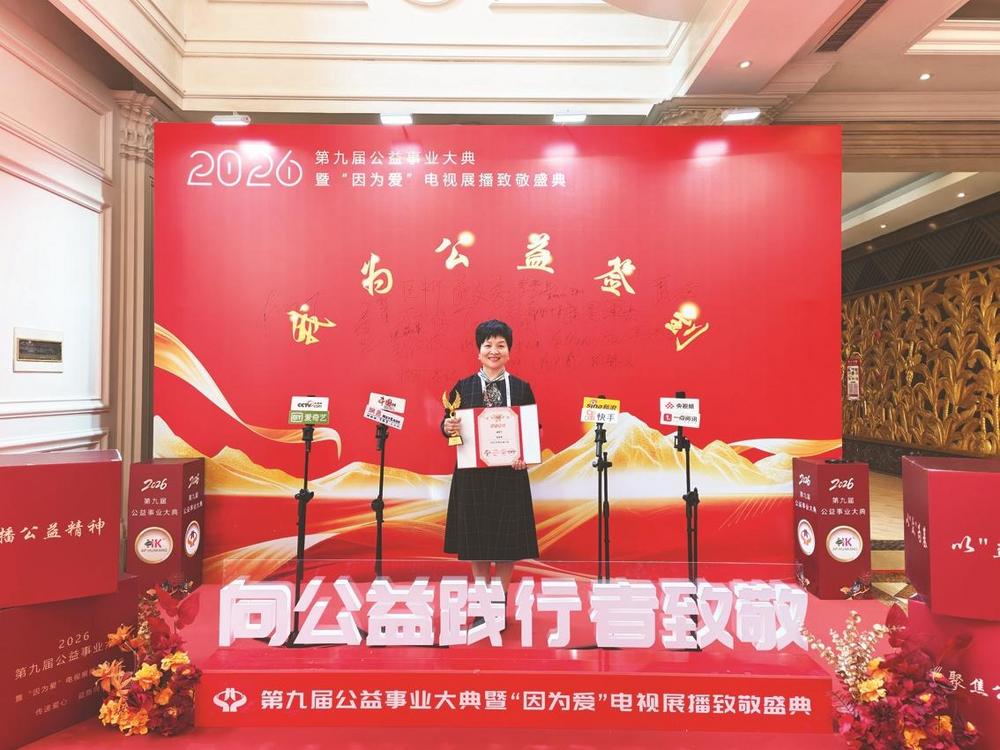
Core Viewpoint - The article highlights the recognition of Zhang Shuying, a retired grassroots doctor from Handan, as the "Annual Public Welfare Star" for her life-saving efforts on high-speed trains, emphasizing the importance of community service and the potential for organized medical assistance in emergencies [3][4]. Group 1: Recognition and Achievements - Zhang Shuying gained fame as the "High-speed Train Rescue Hero" after successfully performing emergency medical interventions on two separate occasions on high-speed trains, which garnered over 50 million views online [3]. - She has received various honors from the Handan municipal government, including the recent title of "Top Ten Good Netizens in Handan," reflecting her impact on the community [4]. Group 2: Suggestions for Improvement - Zhang proposed the addition of a "voluntary medical personnel" registration feature in the high-speed train ticketing system to enable quick identification of medical volunteers during emergencies, which could enhance public safety [4]. Group 3: Professional Background - With over 30 years of experience in grassroots healthcare, Zhang led the transformation of a community health service center into an integrated model of medical prevention and care, creating China's first chronic disease management platform [5]. - After retirement, she continues to engage in public health initiatives, using her expertise to educate the community about chronic disease prevention and health management through various platforms [5]. Group 4: Community Engagement - Zhang actively participates in charitable activities and plans to promote first aid knowledge and traditional Chinese medicine techniques in communities, schools, and nursing homes, aiming to create a health safety network centered around families [5]. - She expresses pride in her hometown of Handan, inviting others to experience its rich culture and community spirit [6].
春节调查:蚂蚁阿福App用户破亿,“问问阿福”渐成日常习惯
2 1 Shi Ji Jing Ji Bao Dao· 2026-02-24 09:43
Core Insights - The article highlights the success of Ant Group's health AI assistant "Ant Aifu," which surpassed 100 million users during the Spring Festival, becoming the top downloaded app on the Apple App Store [1][2]. User Experience - Users have reported that Ant Aifu has become a part of their daily health habits, with many turning to it for health advice during the Spring Festival [3][5]. - A new mother from Shandong found the app helpful in understanding her baby's sleep issues, appreciating its detailed analysis and practical advice [4]. - A medical graduate noted that Ant Aifu sometimes provided more comprehensive and accurate information than his own knowledge, indicating its utility as a health consultant [4]. - A user in a small county used the app for psychological comfort regarding her health concerns, demonstrating its role in providing reassurance [4]. Market Positioning - The article contrasts two paths in the AI market: general AI applications focusing on broad coverage and vertical AI applications like Ant Aifu that address specific needs in health management [6]. - Ant Aifu's success is attributed to its ability to solve real-life health problems, establishing strong user loyalty, particularly among users from lower-tier cities [6][8]. - The app's growth reflects a strategic differentiation for Ant Group, leveraging its existing expertise in health to build a unique competitive advantage in the AI landscape [8].

乃东区全民健康体检进乡村,电子档案闭环管理暖民心
Xin Lang Cai Jing· 2026-02-21 02:48
Core Viewpoint - The article highlights the significant improvements in healthcare services in Naitong District, particularly through mobile health check-ups and upgraded community health facilities, emphasizing a shift from treatment-focused care to proactive health management [1][2][3]. Group 1: Mobile Health Services - A mobile health check-up team has been established in Naitong District, providing comprehensive health screenings directly to rural communities, including blood tests, ECGs, and ultrasounds [1]. - Each participant receives an electronic health record, and any abnormalities detected are followed up with a complete management system, ensuring continuity of care from screening to treatment [2]. Group 2: Community Health Facilities - The newly opened Qiongga Ding Community Health Center represents a significant upgrade in local healthcare services, featuring modern facilities and a range of services, including traditional Tibetan medicine [2]. - The center aims to provide a "small illness does not leave the community" approach, enhancing convenience and trust among residents [2]. Group 3: Hospital Upgrades - The Naitong District Central Hospital has undergone significant upgrades, improving its facilities and expanding its capabilities, including the introduction of minimally invasive procedures [3]. - The hospital aims to transition from a disease treatment focus to a comprehensive health management model, integrating health services, specialized treatments, and educational initiatives [3]. Group 4: Future Developments - By 2026, further enhancements are planned, including the standardization of more village health clinics and the launch of a smart health management platform, which will expand the healthcare network's reach and depth [3].