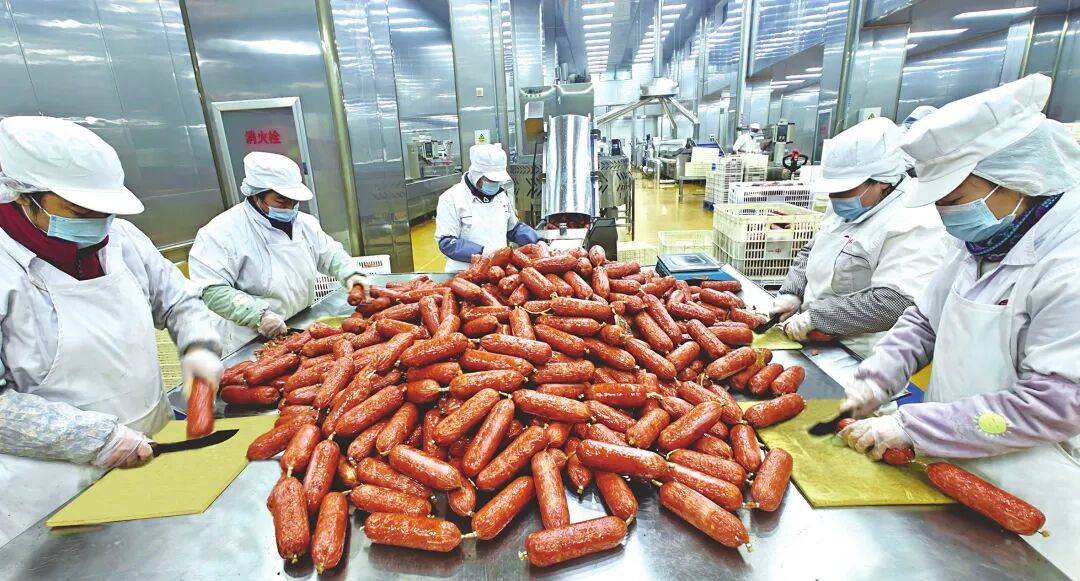
一中火腿

Search documents
“轻量级选手”如何打造新样本——从“一中火腿”看德州国企改革
Sou Hu Cai Jing· 2026-02-07 18:21
Core Insights - The transformation of Yizhong Food Company from a small workshop to a modern enterprise with a production capacity of 3,000 tons over 41 years highlights the impact of state-owned enterprise reform and modernization efforts [2][5][12]. Group 1: Company Evolution - Yizhong Food Company originated as a collective school-run enterprise in 1985, initially producing simple packaged ham with a maximum output of 500 million yuan [3]. - The company underwent significant changes, including a relocation to a larger facility in 2002, which allowed for an increased production capacity of 1,500 tons [3][5]. - In 2022, the company was placed under the direct supervision of the municipal state-owned assets supervision and administration commission, leading to rapid improvements in both social and economic benefits [5][9]. Group 2: Operational Changes - The company has implemented a modernized production process while maintaining traditional craftsmanship, utilizing technology to enhance product quality [6][9]. - The introduction of a flat management structure has improved decision-making efficiency and reduced communication costs among the 47 employees [6][9]. - The company has shifted from a passive sales approach to an active marketing strategy, expanding its sales channels through offline stores and online platforms like WeChat and Douyin [6][10]. Group 3: Financial Performance - From 2022 to 2025, the company is projected to achieve an average annual sales revenue growth of 10%, with an expected output value of 61.23 million yuan and a net profit of 12.59 million yuan by 2025 [6][12]. Group 4: Market Expansion - The company has successfully expanded its market presence beyond local boundaries, leveraging the resources of the parent group to enter new markets and enhance brand visibility [10][11]. - The integration of smart production lines has allowed for automation in packaging and logistics, while still preserving the essence of traditional production methods [9][14]. Group 5: Future Challenges and Strategies - The company recognizes the need to enhance its marketing capabilities to match its increased production capacity, aiming to establish a robust marketing team and network [12][15]. - There is a focus on continuous improvement in management practices and talent acquisition, emphasizing the importance of both traditional craftsmanship and modern technological skills [15].