三星堆文创盲盒

Search documents
镜观回响2025|加快建设文化强国
Xin Hua She· 2025-12-25 01:05
Core Viewpoint - The articles emphasize the importance of cultural development in China, highlighting the integration of material and spiritual civilization under the guidance of Xi Jinping's cultural thought, aiming to build a culturally strong nation by 2025 [1][3]. Group 1: Cultural Development Initiatives - The focus is on promoting socialist core values to strengthen Chinese spirit, values, and power, while developing mainstream culture and public opinion [3]. - Cultural innovation and creativity are continuously emerging across China, with a deep integration of culture and technology, promoting digital empowerment and transformation in cultural construction [7]. - The establishment of new public cultural spaces, such as "city reading rooms" and "cultural stations," is enhancing cultural supply at the grassroots level [18]. Group 2: Historical and Educational Engagement - Various commemorative events, such as the 80th anniversary of the victory in the Chinese People's Anti-Japanese War, are being held to educate the public about history and promote national spirit [4][6]. - Schools are incorporating local intangible cultural heritage into their curricula, allowing students to experience and inherit traditional culture [15]. Group 3: Digital and Technological Integration - Projects like "Digital Dunhuang" and "Digital Garden" are being developed to share cultural resources globally and enhance public engagement with cultural heritage through digital means [10][12]. - The use of VR, AR, and holographic projection technologies in cultural experiences is attracting more people to learn about and appreciate intangible cultural heritage [21]. Group 4: International Cultural Exchange - China is actively engaging in international cultural exchanges to enhance its cultural soft power and influence, showcasing Chinese culture globally [24]. - Events such as the "Encounter China" cultural exhibition in Paris and the "Palace Museum Cultural Products" exhibition at the United Nations are examples of efforts to promote Chinese culture abroad [25][28].


古老文明焕发文旅新活力
Ren Min Ri Bao Hai Wai Ban· 2025-09-15 01:20
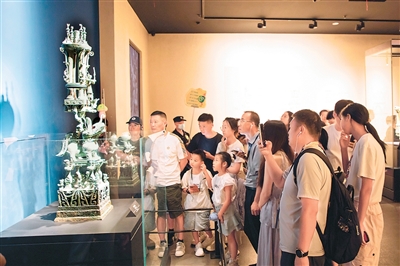
Core Insights - The Sanxingdui Museum's new building showcases unique artifacts from ancient Shu civilization, attracting a significant number of visitors and enhancing cultural appreciation [1][2][3] Group 1: Museum Features - The new museum features a large collection of bronze and jade artifacts, highlighting the exquisite craftsmanship of ancient Shu civilization [2] - A notable exhibit is the 1.5-meter tall bronze tree, which showcases intricate design and craftsmanship, drawing considerable attention from visitors [1] - The architectural design of the new museum incorporates elements of Sanxingdui culture, creating a seamless connection with the old museum [2] Group 2: Visitor Experience - Visitors engage with the exhibits through interactive experiences, such as "wearing" the gold mask for photos, enhancing their connection to the artifacts [1] - The museum includes a large circular chandelier inspired by the motifs found in Sanxingdui artifacts, adding a mysterious ambiance to the space [2] - A rotating ramp in the new museum has been retained from the old museum, providing a sense of familiarity for returning visitors [2] Group 3: Cultural and Economic Impact - The museum is projected to receive nearly 6 million visitors in 2024, indicating its growing popularity [3] - The annual sales of Sanxingdui cultural products are estimated to reach approximately 200 million yuan, reflecting the commercial success of the museum's offerings [3] - The integration of ancient cultural elements into modern products enhances cultural dissemination and practical value [3]