
上海大歌剧院

Search documents
艺术回望2025|普利兹克奖重返中国与这一年的重要建筑
Xin Lang Cai Jing· 2025-12-30 10:50
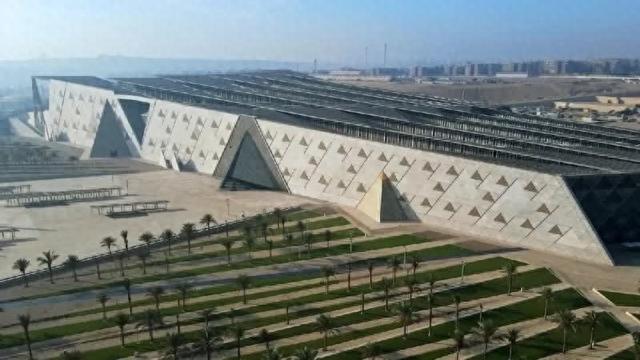
Key Points - The Grand Egyptian Museum, the largest single-civilization museum in the world, officially opened in November 2025 after 20 years of construction, with a total investment of $1.1 billion and housing over 100,000 artifacts [1][3] - The museum's design, by architect Shih-Fu Peng, features a radiating cliff-like structure that harmonizes with the nearby pyramids, creating a visual connection [3] - The museum's exhibition space is organized into 12 galleries, allowing for a non-linear visitor experience that emphasizes themes of society, power, and faith [5][7] - The Osaka Expo's main building, "The Great Roof," designed by architect Sou Fujimoto, has sparked controversy due to its high cost and complex construction, costing approximately 1.6 billion RMB [9][11] - The V&A East Storage Space in London redefines museum display by inviting public interaction with hidden collections, allowing visitors to pre-book specific items from over 500,000 artifacts [15][22] - Liu Jiakun, the second Chinese architect to win the Pritzker Prize, completed the Weiwuyuan Bookstore, transforming an abandoned granary into a cultural space that blends ancient and modern elements [24][26] - Wang Shu's Xi'an Grand Theatre, his first theatre design, features a modern interpretation of traditional Chinese architecture and will serve as a significant cultural venue in the region [30][31] - The Fenix Museum in Rotterdam explores immigration themes and serves as a cultural symbol, built on the site of a historic warehouse [33][36] - The Obama Presidential Center in Chicago aims to redefine the presidential library concept by integrating community spaces and activities, featuring a 68-meter tall museum building [38][40] - The St. Lawrence Market in Toronto has been expanded to include a city courthouse, blending traditional market functions with modern civic needs [44][46] - The Abu Dhabi Guggenheim Museum, designed by Frank Gehry, is nearing completion and will be one of the largest Guggenheim museums globally, focusing on modern and contemporary art from the Middle East and beyond [51][55] - The Shanghai Grand Opera House, designed to resemble a giant folding fan, is set to open in 2026 and aims to create a vibrant public space [59][63]

“悬浮巨扇”展开 传递东方意蕴 上海大歌剧院即将完成场馆建设 全球范围内首次大规模使用165兆帕超高性能混凝土
Jie Fang Ri Bao· 2025-12-15 01:48
Core Insights - The Shanghai Grand Opera House, a significant cultural project, is set to complete its construction and decoration this month after a six-year development period, marking a key milestone in Shanghai's cultural infrastructure [1] - The design of the opera house, inspired by the "Chinese fan," has gained international recognition and is seen as a symbol of modern Chinese architecture, reflecting the evolution of urban space and public interaction [2][3] Design and Architecture - The Shanghai Grand Opera House was established as a major cultural facility during the "13th Five-Year Plan," aiming to enhance Shanghai's status as an Asian performing arts hub [2] - The design, led by the architectural firm Snøhetta, features a distinctive fan shape that breaks away from traditional theater designs, promoting a more open and accessible public space [3] - The structure incorporates a double-spiral staircase that serves both as a functional pathway and a hidden support system, allowing the fan-shaped design to appear as if it is floating without visible columns [5][6] Engineering Innovations - The building's height exceeds 45 meters, with a total area of 147,000 square meters, equivalent to 21 standard football fields, presenting significant engineering challenges [5] - The use of 165 MPa ultra-high-performance concrete, which is three to five times stronger than regular concrete, is a groundbreaking approach in construction, enabling the realization of the fan structure [6] Interior Design and Functionality - The interior design emphasizes a human-centered approach, featuring advanced acoustic design elements to enhance sound quality in public spaces [4] - The opera house will operate under a "white + black" model, providing public cultural space during the day and transforming into a venue for performances at night, thus maximizing its utility [4] - The venue includes three distinct theaters, each designed for different types of performances, and features Asia's first six-module stage, allowing for versatile staging options [7]