
专用SIM卡

Search documents
十部门发力,五大核心领域!“低空经济”将迎来哪些变化
Bei Jing Ri Bao Ke Hu Duan· 2026-02-06 07:09
Core Insights - The release of the "Guidelines for the Construction of Low-altitude Economic Standard System (2025 Edition)" signifies a national effort to establish a unified standardization framework for the low-altitude economy, addressing key issues in the industry and promoting its orderly development [1][2] Group 1: Implications of the Guidelines - The publication of the Guidelines indicates a shift from pilot exploration to large-scale, standardized development in the low-altitude economy, with urgent needs for institutional improvements across the industry chain [1] - The establishment of a clear technical framework will significantly reduce R&D, construction, and operational costs for enterprises, creating opportunities in the low-altitude sector [2] Group 2: Pain Points Addressed by the Guidelines - The Guidelines aim to resolve three major pain points in the industry: 1. Fragmented infrastructure construction, by standardizing technical routes and promoting scale development [5] 2. Safety regulation and operational assurance, by implementing strict identification and registration requirements for drones [5] 3. Disconnection between technology and demand, by providing comprehensive support for the entire chain from R&D to industrialization [5] Group 3: Beneficial Areas in the Low-altitude Industry - The low-altitude infrastructure sector is expected to experience standardized development, with clear technical routes and standards for low-altitude network communication, perception, and high-precision navigation [7] - The low-altitude equipment sector will see compliance upgrades, driven by the Guidelines' requirements for connectivity and safety, enhancing drone safety management [7] - The application areas within the low-altitude industry will witness large-scale implementation, particularly in scenarios like power line inspections and emergency communications, facilitated by standardized technologies [8]

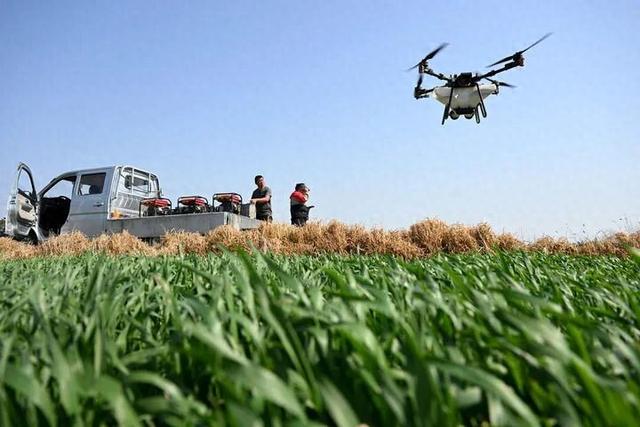
十部门联合印发《指南》 为低空经济发展定规矩、指航向
Ke Ji Ri Bao· 2026-02-06 02:29
Core Insights - The release of the "Guidelines for the Construction of Low-altitude Economic Standard System (2025 Edition)" signifies a national effort to establish a unified standardization framework for the low-altitude economy, addressing key issues in the industry and promoting its orderly development [1][2]. Group 1: Significance of the Guidelines - The publication of the Guidelines indicates a shift from pilot exploration to large-scale, standardized development in the low-altitude economy, with urgent needs for institutional improvements across the industry chain [1]. - The Guidelines provide clear technical guidance, which will significantly reduce R&D, construction, and operational costs for enterprises, creating opportunities in the low-altitude sector [2]. Group 2: Pain Points Addressed by Standardization - By 2027, the standard system for the low-altitude economy is expected to be established, meeting the safety and health development needs of the industry [3]. - The Guidelines aim to resolve three major pain points: 1. Addressing the issue of "dispersed infrastructure construction" by standardizing technical routes and promoting scale development [3]. 2. Enhancing safety regulation and operational assurance through strengthened identification and registration requirements for drones [3]. 3. Bridging the gap between technology and demand by providing comprehensive support for the R&D, testing, standardization, and industrialization of new technologies and products [3]. Group 3: Beneficial Areas in the Low-altitude Industry - The low-altitude infrastructure sector is expected to experience "standardized development" due to the clear technical routes and standards outlined in the Guidelines [4]. - The low-altitude equipment sector will see "compliance upgrades" as the Guidelines promote networked and safety requirements, leading to advancements in drone technology [4]. - The application areas within the low-altitude industry will benefit from "scaled implementation," with standardized technologies enhancing reliability in various operational scenarios such as inspections, emergency response, and safety regulation [5].
为低空经济发展定规矩、指航向
Ke Ji Ri Bao· 2026-02-06 01:38
Group 1 - The release of the "Guidelines" signifies a national-level initiative to establish a standardized framework for the low-altitude economy, addressing issues such as unclear policies and fragmented technical routes, which have hindered the industry's development [1][2] - The "Guidelines" aim to provide clear technical guidance, significantly reducing R&D, construction, and operational costs for enterprises, thus creating opportunities in the low-altitude sector [2] Group 2 - The "Guidelines" are expected to resolve three major pain points in the low-altitude economy: fragmented infrastructure, safety regulation challenges, and the disconnect between technology and demand [3] - The establishment of a unified technical route will facilitate large-scale development and avoid redundant construction in low-altitude communication and navigation [3] - Enhanced safety measures, such as unique identification for drones, will improve traceability and regulatory compliance, ensuring a safer operational environment [3] Group 3 - The low-altitude infrastructure sector is anticipated to experience standardized development, with clear technical routes and requirements aiding in large-scale deployment [4] - The low-altitude equipment sector will see compliance upgrades, driven by the "Guidelines" which promote safety and connectivity standards for drones [4] - The application fields within the low-altitude industry are expected to achieve large-scale implementation, enhancing reliability in inspections and emergency response scenarios through standardized technologies [5]
