
5G通信模组

Search documents
十部门发力,五大核心领域!“低空经济”将迎来哪些变化
Bei Jing Ri Bao Ke Hu Duan· 2026-02-06 07:09
Core Insights - The release of the "Guidelines for the Construction of Low-altitude Economic Standard System (2025 Edition)" signifies a national effort to establish a unified standardization framework for the low-altitude economy, addressing key issues in the industry and promoting its orderly development [1][2] Group 1: Implications of the Guidelines - The publication of the Guidelines indicates a shift from pilot exploration to large-scale, standardized development in the low-altitude economy, with urgent needs for institutional improvements across the industry chain [1] - The establishment of a clear technical framework will significantly reduce R&D, construction, and operational costs for enterprises, creating opportunities in the low-altitude sector [2] Group 2: Pain Points Addressed by the Guidelines - The Guidelines aim to resolve three major pain points in the industry: 1. Fragmented infrastructure construction, by standardizing technical routes and promoting scale development [5] 2. Safety regulation and operational assurance, by implementing strict identification and registration requirements for drones [5] 3. Disconnection between technology and demand, by providing comprehensive support for the entire chain from R&D to industrialization [5] Group 3: Beneficial Areas in the Low-altitude Industry - The low-altitude infrastructure sector is expected to experience standardized development, with clear technical routes and standards for low-altitude network communication, perception, and high-precision navigation [7] - The low-altitude equipment sector will see compliance upgrades, driven by the Guidelines' requirements for connectivity and safety, enhancing drone safety management [7] - The application areas within the low-altitude industry will witness large-scale implementation, particularly in scenarios like power line inspections and emergency communications, facilitated by standardized technologies [8]

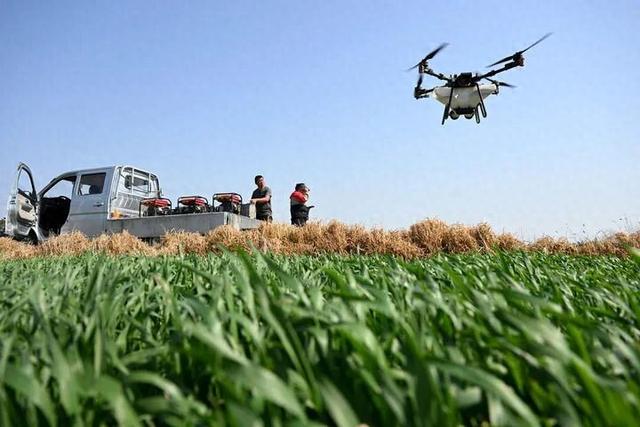
十部门联合印发《指南》 为低空经济发展定规矩、指航向
Ke Ji Ri Bao· 2026-02-06 02:29
低空经济是我国战略性新兴产业的重要赛道。《指南》的发布意味着什么?标准落地将解决低空经济发 展中的哪些痛点?低空产业哪些领域将受益,将迎来什么样的发展机遇? 近日,国家市场监督管理总局等十部门联合印发《低空经济标准体系建设指南(2025年版)》(以下简称 《指南》),重点围绕低空航空器、低空基础设施、低空空中交通管理、安全监管和应用场景五大核心 领域,建立技术标准与管理规范融合、国内标准与国际规则融合、强制性标准与推荐性标准融合、基础 标准与场景标准融合的"四维融合"标准供给体系。 在丁海煜看来,随着《指南》为低空经济产业链各环节确立统一技术规则、破除标准问题带来的规模化 发展壁垒,制约行业安全健康发展的三大痛点将迎刃而解。 一是破解"基础设施分散建设"痛点,统一技术路线、实现规模发展。针对"技术路线分散、互联互通 难"的问题,《指南》规范了低空通信、导航、感知的数据接口,可进一步推动5G-A通信基站、通感一 体基站协同组网,避免重复建设。 二是破解"安全监管与运行保障"痛点,筑牢产业发展安全底线。针对"无人机身份难追溯"的问题,《指 南》强化了"一机一码""实名登记"等要求。"例如,结合中国移动提出的'四码 ...
为低空经济发展定规矩、指航向
Ke Ji Ri Bao· 2026-02-06 01:38
Group 1 - The release of the "Guidelines" signifies a national-level initiative to establish a standardized framework for the low-altitude economy, addressing issues such as unclear policies and fragmented technical routes, which have hindered the industry's development [1][2] - The "Guidelines" aim to provide clear technical guidance, significantly reducing R&D, construction, and operational costs for enterprises, thus creating opportunities in the low-altitude sector [2] Group 2 - The "Guidelines" are expected to resolve three major pain points in the low-altitude economy: fragmented infrastructure, safety regulation challenges, and the disconnect between technology and demand [3] - The establishment of a unified technical route will facilitate large-scale development and avoid redundant construction in low-altitude communication and navigation [3] - Enhanced safety measures, such as unique identification for drones, will improve traceability and regulatory compliance, ensuring a safer operational environment [3] Group 3 - The low-altitude infrastructure sector is anticipated to experience standardized development, with clear technical routes and requirements aiding in large-scale deployment [4] - The low-altitude equipment sector will see compliance upgrades, driven by the "Guidelines" which promote safety and connectivity standards for drones [4] - The application fields within the low-altitude industry are expected to achieve large-scale implementation, enhancing reliability in inspections and emergency response scenarios through standardized technologies [5]

宇树科技IPO,相关受益公司名单
Sou Hu Cai Jing· 2025-11-15 08:12
Core Viewpoint - Yushu Technology Co., Ltd. plans to submit its IPO application in Q4 2025, marking a significant milestone as the first profitable humanoid robot company globally, which is expected to attract attention to the entire humanoid robot industry chain [1] Shareholding/Investment - Juxing Technology holds shares in Yushu Technology through its subsidiary, ensuring clear equity investment and direct asset appreciation [3] - Jing Shan Light Machine participated in Yushu's early investment through an industrial investment fund, though specific shareholding ratios are not disclosed [3] - Shoukai Co., Ltd. indirectly holds approximately 0.85% of shares through the Jinshi Growth Fund, indicating a relatively high indirect shareholding among A-share listed companies [3] - Jinfat Technology holds 4.77% indirectly through the Jinshi Growth Fund and is a leading chemical materials company with over 60% market share in robot shell materials, reporting a 35.5% revenue growth in H1 2025 [3] - Wolong Electric Drive holds 0.1525% indirectly and has seen a 36.76% net profit increase in H1 2025, with a gross margin of 28% [3] - Other companies like Jingxing Paper and Rongsheng Environmental Protection hold minor indirect stakes, primarily for financial investment [3][4] Core Suppliers - Zhongdali De is the core supplier of planetary reducers, with orders locked at 3.2 billion yuan for 2025, accounting for 36% of Yushu's costs [6] - Changsheng Bearings exclusively supplies self-lubricating bearings with over 80% penetration, expecting 8% of its revenue from robot business in 2025 [6] - Aobi Zhongguang is the sole supplier of 3D vision modules, with a supply ratio of 72% and a doubling of revenue in H1 2025 [6] - Lide Technology provides flexible tactile sensors, breaking the monopoly of Korean companies [6] - Weilan Lithium Core is the core supplier of lithium batteries for Yushu, with an expected 60% supply ratio in 2024 [6] Technical Cooperation Partners - iFLYTEK collaborates on developing the "robot brain," with a leading position in voice recognition and a planned R&D investment of 2.392 billion yuan in 2025 [8] - Lingyun Optical is jointly developing the FZMotion motion capture system, achieving high precision and expected stock price growth of over 200% in 2025 [8] - Zhongke Chuangda provides motion control algorithms and holds 1.86% of shares, with strong adaptability in edge computing modules [8] - Other partners include Shuanglin Co., Ltd. and Shengtong Co., Ltd., focusing on various components and educational collaborations in robotics [8][9]





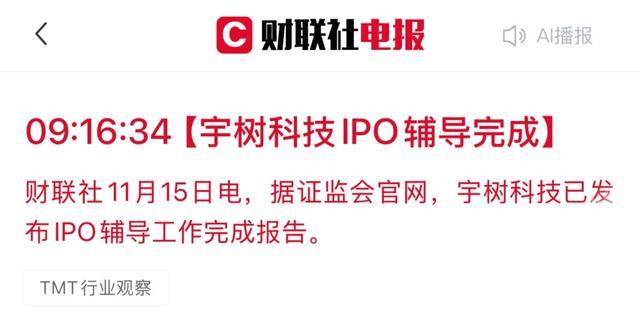
长虹与海思深度联合研发 5G技术落地迎关键期
Zheng Quan Ri Bao· 2025-07-28 03:02
围绕5G的广阔空间,家电与科技巨头的联盟正向更深领域渗透,势力也在不断扩大。 近日,多个巨头在5G商用领域动作频频,跨界联合研发,落地生态实验基地,欲孵化新业态。长虹与 上海海思的5G应用联合实验室于近日宣告成立,双方将在智能工厂、安全芯片等领域布局5G产业。联 想集团也与联通在线宣布将成立5G应用联合创新实验室。华为联合长虹、京东方等多家企业智慧屏白 皮书工作组,探索loT智慧家居生态模式。 四川长虹副总工程师何龙接受《证券日报》记者采访时表示:"长虹与海思将在智慧工厂、人工智能等 垂直领域展开深度合作,长虹将继续加大在5G融合终端应用上的研发投入,并加速推动新型智能终端 的应用场景落地。" 实际上,这不是双方的首次合作。长虹旗下爱联科技研发的首款国产超小体积5G通信模组,也是采用 上海海思5G模组中间件方案设计,支持5G/4G/3G多种网络制式,可广泛应用在智慧工业、智慧能源、 无人机等领域。长虹内部人士透露,这是继全球首款5G工业互联网模组在长虹下线后的又一突破。 谈及长虹和海思的合作空间,钉科技创始人丁少将接受《证券日报》采访时表示:"海思用硬核底层技 术以及围绕其展开的软硬件能力打造数字经济的基础, ...
