
中国互联网惠老助残智能应用共性技术服务平台

Search documents
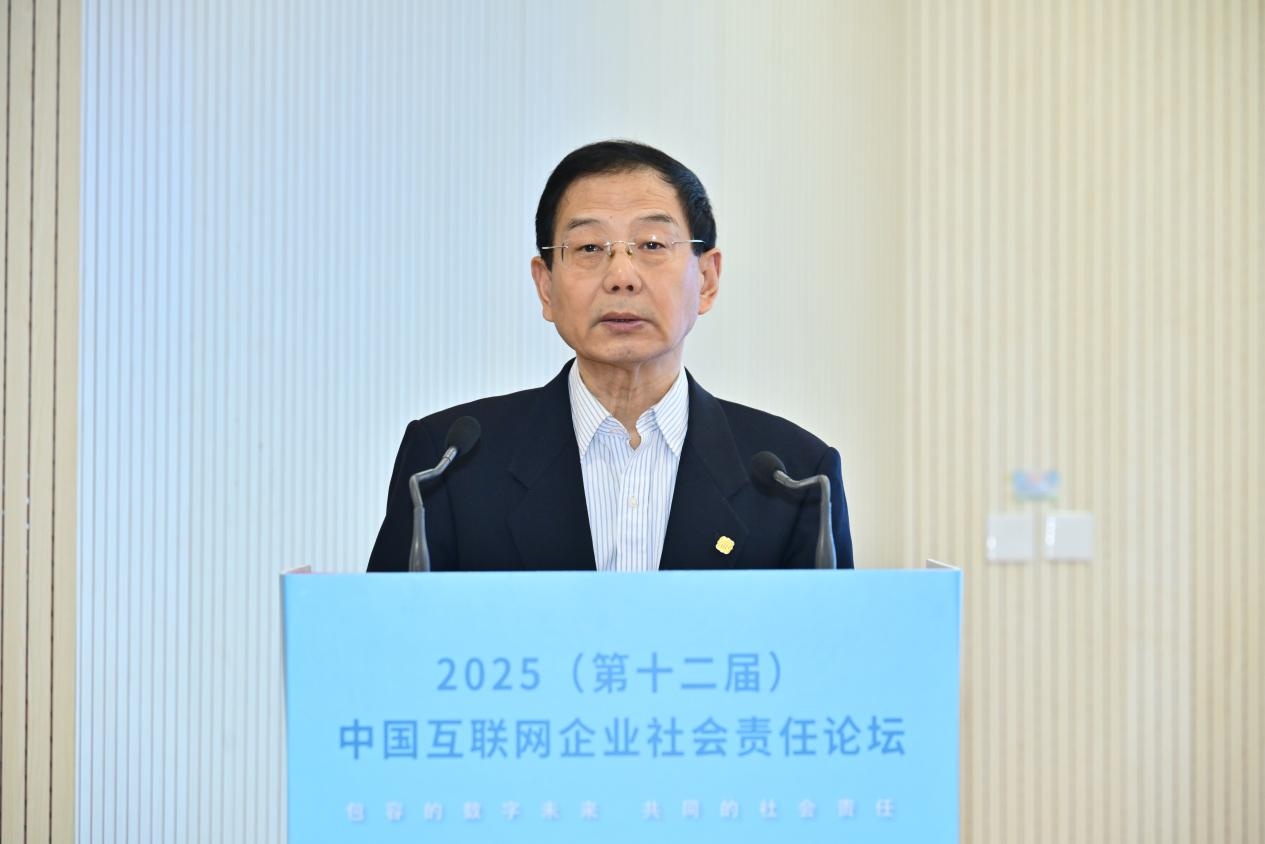
2025(第十二届)中国互联网企业社会责任论坛在京举办
Yang Guang Wang· 2026-01-13 02:43
Core Viewpoint - The 2025 China Internet Enterprises Social Responsibility Forum emphasizes the theme of "Inclusive Digital Future, Shared Social Responsibility," aiming to explore new methods for social responsibility in the digital era and promote healthy development in the internet industry [1]. Group 1: Forum Overview - The forum was organized by the China Internet Association and included various stakeholders such as government officials, industry leaders, and experts from organizations like Alibaba, Meituan, and Tencent [2]. - The forum featured speeches and discussions on the importance of social responsibility in the internet sector, highlighting the need for collaboration and innovation [2][4]. Group 2: Key Speeches and Recommendations - Huang Chengqing, a key speaker, outlined four recommendations for the internet industry: integrating technology for good, fostering partnerships for ecological prosperity, embedding green development into operations, and promoting open dialogue to address challenges [4]. - Lv Shiming emphasized the significance of building an accessible environment as a marker of national and social civilization, highlighting the legal framework supporting 85 million disabled individuals and 310 million elderly people in China [5]. Group 3: Reports and Initiatives - Zhao Xinxin presented the "Sustainable Information Disclosure Development Report (2025)," indicating that the overall quality of information disclosure in the internet and communication sectors is improving, with significant advancements in quantitative data disclosure and substantive issue analysis [6]. - The "China Internet Elderly Assistance and Disability Support Intelligent Application Common Technology Service Platform" was launched to address the needs of 130 million elderly individuals living alone and 30 million individuals with severe disabilities [7][11]. Group 4: Collaborative Efforts and Future Plans - The China Internet Association, along with other organizations, initiated a recruitment plan for partners in the intelligent application ecosystem, focusing on collaboration among government, enterprises, social organizations, and research institutions [8]. - The forum also announced the "Digital Temperature" series of promotional activities aimed at showcasing the internet industry's social responsibility practices through case studies [12]. Group 5: Trends and Future Directions - A report on the "Top Ten Trends in Internet Industry Sustainable Development" was released, highlighting the integration of environmental, social, and governance (ESG) factors into business operations and the role of artificial intelligence in reshaping industry responsibilities [11]. - The forum concluded with a roundtable discussion on "Technology for Good and Business Practice," emphasizing the importance of sharing experiences and best practices in fulfilling social responsibilities [14].

中国互联网惠老助残智能应用生态建设工作正式启动
Huan Qiu Wang Zi Xun· 2025-12-22 02:16
Core Insights - The launch of the "China Internet Elderly Assistance and Disability Support Intelligent Application Ecosystem" marks a new phase in leveraging technology for social responsibility, focusing on inclusivity and accessibility for elderly and disabled populations [1][8] - The initiative aims to create a comprehensive intelligent application ecosystem that integrates public welfare, providing free system support to government and disability organizations, while fostering the development of a "people's livelihood Internet of Things" [1][8] Group 1: Key Statements from Officials - Huang Chengqing, Vice Chairman of the China Internet Association, emphasized the importance of addressing the "digital divide" faced by elderly and disabled groups, urging the internet industry to take social responsibility seriously [2] - He highlighted the association's efforts in establishing guidelines for ESG disclosure and promoting cross-sector collaboration to lay a solid foundation for the ecosystem [2] - Lv Shiming, Chairman of the China Disability Volunteer Association, pointed out that the implementation of the "Barrier-Free Environment Construction Law" provides legal support for 85 million disabled individuals and 310 million elderly people [3] Group 2: Ecosystem Structure and Implementation - The ecosystem will be built on a "1+4+T" framework, featuring a national hub platform at its core, supported by a four-tier local response system [4] - The platform aims to reduce local construction costs by 90% and improve emergency response times from over 30 minutes to within 15 minutes through seamless integration with healthcare resources [5] - The initiative is expected to cover 90% of prefecture-level cities by 2030, benefiting 200 million people annually and driving a 60% annual growth in related industries [5] Group 3: Collaboration and Partnership Opportunities - The recruitment plan for partners in the ecosystem is open to government, enterprises, social organizations, and research institutions, focusing on collaborative efforts to enhance elderly care and disability support [6][7] - Partners will receive various benefits, including free access to deployment templates, open-source toolkits, and opportunities for brand exposure and professional training [7] - The initiative aims to create a national benchmark for digital elderly care, ensuring that elderly and disabled individuals can share in the benefits of the digital age [7][8]