
科技向善

Search documents
腾讯研究院司晓:AI要让人放心,把人放大
腾讯研究院· 2026-03-02 08:33
Core Viewpoint - The article emphasizes the importance of AI in enhancing human capabilities and ensuring trust in technology, advocating for a future where AI serves as an extension of human potential rather than a replacement [2][3][6]. Group 1: Trust in AI - The concept of "trust" in AI goes beyond data protection and legal compliance; it involves establishing deep trust in human-machine collaboration [2][3]. - AI's current limitations necessitate a "human-machine feedback" ethical framework, ensuring that humans maintain control over critical decision-making processes [2][3]. Group 2: Amplifying Human Potential - AI is positioned as a tool to amplify human abilities, enabling ordinary individuals to achieve professional-level creative outputs without extensive training [3][4]. - The article highlights a case where AI assisted a small business owner in overcoming marketing challenges, illustrating how technology can empower individuals [3][4]. Group 3: Redefining Human Value - The shift from viewing individuals as mere data points to recognizing them as the purpose of services is crucial; AI should enhance the value of professionals like doctors and teachers rather than replace their roles [4][5]. - AI's role in society is to elevate the overall intellectual capacity, allowing individuals to focus on higher-level thinking and creativity [5][6]. Group 4: The Future of Human-AI Collaboration - The relationship between humans and AI is evolving from a tool-based interaction to a partnership, where humans guide AI with experience and judgment [6]. - The article calls for a collective societal effort to redefine this relationship, ensuring that technology enhances emotional and creative pursuits rather than detracting from them [6].


科技创新三大关键词
2 1 Shi Ji Jing Ji Bao Dao· 2026-02-27 13:23
Group 1: Core Focus Areas - The upcoming National Two Sessions will emphasize technology, with a focus on high-level self-reliance and innovation-driven development as outlined in the "14th Five-Year Plan" [1] - Key topics of interest among representatives include the transformation of scientific achievements, technology empowerment across various sectors, and the role of enterprises in innovation [1][10] - In 2025, 176 proposals related to the transformation of scientific achievements were submitted, focusing on enhancing the role of enterprises in technological innovation and reforming the transformation mechanism [1] Group 2: Transformation of Scientific Achievements - The transformation of scientific achievements is seen as the "last mile" of technological innovation, with a need for smooth transitions from science to technology and then to commercialization [5] - Proposals include expanding the scale of original exploration plans and establishing technology transfer offices in universities to facilitate smoother transitions [5][6] - The medical sector is highlighted for its need to accelerate the market entry of innovative products, with suggestions for opening up application scenarios [6] Group 3: Technology Empowerment - Representatives are focusing on how technology can empower industries, with an emphasis on integrating technology with real-world needs [7] - The development of the marine economy and agricultural technology innovation are highlighted as critical areas for technological advancement [8][9] - There is a call for the introduction of advanced technologies such as robotics and AI in agriculture to enhance production efficiency [9] Group 4: Role of Enterprises - The importance of strengthening the role of enterprises in innovation is emphasized, with a focus on knowledge property rights and the participation of private enterprises in national innovation platforms [10][12] - Suggestions include enhancing judicial protection of intellectual property and creating a supportive environment for "specialized, refined, and innovative" enterprises [12] - The integration of industry and research is seen as essential for fostering a modern industrial system and enhancing national competitiveness [13] Group 5: Emerging Topics - Discussions around artificial intelligence and ethical technology are gaining traction, with a focus on data privacy and algorithm fairness [14] - The need for a structured approach to "silver technology" for the elderly is also highlighted, aiming to make technology more accessible and practical for older adults [9][14]
奋进“十五五” 对话代表委员
Ren Min Ri Bao· 2026-02-25 22:10
Group 1: Museum and Cultural Development - The ongoing "museum fever" reflects a strong cultural confidence, and there is a need to enhance the public service efficiency of museums to better transmit traditional Chinese culture [1][2] - Inter-museum cooperation has been effective in addressing the uneven development of museums and improving the quality of grassroots museum services [2] - Suggestions have been made to accelerate the application for World Cultural Heritage status for the Niuheliang Hongshan Cultural Site, which has received positive feedback from various government levels [1] Group 2: Rural Development and Revitalization - The "14th Five-Year Plan" emphasizes the modernization of agriculture and rural areas, with a focus on developing characteristic industries to support rural revitalization [3][5] - The establishment of public cultural spaces in rural areas is crucial for enhancing community spirit and cultural life [4] - The transformation of villages into attractive living and working environments is being pursued through the development of tourism and local industries [3][6] Group 3: Aging Population and Elderly Care - The aging population in China necessitates a shift in the elderly care system from basic support to high-quality services, integrating technology to enhance care [8][9] - There is a call for a multi-layered elderly care service system that meets diverse needs, ensuring that community services are accessible and comprehensive [9] - The importance of policy support for "silver technology" is highlighted, aiming to improve the effectiveness and accessibility of technological solutions for elderly care [9][10] Group 4: Higher Education and Application-Oriented Universities - The development of application-oriented universities is shifting towards quality enhancement and differentiation, addressing the mismatch between educational outcomes and industry needs [11][12] - Recommendations include implementing an "industry professor" system and establishing a mutual recognition system for academic and skills certifications to improve educational relevance [12] - The focus is on deepening the integration of education and industry to better serve regional economic development [12]
春晚里的人间烟火暖
Ren Min Ri Bao· 2026-02-20 00:21
Core Viewpoint - The Spring Festival Gala serves as a cultural feast that reflects the warmth of ordinary life, showcasing the resilience and dedication of everyday individuals while conveying a sense of hope and confidence for the future [1][4]. Group 1: Emotional Resonance - The emotional narratives presented in the gala, such as "Mom Has a Cinema" and "Grandma's Favorite," highlight the irreplaceable warmth of human connection amidst technological advancements [2]. - The performances emphasize the value of sincerity and genuine relationships, as seen in the skit "Whose Dish," which illustrates the preciousness of human interactions [2]. Group 2: Social Reflection - The gala acts as a mirror to contemporary society, addressing issues like formalism and community harmony through humorous sketches like "Here It Comes" and "Guaranteed Satisfaction" [3]. - Musical performances resonate with social sentiments, fostering a sense of shared experience and hope for the future, as demonstrated in songs like "Human Resonance" and "You and I Experience a Moment" [3]. Group 3: Regional Diversity - The establishment of four sub-venues for the gala showcases diverse regional expressions of the New Year, integrating local culture with broader national narratives [4]. - Each region, from Harbin's winter landscape to Yiwu's transformation into a global marketplace, reflects unique cultural and economic developments, contributing to a rich tapestry of contemporary China [4]. Group 4: Cultural Significance - The gala transcends mere entertainment, embodying a spiritual "New Year's Eve dinner" filled with the flavors of life, human connection, and Chinese culture [4]. - It emphasizes the importance of labor, family bonds, and the collective journey of ordinary people, reinforcing the gala's enduring appeal and relevance to the public [4].
“三个一”解密全球首辆“脑车” 上车半小时可测老年痴呆
Xin Lang Cai Jing· 2026-02-16 00:28
Core Viewpoint - The world's first 5G brain-heart vehicle, equipped with over 10 patented technologies, aims to provide mobile brain health services and early screening for Alzheimer's disease, addressing the growing concern of dementia in an aging society [1][2]. Group 1: Vehicle and Technology - The 5G brain-heart vehicle can conduct a quick Alzheimer's test in about 15 minutes, with results available in as little as 3 minutes [2][3]. - The vehicle features a flexible brain-machine interface system that allows for rapid screening not only for Alzheimer's but also for other conditions like depression through interchangeable modules [3]. - The vehicle is designed to enhance screening efficiency, potentially doubling the rate of early detection and treatment for Alzheimer's disease [3]. Group 2: Blood Testing Innovation - The vehicle includes a mini-laboratory for blood testing, which can accurately detect Alzheimer's disease using a single blood sample, a method that is more accessible than traditional PET-CT scans or lumbar punctures [4]. - This blood plasma biomarker test has a sensitivity and specificity exceeding 90% and can predict Alzheimer's risk 10-15 years in advance [4]. Group 3: Future Upgrades and Expansion - Future upgrades for the 5G brain-heart vehicle will focus on three areas: real-time data transmission and AI-assisted diagnosis, creating a closed-loop service model with family doctors, and developing a standardized output model for broader application [6]. - The initiative aims to transform the vehicle into a replicable "Guangdong solution," promoting high-quality medical resources through partnerships and opportunities along the Belt and Road Initiative [6].
中国宏观经济月度分析报告202601:烽火科技纠缠,时间藏一陬-20260212
中采咨询· 2026-02-12 05:56
Economic Indicators - The manufacturing PMI for January 2026 is 49.3%, a decrease of 0.8 percentage points from the previous month, indicating a slowdown in manufacturing activity[4] - The CPI growth rate for January 2026 is 0.2%, primarily due to the high base effect from the previous year's Spring Festival[6] - The PPI for January 2026 is -1.4%, with a narrowing decline of 0.5 percentage points, reflecting improved internal structure and demand driven by technology[6] Trade and Investment - In December 2025, China's total imports and exports amounted to $601.42 billion, with exports increasing by 6.6% and imports rising by 5.7% year-on-year[20] - The M1 growth rate in December 2025 fell to 3.8%, while M2 grew by 8.5%, leading to an expanding M1-M2 gap of -4.7%[34] - The real estate market shows signs of recovery, with new home prices averaging 17,114 RMB per square meter, a month-on-month increase of 0.18%[48] Sector Performance - The service sector's business activity index has stabilized around 49.5% for three consecutive months, supported by financial activities and holiday-related consumption[4] - The consumer goods sector experienced a decline of 2.2 percentage points, primarily due to a drop in clothing orders[27] - The equipment sector shows resilience, with significant demand for computers and automation equipment, indicating a positive trend in industrial investment[28]
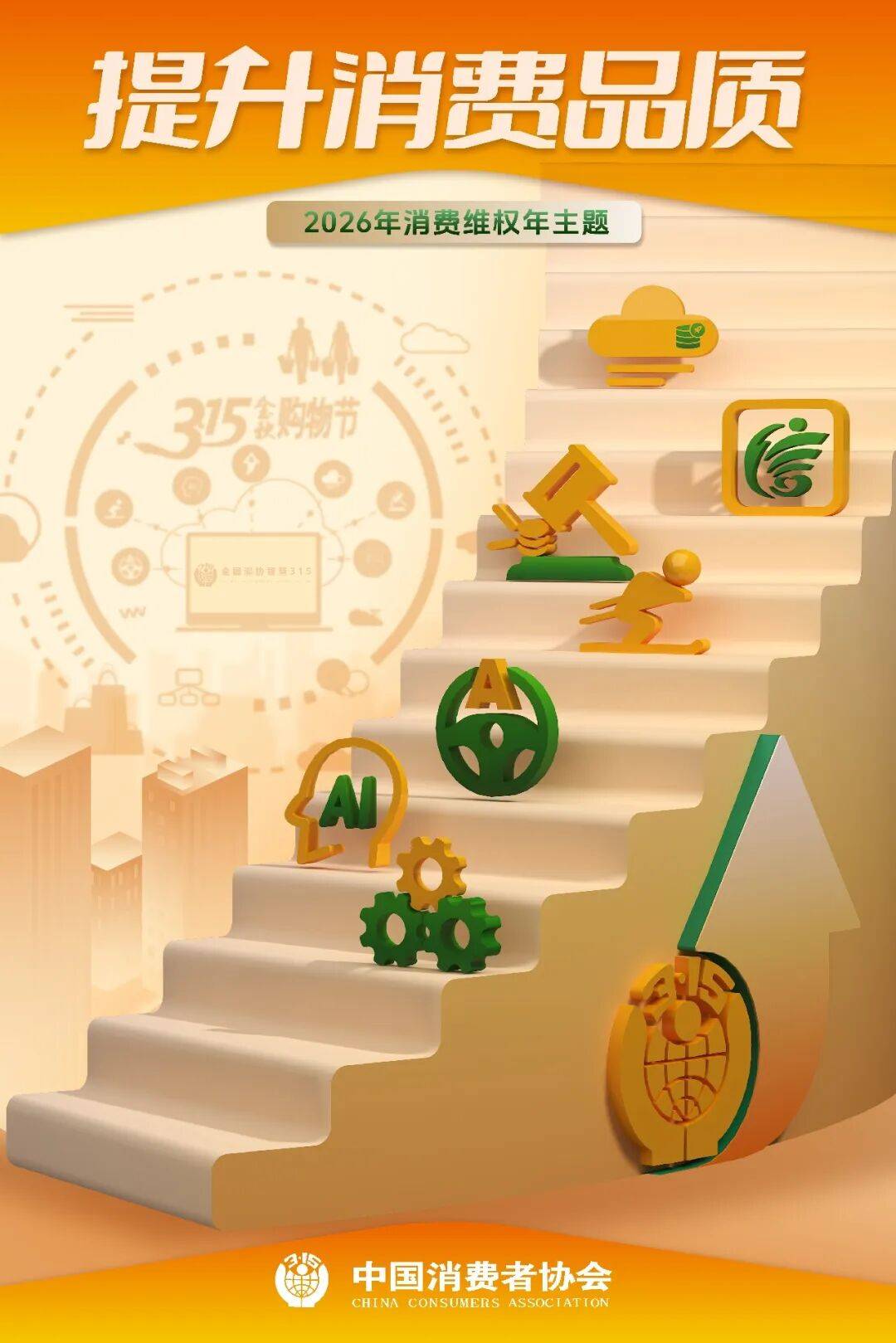
【1314】 2026年消费维权年主题公布!推出十项重点工作!
Sou Hu Cai Jing· 2026-02-02 12:14
Core Viewpoint - The theme for the 2026 National Consumer Rights Protection Year is "Enhancing Consumption Quality," aimed at strengthening consumer rights protection and meeting the growing demand for high-quality living among the populace, thereby contributing to high-quality economic and social development [1]. Group 1: Theme Significance - The theme emphasizes the responsibility of consumer associations to enhance consumption quality by improving supply quality, accelerating consumer rights protection, and optimizing the consumption environment, which will inject lasting momentum into high-quality economic and social development [4]. - The focus is on improving product and service quality to establish a solid foundation for consumption quality, aligning with the central economic work meeting's emphasis on domestic demand and consumption upgrades [4]. Group 2: Enhancing Consumer Rights Protection - The consumer associations are tasked with modernizing consumer rights protection to address new challenges arising from technological advancements and changing consumer needs, ensuring robust support for enhancing consumption quality [5]. - There is a call for the establishment of a comprehensive consumer rights protection network, leveraging digital technology to facilitate efficient dispute resolution and bolster consumer confidence [5]. Group 3: Optimizing Consumption Environment - The consumer associations are encouraged to foster a multi-faceted governance structure for consumer rights protection, focusing on legal safeguards, government oversight, industry self-discipline, corporate responsibility, social supervision, and consumer participation [6]. - Efforts will be made to address issues arising from new business models and technologies, ensuring a fair and orderly market environment through effective legislation and standard-setting [6]. Group 4: Key Work Arrangements - The consumer associations plan to promote the theme of consumer rights protection through various activities, including the "3·15" theme event, to raise awareness and foster social consensus [11]. - Initiatives will include enhancing the capabilities of consumer associations, improving complaint handling processes, and expanding the reach of consumer education programs to empower consumers [13].
壹快评|“李鬼”网站长期猖獗,百度搜索何以成了骗子的“帮手”?
Di Yi Cai Jing· 2026-01-31 15:07
Core Viewpoint - Companies must balance commercial interests with social responsibilities, especially in the context of online safety and fraud prevention [1][3][4] Group 1: Incident Overview - An elderly resident in Shanghai lost over 1000 yuan due to a phishing website disguised as the official site for a prepaid card [1] - Similar scams have been reported since March of the previous year, indicating a persistent issue [1] - The search engine's auction-based ranking system allows fraudulent sites to appear prominently in search results, raising concerns about the platform's content review processes [1][2] Group 2: Historical Context - The incident recalls the "Wei Zexi incident" from 2016, where a student was misled by a top-ranked hospital in search results, leading to tragic consequences [2] - Despite regulatory improvements following the incident, similar issues continue to arise, suggesting ongoing vulnerabilities in content moderation [2] Group 3: Platform Responsibility - Platforms must take responsibility for the authenticity and legality of promoted content, as they profit from advertising [3] - The search engine's role has evolved beyond a mere commercial tool to a critical information infrastructure, necessitating a commitment to social responsibility [3] Group 4: Regulatory Recommendations - Strengthening regulatory oversight is essential to combat fraudulent websites, with calls for a consistent monitoring mechanism for search engines [4] - There is a need for a cross-departmental information-sharing system to enhance the collective response to online fraud [4]

病人离院后的99%时间,华为擎云如何“接管”?
经济观察报· 2026-01-30 10:43
Core Viewpoint - Huawei Qingtian transforms "proactive health" into an inclusive service, exemplifying "technology for good," as smart hardware evolves into a partner for extending human health cycles [1][29]. Group 1: Healthcare Challenges and Solutions - A case study of a coronary heart disease patient highlights the critical issue of patients being disconnected from professional monitoring after hospital discharge, leading to potential health risks [3][6]. - The collaboration between Huawei Qingtian and Wenzhou People's Hospital addresses the structural pain point in healthcare by extending service boundaries beyond hospitals, utilizing digital technology to convert out-of-hospital health data into usable medical resources [7][16]. - The introduction of Huawei Qingtian's smart wearable devices into the post-discharge management process allows for continuous monitoring of patients' vital signs, significantly improving the interaction between doctors and patients [13][14]. Group 2: Technological Advancements - Huawei Qingtian's TruSeen™ monitoring technology has evolved to provide high-precision continuous monitoring of vital signs, ensuring that data accuracy is maintained for effective medical interventions [11][12]. - The system enables a closed-loop monitoring process where abnormal data can prompt proactive medical responses, shifting the traditional reactive healthcare model to a more proactive approach [13][25]. - The "micro-health check" feature of Huawei Qingtian devices allows patients to collect health data efficiently, filling the data gap that exists outside of hospital settings [15][25]. Group 3: New Quality Productivity in Healthcare - The concept of "new quality productivity" in healthcare emphasizes the activation and configuration of data rather than merely increasing physical resources like hospital beds [18][19]. - Huawei Qingtian's approach to data security ensures that sensitive patient information is protected while enabling effective data utilization for healthcare improvements [20][23]. - The "platform + ecosystem" model proposed by Huawei Qingtian lowers the barriers for medical innovation, facilitating the development of specialized algorithms and applications for various health conditions [24][27]. Group 4: Long-term Impact on Healthcare - The proactive health model promoted by Huawei Qingtian is shifting the healthcare focus from "treating diseases" to "preventing diseases," which is crucial in an aging society [28][29]. - By enabling early warnings for critical health risks through continuous monitoring, Huawei Qingtian's technology aims to reduce the burden on healthcare systems and families, ultimately leading to more efficient chronic disease management [29][30].
“善行边疆”汇聚百家慈善力量 科技向善绘就兴边富民新图景
Chang Jiang Shang Bao· 2026-01-30 00:56
Core Viewpoint - The "善行边疆" initiative aims to leverage technology and charity to enhance the welfare of border regions in Heilongjiang, with over 100 charitable organizations participating and 21 projects signed to cover various local needs [1][2][3] Group 1: Charitable Initiatives - The initiative focuses on demand-oriented and precise matching of charitable resources to local needs, with a comprehensive survey conducted to identify charity projects and development needs in border areas [2] - A framework agreement for cooperation in charity was signed between Guangdong and Heilongjiang, facilitating the introduction of innovative charity concepts and projects to the border regions [3] - Various charitable projects have been launched, including free cataract surgeries and support for children with autism, addressing specific local needs [3][4] Group 2: Technological Integration - Technology plays a central role in the initiative, with digital tools and AI applications enhancing the efficiency and precision of charitable services [5][6] - Training sessions for local charitable organizations on internet fundraising capabilities are being conducted, along with the provision of digital tools to improve management and project execution [5] - AI health assistants are being deployed to improve healthcare access in remote areas, addressing challenges in medical resource distribution [6] Group 3: Broader Impact - The initiative not only focuses on immediate welfare but also extends to industrial and educational development, promoting agricultural upgrades and providing educational resources to children [4] - The integration of technology and charity is seen as a new model for sustainable development in border regions, aiming to create a lasting impact on local communities [7]