中小型豪华邮轮体验

Search documents
首个品牌体验中心在京落成,维京游轮持续加码中国市场
Bei Jing Shang Bao· 2026-02-24 17:03
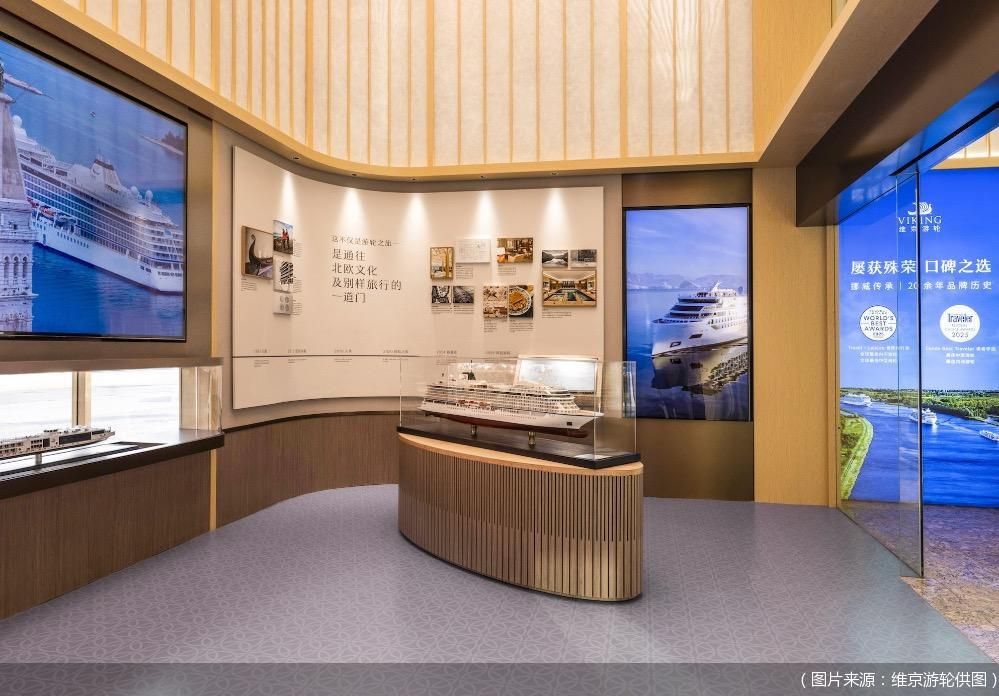
Core Insights - Viking Cruises is expanding its presence in the Chinese market by opening its first brand experience center in Beijing, targeting consumers in North China for immersive experiences in luxury cruise travel [1][4][7] - The company has served nearly 100,000 Chinese consumers over the past decade, with an overall repurchase rate exceeding 15%, primarily from the educated senior demographic aged 55 and above [1][11][12] - By 2026, Viking Cruises plans to invest in five ships specifically designed for the Chinese market, including river and ocean vessels, and aims to launch new products with Chinese services [1][14][15] Market Strategy - The new brand experience center in Beijing is strategically located to enhance direct consumer engagement and facilitate face-to-face interactions, addressing the preferences of the target demographic [4][7] - Viking Cruises aims to host approximately 400 offline sharing and promotional events at the experience center this year, enhancing brand visibility and consumer interaction [7][8] - The company is focusing on a dual product strategy to attract both first-time travelers and repeat customers by maintaining classic routes while diversifying product offerings [14][15] Consumer Insights - The target demographic of Viking Cruises consists of educated seniors who value quality experiences and are willing to pay for high-value offerings, showing a growing trend in onboard secondary spending [12][14] - The company has observed a shift in consumer perception towards cruise travel, particularly in major cities like Beijing and Shanghai, where awareness and familiarity with Viking's brand have increased [9][11] Future Developments - Viking Cruises plans to introduce a new Nordic cruise line with Chinese services and expand its river cruise offerings across more European destinations [12][14][15] - The company is also exploring inbound tourism routes to showcase Chinese culture to international travelers, aiming for a dual-directional business model [15]