
亚伯拉罕·林肯号航空母舰打击群

Search documents
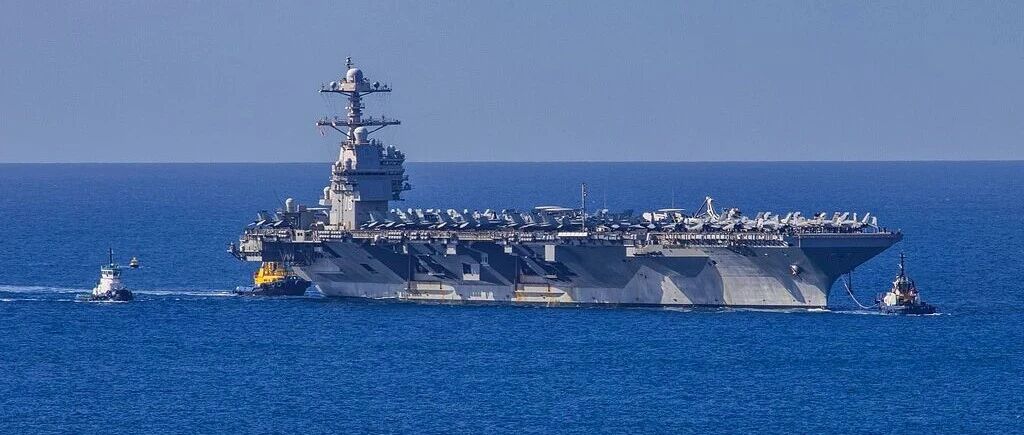
特朗普:将增派第二艘航母,施压伊朗
财联社· 2026-02-13 23:19
Core Viewpoint - The article discusses the deployment of a second U.S. aircraft carrier strike group to the Middle East as a strategy to pressure Iran into negotiations, highlighting the ongoing tensions and military presence in the region [1][2][3]. Group 1: Military Deployment - The U.S. military is sending the "Gerald R. Ford" aircraft carrier strike group from the Caribbean to the Middle East to enhance its military presence around Iran [2]. - The "Abraham Lincoln" aircraft carrier strike group had already entered the Middle East last month, indicating a significant military buildup in the region [2]. - The deployment of the "Ford" carrier is part of a broader strategy, with its current mission nearing the end of an 8-month deployment cycle, which typically lasts 6 to 8 months [5]. Group 2: Diplomatic Context - President Trump has indicated that if negotiations with Iran do not yield results, further military action may be necessary, suggesting a dual approach of diplomacy backed by military readiness [3][7]. - Recent statements from Trump suggest optimism about the potential for successful negotiations with Iran, while also warning of severe consequences if talks fail [8]. - The article notes that the U.S. defense strategy appears to conflict with the deployment, as it has been shifting focus towards the Western Hemisphere rather than the Middle East [6]. Group 3: Regional Implications - The deployment has raised concerns among Gulf Arab states, warning that any military action could lead to renewed regional conflict, particularly amidst the ongoing turmoil from the Israel-Hamas war [6]. - Iran has been communicating through intermediaries, indicating a willingness to engage in negotiations, which adds complexity to the military posture [6].

特朗普被曝“正考虑对伊朗发动新的重大打击”:包括空袭伊朗领导人和安全官员,袭击伊核设施和政府机构!伊外长:手指已扣在扳机上……
Mei Ri Jing Ji Xin Wen· 2026-01-29 05:28
Group 1 - The core point of the news is that President Trump is considering significant military action against Iran, including airstrikes on Iranian leaders and nuclear facilities, amid escalating tensions in the region [1][7]. - The U.S. military has been deploying defense systems, including the "Patriot" system and potentially the "THAAD" missile defense system, to protect American forces in the Middle East from Iranian retaliation [1]. - Iran's leadership has responded aggressively, stating that any military action from the U.S. will be viewed as the start of a war, with immediate and unprecedented retaliation aimed at Tel Aviv and its supporters [3][5]. Group 2 - Iranian officials, including Foreign Minister Zarif, have indicated that Iran's armed forces are on high alert and ready to respond decisively to any aggression against its territory [5][6]. - Iran's Deputy Foreign Minister has emphasized the country's commitment to self-defense and has denied any ongoing negotiations with the U.S., although there have been indirect communications [6]. - The U.S. has communicated its military readiness to Israel, indicating that preparations for potential action against Iran could be completed within two weeks [7].
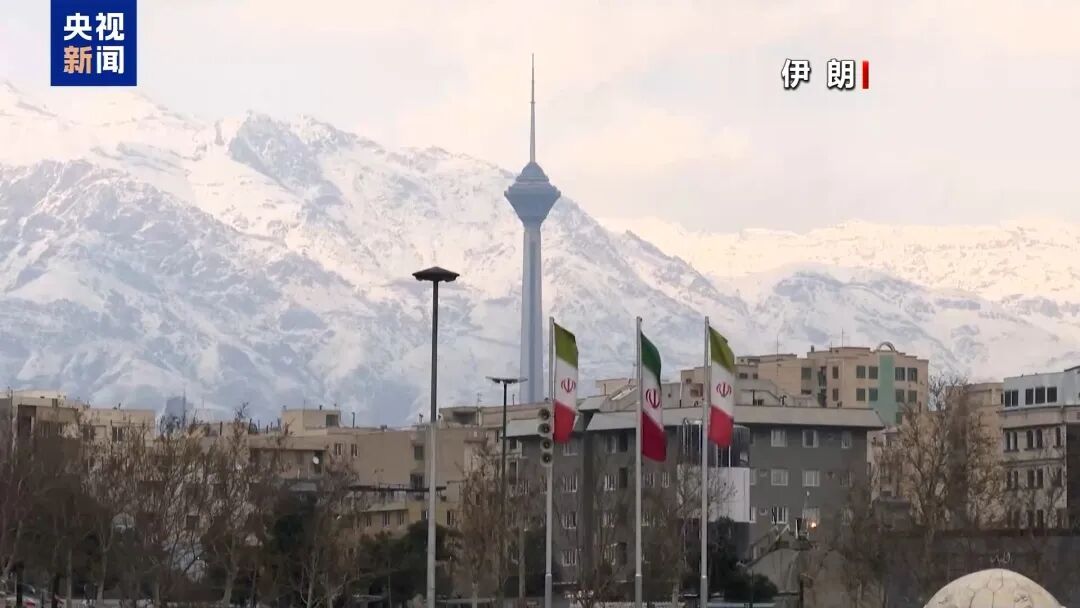
爆料:美国通报对伊行动时间表
中国能源报· 2026-01-28 00:35
Group 1 - The core viewpoint of the article indicates that the U.S. has communicated to Israel about its preparations for potential military actions against Iran, with readiness expected to be completed within two weeks and possible action windows in the coming months [1] - The U.S. emphasized that military action could occur before all preparations are finalized if President Trump gives the order, although this option is not currently seen as urgent [1][2] Group 2 - The U.S. Central Command announced that the Ninth Air Force will conduct a multi-day air readiness exercise in the Middle East to demonstrate rapid deployment, dispersed deployment, and sustained operational capabilities [3] - The exercise aims to enhance the capability for dispersed deployment of military equipment and personnel, strengthen regional partnerships, and prepare for flexible response actions within the Central Command area of responsibility [3] - During the exercise, U.S. forces will deploy small teams to multiple emergency locations to validate rapid deployment, mission execution, and evacuation processes [3][4]
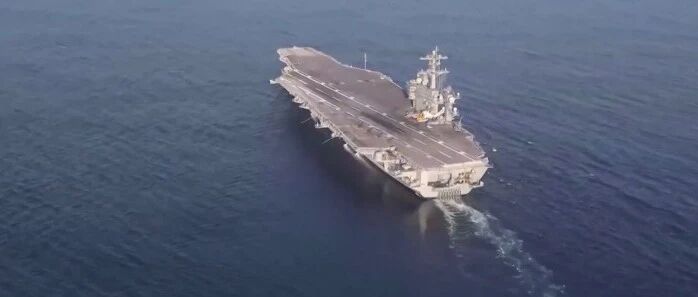
专家分析美国加大军力部署施压伊朗:核心目的是强化战略威慑
Nan Fang Du Shi Bao· 2026-01-27 03:40
Group 1 - The core viewpoint of the articles indicates that the U.S. is reinforcing its military presence in the Middle East, particularly through the deployment of the USS Abraham Lincoln aircraft carrier strike group, to enhance strategic deterrence against Iran [1][2] - The deployment is characterized as a strategic move to send a clear military pressure signal to Iran, aiming to curb its nuclear program and support for proxy networks, while also maintaining limited military intervention options [2][3] - The current military posture between the U.S. and Iran is described as a "highly tense but controlled edge confrontation," rather than an imminent direct war [2][3] Group 2 - Iran has taken countermeasures, including the deployment of coastal anti-ship missile systems, while the U.S. has simultaneously strengthened its aerial forces in the region [3] - Any direct military strike by the U.S. on Iranian territory, even if limited and precise, carries significant spillover risks, potentially leading to missile attacks on U.S. military bases in surrounding countries and direct strikes on Israel [3] - Both the U.S. and Iran are considering the potential consequences of their actions, with the U.S. leaning towards a limited military posture for deterrence and political gain, while Iran is showcasing a hardline stance to compel the U.S. to moderate its strategic deterrence [3]