交流伺服系统

Search documents
埃斯顿开启招股:拟募资16亿港元,3月9日港股上市
3 6 Ke· 2026-02-27 09:11
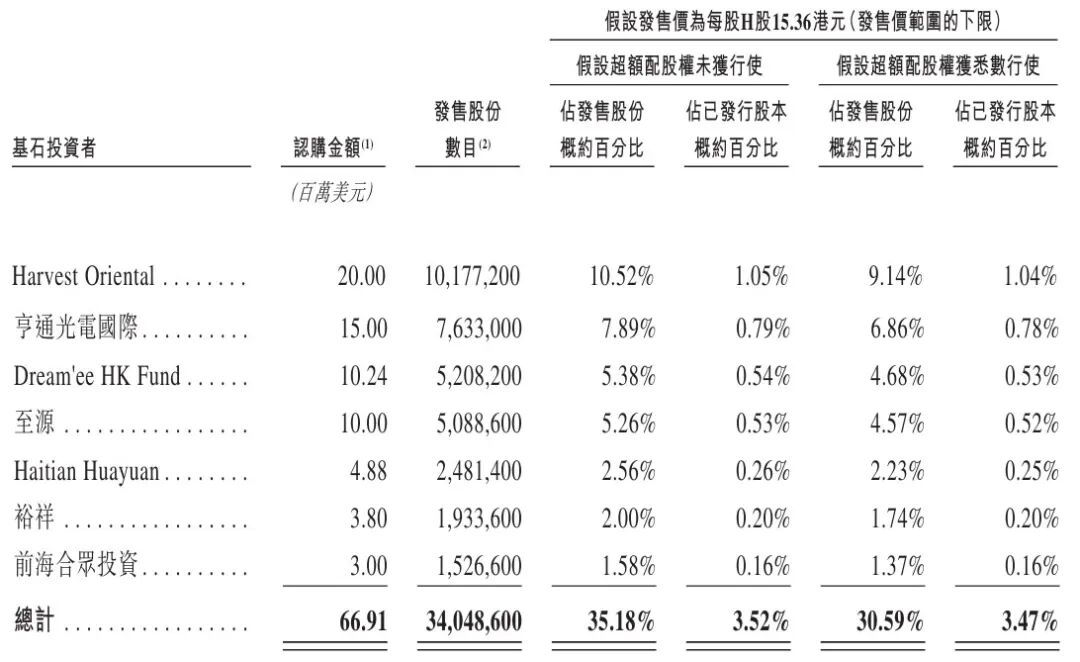
Core Viewpoint - Nanjing Estun Automation Co., Ltd. (referred to as "Estun") has initiated its IPO process, aiming to list on the Hong Kong Stock Exchange on March 9, 2026, with a fundraising target of up to HKD 1.645 billion [1]. Group 1: IPO Details - Estun is offering shares in a price range of HKD 15.36 to HKD 17, with a total of 96.78 million shares available for global sale [1]. - The cornerstone investors have collectively subscribed for USD 66.91 million, with significant contributions from Harvest Oriental (USD 20 million) and Hengtong Optic-Electric International (USD 15 million) [2]. Group 2: Fund Utilization - Approximately 25% of the funds raised will be used to expand global production capacity, another 25% for strategic alliances and acquisitions, 20% for R&D projects, 10% for enhancing global service capabilities, and the remaining 10% for working capital and general corporate purposes [3]. Group 3: Financial Performance - Estun's revenue for 2022, 2023, and 2024 was CNY 3.881 billion, CNY 4.652 billion, and CNY 4.008 billion, respectively, with net profits of CNY 1.836 billion, CNY 1.336 billion, and a projected loss of CNY 817.685 million for 2024 [8][9]. - The company expects a net profit of CNY 35 million to CNY 50 million for 2025, a significant recovery from a net loss of CNY 810.444 million in the previous year [10]. Group 4: Business Overview - Estun focuses on three core business areas: industrial automation products, robotics and intelligent manufacturing systems, and industrial digital products, providing comprehensive solutions across various sectors [6]. - The company has developed a complete ecosystem for intelligent manufacturing, with a product range that includes high-precision multi-axis motion controllers and various industrial robots [6][8]. Group 5: Shareholding Structure - The controlling shareholders, including the Wu family, hold approximately 42% of the voting rights, with Wu Bo directly owning 12.74% of the shares [12][17].


新春开工以来,南京机器人企业产线忙不停
Nan Jing Ri Bao· 2026-02-27 02:42
Group 1: Industry Overview - The robot manufacturing industry in Nanjing is experiencing a surge in production and orders, aiming for a strong start in the first quarter of 2026 [1][2] - Nanjing's robots are being deployed across various global industries, showcasing the strength of "Nanjing Intelligent Manufacturing" [2] Group 2: Tianchuang Robotics - Tianchuang Robotics has a total order amount of 200 million yuan, with 68 production lines operating at full capacity [3] - The company aims to deliver over 35 million yuan in total orders this year, representing a year-on-year growth of over 30% [4] - Tianchuang Robotics delivered 326 major projects in 2025, with over 1,000 robots actively working in various applications [4] Group 3: Jicui Intelligent Manufacturing - Jicui Intelligent Manufacturing is targeting sales of over 4,500 robots this year, with a sales goal of 150 million yuan [6] - The company experienced a twofold increase in overseas sales in 2025, with products sold in 38 countries and regions [6] - Jicui is constructing a new industrial base to enhance production capacity, aiming to reduce delivery cycles to 30 days and increase production efficiency by 50% [6] Group 4: Estun Automation - Estun Automation has resumed full production and is focusing on delivering heavy-load industrial robots, with a market share of 10.6% in China [7][8] - The company is expected to maintain a 25% year-on-year growth in robot shipments for 2025 [7] - Estun aims to deepen its global strategy and expand its brand influence, with plans for overseas listing [8]

埃斯顿通过上市聆讯:预计2025年扣非后净利600万到800万 吴波家族控制42%股权
Xin Lang Cai Jing· 2026-02-23 14:22
Core Viewpoint - Nanjing Estun Automation Co., Ltd. is preparing for an IPO on the Hong Kong Stock Exchange after already being listed on the A-share market, with a current market capitalization of 21.2 billion RMB and an expected net profit of 6 to 8 million RMB after deducting non-recurring items for the upcoming year [2][12]. Group 1: Company Overview - Estun was established in 1993 and focuses on autonomous motion control and robotics technology, creating a complete industrial ecosystem for smart manufacturing [2][23]. - The company has developed three core business areas: industrial automation products, robotics and intelligent manufacturing systems, and industrial digitalization products, providing comprehensive solutions globally [4][25]. Group 2: Product and Market Presence - Estun offers a wide range of products covering information, control, drive, and execution layers, including high-precision multi-axis motion controllers and various automation systems [4][25]. - The company has 87 models of industrial robots that cover loads from 3 to 700 kg, serving industries such as automotive, photovoltaics, lithium batteries, and aerospace [6][27]. Group 3: Financial Performance - Estun's revenue for 2022, 2023, and 2024 was 3.881 billion RMB, 4.652 billion RMB, and 4 billion RMB respectively, with corresponding gross profits of 1.276 billion RMB, 1.455 billion RMB, and 1.134 billion RMB [8][29]. - The company reported a significant net loss of 817.685 million RMB in 2024, attributed to a 360 million RMB impairment of intangible assets and goodwill [8][29]. - For the first three quarters of 2025, Estun achieved a revenue of 3.8 billion RMB, a 12.8% increase from the previous year, with a net profit of 29.7 million RMB [10][31]. Group 4: Future Projections - Estun anticipates a net profit of 35 to 50 million RMB for 2025, a substantial recovery from the previous year's loss of 810 million RMB [12][33]. - The expected net profit after excluding non-recurring items is projected to be between 6 to 8 million RMB, compared to a loss of 840 million RMB in the prior year [12][33]. Group 5: Shareholding Structure - The controlling shareholders of Estun include Wu Bo and his family, holding approximately 42% of the voting rights, with Wu Bo directly owning 12.74% of the shares [13][40]. - As of September 30, 2025, the company had a diverse shareholder base, including institutional investors and employee stock ownership plans [19][42].