
工业机器人

Search documents
珞石机器人获赴港上市备案通知书:距离完成「从A转H」流程仅一年时间
IPO早知道· 2026-03-31 05:25
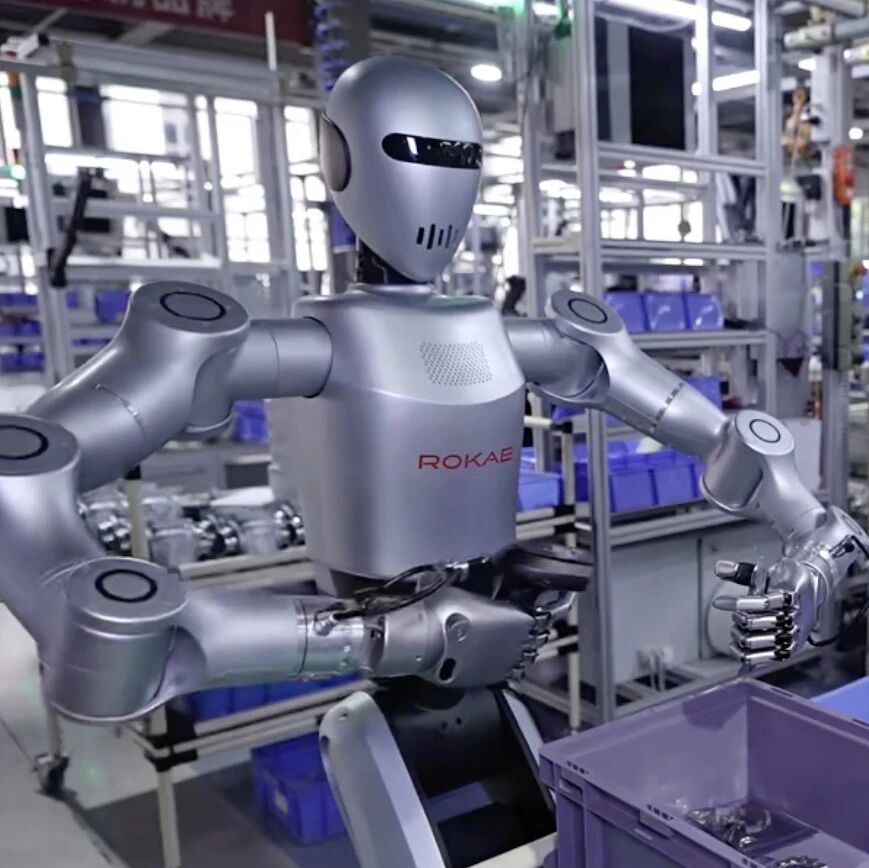
Core Viewpoint - Luoshi Robotics has successfully transitioned from pursuing an A-share IPO to preparing for a Hong Kong listing within a year, indicating rapid growth and adaptability in the market [3]. Group 1: Company Overview - Established in 2014, Luoshi Robotics has developed a comprehensive ecosystem of robotic applications, including industrial robots, collaborative robots, and embodied intelligent robots [3]. - The company offers 10 series of 27 industrial robot products with payload capacities ranging from 4 kg to 220 kg and working radii from 475 mm to 2,705 mm, as well as 3 series of 15 collaborative robot products with payload capacities from 3 kg to 45 kg and working radii from 705 mm to 2,246 mm [3]. - Luoshi Robotics is the only company in China capable of mass-producing both industrial and collaborative robots, ranking third among domestic manufacturers and seventh globally in multi-joint robot sales by 2024 [4]. Group 2: Financial Performance - Revenue for Luoshi Robotics is projected to be 153 million yuan in 2022, 267 million yuan in 2023, and 325 million yuan in 2024, with a significant increase in the first half of 2025 to 176 million yuan, representing over 50% growth compared to the same period in 2024 [4]. - The gross profit margins for Luoshi Robotics from 2022 to 2025 are 7.0%, 11.4%, 21.9%, and 22.3% respectively, indicating a positive trend in profitability [5]. - The company has completed a total of 10 financing rounds, with a valuation of 5.295 billion yuan following its last round before the IPO [5]. Group 3: Strategic Partnerships and Market Reach - Luoshi Robotics has provided robotic solutions to over 1,000 clients across approximately 40 countries and regions, including leading companies in various sectors such as consumer electronics and automotive manufacturing [4]. - The company has entered into an agreement with Zhiyuan Robotics to supply humanoid robotic arms for integration into their humanoid robot products, showcasing its commitment to innovation and collaboration [4].

100%分红!超5400亿巨头,突传大动作!
券商中国· 2026-03-30 12:56
Core Viewpoint - Midea Group has announced a significant 100% dividend payout for 2025, returning nearly all of its annual profit to shareholders, which reflects a strategic shift beyond traditional home appliances into AI-driven innovations across various sectors [1][2]. Financial Performance - Midea Group reported total revenue of 458.5 billion yuan and a net profit attributable to shareholders of 43.95 billion yuan for 2025 [1]. - The total dividend for 2025 amounts to 32.4 billion yuan, with an additional 11.6 billion yuan allocated for share buybacks, bringing the total return to shareholders to approximately 44 billion yuan, nearly equivalent to the net profit [2]. Market Position - Midea is recognized as the world's leading brand in smart home appliance sales for 2025, with the highest sales in both online and offline channels in China [3]. - The company has expanded its global reach, increasing the number of countries covered by its subsidiaries from 27 to 50, and holds the top market share in 32 product categories on major platforms like Amazon in North America and Europe [3]. Cash Flow and Investment - Midea's operating cash flow for 2025 reached 53.3 billion yuan, indicating strong business performance and providing the confidence to distribute all profits as dividends [4]. - The company invested 17.8 billion yuan in R&D in 2025, a 9.6% increase year-on-year, with plans to invest over 60 billion yuan in cutting-edge research over the next three years [5]. Diversification and Growth - Midea is diversifying beyond home appliances, achieving significant market shares in various sectors, including motors for air conditioning and elevators, and has seen over 50% growth in its automotive components division [6]. - The company’s robotics division, KUKA, ranks among the top four global industrial robot manufacturers, with a 9.6% market share in domestic sales and a 47.4% share in heavy-load robots [7]. AI Integration - Midea has established a 400-member AI team focused on smart home, manufacturing, and industry empowerment, with over 13,000 AI agents deployed across various operational areas [8]. - The company’s AI capabilities are enhancing efficiency in manufacturing and logistics, exemplified by the certification of its washing machine factory as the world's first smart factory [9]. Future Outlook - Midea's AI-driven initiatives are expected to redefine its operational efficiency and market valuation, prompting discussions on whether the company should be reassessed in the context of the AI era [10].


机械行业月报:顺周期机械复苏持续,高油价有望催化新能源行业机遇
Zhongyuan Securities· 2026-03-27 10:24
Investment Rating - The report maintains an "Outperform" rating for the mechanical industry [1] Core Views - The cyclical recovery in the mechanical sector continues, with high oil prices expected to catalyze opportunities in the new energy sector [1][5] - In March, the CITIC mechanical sector fell by 13.54%, underperforming the CSI 300 index by 8.59 percentage points, ranking 25th among 30 CITIC primary industries [4][10] - The report suggests a cautious approach to investing in the mechanical sector, focusing on defensive stocks and sectors with stable earnings and high dividend yields [5] Summary by Sections 1. Mechanical Sector Market Performance - As of March 26, 2026, the CITIC mechanical sector experienced a decline of 13.54%, with all sub-industries showing a downward trend, except for nuclear power and railway transportation equipment, which fell by less than 10% [4][10] - The median decline for 635 stocks in the CITIC mechanical sector was -14.17%, with 58 stocks rising and 576 falling [14] 2. Engineering Machinery - In January-February 2026, excavator sales increased by 13.1% year-on-year, indicating a sustained recovery in the industry [21][32] - The report highlights the importance of equipment renewal cycles and increasing export competitiveness for leading companies in the engineering machinery sector [39] 3. Robotics - The industrial robot sector continues to recover, with production increasing by 31.1% year-on-year in January-February 2026 [40][43] - The report emphasizes the significance of humanoid robots as a key application of artificial intelligence, with several domestic companies entering the IPO stage [48] 4. Shipbuilding - In January-February 2026, new ship orders and prices showed signs of recovery, with China maintaining a leading position in global shipbuilding metrics [49][51] - The report notes that the global shipbuilding market remains competitive, with China capturing a significant share of new orders [51]
机械行业月报:顺周期机械复苏持续,高油价有望催化新能源行业机遇-20260327
Zhongyuan Securities· 2026-03-27 08:48
Investment Rating - The report maintains an "Outperform" rating for the mechanical industry [1] Core Viewpoints - The cyclical recovery in the mechanical sector continues, with high oil prices expected to catalyze opportunities in the new energy sector [1][5] - In March, the CITIC mechanical sector fell by 13.54%, underperforming the CSI 300 index by 8.59 percentage points, ranking 25th among 30 CITIC primary industries [4][10] - The report suggests a defensive approach in the short term, focusing on stable recovery and high dividend yields from leading cyclical mechanical companies [5] Summary by Sections 1. Mechanical Sector Market Performance - As of March 26, 2026, the CITIC mechanical sector experienced a decline of 13.54%, with all sub-industries showing a downward trend, except for nuclear power and railway transportation equipment, which fell by less than 10% [4][10] - The report highlights that the mechanical sector's valuation is at a high level, with a price-to-earnings ratio of 39.2, placing it in the 76.5th percentile of the past decade [16][19] 2. Engineering Machinery - In January-February 2026, excavator sales increased by 13.1% year-on-year, indicating a sustained recovery in the industry [21][32] - The report emphasizes the importance of equipment renewal cycles and the increasing competitiveness of engineering machinery exports, with major companies expanding their global presence [39] 3. Robotics - The industrial robotics sector continues to recover, with production increasing by 31.1% year-on-year in January-February 2026 [40][43] - The report notes that humanoid robots are entering a phase of mass production, with significant advancements in technology and market potential [48] 4. Shipbuilding - In January-February 2026, new ship orders and prices are showing signs of recovery, with China maintaining a leading position in global shipbuilding metrics [49][51] - The report indicates that the shipbuilding industry is experiencing a resurgence, with a notable increase in new orders compared to previous years [49]





华勤技术(603296):2025年业绩位于预告上限,四大板块营收增速均超50%
Shenwan Hongyuan Securities· 2026-03-23 14:45
Investment Rating - The investment rating for the company is "Buy" (maintained) [2] Core Insights - The company's 2025 revenue reached 171.4 billion yuan, a year-on-year increase of 56%, aligning with the upper limit of the forecast range [8] - The net profit attributable to the parent company for 2025 was 4.05 billion yuan, reflecting a year-on-year growth of 38.55%, also at the upper limit of the forecast [8] - All four major business segments achieved revenue growth exceeding 50% in 2025, with mobile terminal business revenue at 80.2 billion yuan (+57%), computing and data business at 75.5 billion yuan (+52%), AIoT business at 7.88 billion yuan (+69%), and innovative business at 3.48 billion yuan (+121%) [8] - The company has established a core supplier position among major CSP clients with a full-stack product portfolio in the data center business [8] - The company is focusing on building a second growth curve in the robotics sector, leveraging its experience in consumer electronics [8] - The company maintains a global layout with significant capital expenditure planned for manufacturing equipment, estimated at around 3 billion yuan annually for the next three years [8] - The profit forecast for 2026 and 2027 is maintained at 5.1 billion yuan and 6 billion yuan respectively, with a new revenue and profit forecast for 2028 set at 274.5 billion yuan and 6.8 billion yuan [8] Financial Data and Profit Forecast - Total revenue projections are as follows: 2024: 109.88 billion yuan, 2025: 171.44 billion yuan, 2026E: 195.4 billion yuan, 2027E: 236.04 billion yuan, 2028E: 274.49 billion yuan [7] - Net profit attributable to the parent company is projected to be: 2024: 2.93 billion yuan, 2025: 4.05 billion yuan, 2026E: 5.07 billion yuan, 2027E: 5.95 billion yuan, 2028E: 6.83 billion yuan [9] - The company’s ROE is expected to increase from 13.0% in 2024 to 17.5% by 2027 [7]

信测标准(300938):投资存算加速芯片厂商,探索新兴成长业务
Changjiang Securities· 2026-03-23 09:16
Investment Rating - The investment rating for the company is "Buy" and is maintained [7]. Core Insights - The company has recently made an external investment, acquiring a 30% stake in Shanghai Fengxing Zhiyuan Technology Co., Ltd., which focuses on edge computing storage and acceleration modules, utilizing the ultra-converged chip STAR2000 for integrated storage, computing, and transmission with very low power consumption [2][6]. - The edge computing sector is becoming a core component of new infrastructure, driven by national strategies such as "East Data West Computing," with significant potential for growth in applications across various industries including energy, transportation, and smart cities [10]. - The company plans to establish a joint venture in robotics in 2025, which is expected to create a new growth curve by enhancing efficiency and reducing labor costs in the inspection services industry [10]. - The company's main business has shown steady revenue and profit growth, with a notable increase in revenue growth rate in Q3 2025, achieving a year-on-year revenue increase of 22.2% [10]. - The operating cash flow has improved year-on-year, with Q3 2025 showing a net cash flow of 0.67 billion, a 21% increase compared to the previous year [10]. - Revenue projections for 2025-2027 are estimated at 8.08 billion, 9.29 billion, and 10.66 billion respectively, with corresponding net profits of 1.96 billion, 2.34 billion, and 2.78 billion, reflecting growth rates of 11.4%, 15.0%, and 14.7% [10]. Summary by Sections Recent Developments - The company has invested in Shanghai Fengxing Zhiyuan Technology Co., Ltd., acquiring a 30% stake, focusing on edge computing solutions [2][6]. Business Performance - In Q1-Q3 2025, the company achieved a revenue of 5.97 billion, with a year-on-year growth of 8.3% and a net profit of 1.55 billion, also up 8.3% [10]. - Revenue growth rates for Q1, Q2, and Q3 were -8.0%, +10.5%, and +22.2% respectively, indicating a significant recovery in Q3 [10]. Financial Projections - Expected revenues for 2025-2027 are 8.08 billion, 9.29 billion, and 10.66 billion, with net profits projected at 1.96 billion, 2.34 billion, and 2.78 billion [10].

美国特别竞争研究项目:《中美技术竞争中谁领先、谁落后及未来走向》
欧米伽未来研究所2025· 2026-03-19 15:40
Core Viewpoint - The SCSP report highlights the competitive landscape between the U.S. and China in key technology sectors, indicating a complex, fluid, and uncertain multi-dimensional competition rather than a clear-cut dominance by either side [2]. Group 1: China's Strengths - China leads in four strategic technology areas: advanced batteries, advanced manufacturing, commercial drones, and 5G infrastructure, with high confidence ratings [4]. - In the battery sector, China's manufacturing capacity reached 1,705 GWh in 2023, compared to the U.S. at 93 GWh, marking an 18-fold difference. China controls 80% of global lithium-ion battery component shipments and holds about 60% of the global electric vehicle battery market [4]. - China accounts for approximately 35% of global manufacturing output, while the U.S. is at about 12%. The number of industrial robots deployed by Chinese companies in 2023 matches the total of all other countries combined [5]. - China has deployed over 4 million 5G base stations, averaging 206 per 100,000 people, compared to the U.S. with about 100,000 base stations or 77 per 100,000 people. By 2024, China is expected to have over 1 billion 5G users, covering 88% of its mobile users [5]. Group 2: U.S. Strengths - The U.S. maintains a lead in artificial intelligence, quantum computing, semiconductors, fusion energy, and internet platforms, relying on foundational research breakthroughs and private sector innovation [6]. - In AI, U.S. private investment reached $67.2 billion in 2023, compared to China's $7.76 billion, a nearly 9-fold difference. Most foundational AI models have originated from U.S. private companies [6]. - The semiconductor sector is rated as "U.S. leading, high confidence," with the CHIPS Act expected to drive over $400 billion in private investment, projecting that the U.S. will hold 28% of global advanced logic chip capacity by 2032 [7]. Group 3: Structural Weaknesses - A recurring structural pattern is observed: U.S. innovation versus Chinese commercialization. The U.S. holds 39% of global biotechnology patents but has seen a shift in the production side, with Chinese companies supplying about 17% of U.S. active pharmaceutical ingredients (APIs) [9]. - In synthetic biology, the U.S. market is valued at $16.3 billion compared to China's $1.05 billion, yet China controls 70% of global fermentation capacity, highlighting a significant production bottleneck for U.S. firms [10]. - DJI dominates the global consumer drone market with over 90% share, raising national security concerns for the U.S. as it lacks comparable domestic alternatives [10]. Group 4: Strategic Recommendations - The report suggests establishing a "Technology Competition Council" to unify strategic direction and coordinate responses across departments, addressing the misalignment between private sector focus and government priorities [11]. - The trajectory of fusion energy illustrates the competitive dynamics, with the U.S. currently leading but facing significant investment from China, which may narrow the gap in the coming years [12].

经济开门红的两个维度和三个后续
2026-03-18 02:31
Summary of Key Points from the Conference Call Industry Overview - The macroeconomic data for January-February 2026 indicates a strong recovery, with Q1 GDP growth expected around 5%, at the upper limit of the annual target of 4.5%-5% [2][3] - Industrial value added increased by 6.3% year-on-year, driven significantly by exports, while high-tech manufacturing grew by 13.3% [1][4] - The new energy vehicle production saw a decline of 13.7%, marking the first drop since 2020, attributed to rising costs and subsidy reductions [1][4] Core Insights and Arguments - The economic indicators show a marked improvement compared to the end of 2025, with exports and retail sales increasing, while fixed asset investment and social retail sales lagged behind [2][3] - The resilience of social retail sales, particularly in goods consumption, is crucial for economic momentum, as service retail grew by 5.6% while total retail sales only increased by 2.8% [3][6] - The real estate market is showing signs of internal recovery, with second-hand housing prices in major cities like Beijing and Shanghai experiencing slight increases [1][4][8] Important but Overlooked Content - The Producer Price Index (PPI) is expected to turn positive by March, influenced by rising oil prices, which may lead to a wage-price spiral if cost pressures are effectively managed [1][4] - Fixed asset investment grew by 1.8% year-on-year, with broad infrastructure investment leading at 9.8%, while real estate investment continued to decline by 11% [7][8] - The automotive manufacturing sector saw a significant drop in investment growth from 12% to 2.6%, reflecting the overall downward trend in the industry [7][8] - The recovery in the second-hand housing market, particularly in first-tier cities, is a critical indicator of potential stabilization in the real estate sector, which could signal a bottoming out of the market if the trend continues [8]
2026年,钱从哪挣?
创业家· 2026-03-17 10:15
Group 1 - The core question for many is where the money will come from in 2026 [2] - The article highlights five key concepts related to business strategies for growth [3] - Many companies are facing significant challenges due to insufficient domestic demand [5][6] Group 2 - Companies are increasing competition due to limited market capacity, leading to a cycle of intense competition [7] - One potential solution for companies is to expand overseas, which has evolved from traditional export methods [8][9] - An example is Miniso, which not only sells products abroad but also relocates its entire value chain, including branding and R&D, overseas [10][11] Group 3 - Leading companies are beginning to explore overseas expansion, which requires integrating complex supply chain systems [14][15] - Tesla's operations in Shanghai illustrate the importance of a robust supply chain network for successful overseas ventures [20][21] - Other industries can also benefit from collaborating with leading companies to expand internationally [22] Group 4 - Companies are leveraging their unique advantages to succeed in overseas markets, such as cost advantages from factories in Yiwu [25][26] - Product advantages are also crucial, as seen with Mech-Mind Robotics, which has developed advanced industrial robots [27][28] - Identifying and utilizing comparative advantages can lead to successful international ventures [24] Group 5 - Building long-term trust in familiar social networks is essential for business success, as demonstrated by the story of Pang Donglai [31][34] - Employees who feel respected and valued are more likely to engage with customers and provide feedback, fostering a cycle of trust [34][36] Group 6 - The article discusses a shift in consumer behavior, where individuals are willing to pay for better experiences, indicating an upgrade in consumption concepts [38][39] - Businesses can create demand by introducing services that consumers may not initially recognize as valuable, such as travel photography for retirees [40][41] - As traditional large-scale business opportunities diminish, a more refined and personalized commercial ecosystem is emerging [43][46]



1—2月经济数据点评:供给韧性延续,需求修复仍待观察
LIANCHU SECURITIES· 2026-03-17 09:03
Production - Industrial production maintained resilience with a year-on-year growth of 6.3% in January-February, and a month-on-month increase of 0.8% in February, significantly above historical seasonal levels[1] - The manufacturing value added grew by 6.6%, outperforming mining (6.1%) and utilities (4.7%), with high-end equipment and electronics manufacturing as key supports[1] - High-tech manufacturing products showed rapid growth, with industrial robots, integrated circuits, and power generation equipment increasing by 31.1%, 12.4%, and 21.6% respectively[1] Investment - Fixed asset investment rose by 1.8% year-on-year in January-February, recovering from negative growth in 2025[2] - Infrastructure investment surged, with narrow and broad infrastructure investments growing by 11.4% and 9.8% respectively, significantly improving from last year[2] - Manufacturing investment increased by 3.1%, a notable improvement from the 0.3% growth in 2025, driven by a 11.5% rise in equipment purchases[2][3] Real Estate - Real estate investment declined by 11.1%, but the drop was 6.1 percentage points less than the full-year decline in 2025, indicating some stabilization[4] - New construction area and completed area fell by 23.1% and 27.9% respectively, reflecting weak new construction intentions[4] - The amount of funds available for real estate decreased by 16.5%, with personal mortgage loans dropping by 41.9%, indicating weak leverage willingness among residents[4] Consumption - Overall retail sales grew by 2.8% year-on-year, slightly below the 3.7% growth in 2025, primarily due to a slowdown in automobile consumption[5] - Restaurant income increased by 4.8%, significantly higher than the previous year, driven by strong demand during the Spring Festival[5] - Essential and policy-related consumption performed relatively well, while some discretionary spending remained weak, particularly in real estate-related sectors[5]