优必选Walker S1机器人

Search documents
烧了540亿,机器人进入“吃鸡游戏”拐点
Xin Lang Cai Jing· 2026-02-21 06:56
Core Insights - The 2026 Spring Festival Gala showcased a strong presence of robots, indicating a shift in the robotics industry towards a survival-of-the-fittest competition, moving from market expansion to a "battle royale" scenario focused on practical applications [1][6][10] Industry Overview - The number of humanoid robot companies in China is projected to increase from over 120 in 2023 to over 320 by 2025, with industry financing exceeding 58 billion yuan [2] - In 2025, the financing amount for robots is expected to reach 38 billion yuan [3] - In January 2026 alone, the financing amount reached 16 billion yuan, indicating a robust investment climate [4] Competitive Landscape - The "Hundred Machines Battle" has transitioned from concept to reality, with notable companies like Yushu Technology and ZhiYuan Robotics leading the charge, while new entrants like UniX AI are rapidly emerging [5] - Major tech firms such as Tencent, Baidu, and JD.com are now investing in the robotics sector, intensifying competition [5] - The Spring Festival Gala served as a platform for companies to gain exposure, with estimates suggesting that each company spent nearly 100 million yuan for a few minutes of airtime [6] Market Dynamics - The global shipment of humanoid robots is expected to reach 18,000 units in 2025, a staggering increase of 508% year-on-year, with Yushu Technology and ZhiYuan Robotics capturing nearly 60% of the market share [7] - The industry is entering a phase of consolidation, with predictions that over 230 companies will significantly reduce in number as competition intensifies [8] Investment Trends - The investment landscape is shifting, with a 31.7% decrease in the number of financing events but a 46.8% increase in average financing amounts, indicating a focus on companies with clear market applications [12] - Companies are increasingly required to demonstrate practical applications of their robots to attract investment [13] Technological Advancements - Companies like UniX AI are innovating with new robot models designed for real-world applications, emphasizing the importance of practical functionality [14] - The cost of humanoid robots currently ranges from 300,000 to 800,000 yuan, posing challenges for widespread adoption [15] - The Chinese robotics industry benefits from a robust supply chain, which is expected to drive down costs significantly in the coming years [16][19] Future Outlook - The integration of advanced manufacturing capabilities and the development of core components are expected to enhance the competitiveness of Chinese robotics firms [17][18] - Predictions suggest that the price of humanoid robots could drop to several thousand yuan within the next few years, facilitating broader market penetration [19] - The industry faces challenges related to data scarcity for training robots, but companies are exploring innovative solutions to overcome these hurdles [20]

“半马”之后,北京科博会又迎机器人赋能千行百业
Zhong Guo Qing Nian Bao· 2025-05-09 08:32
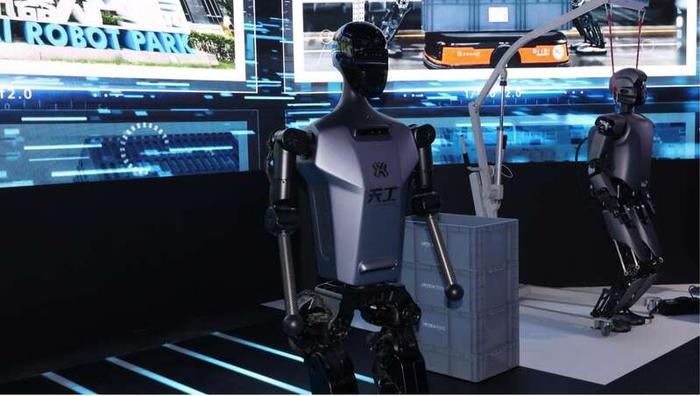
Core Insights - The 27th Beijing International Technology Industry Expo showcased various humanoid robots, highlighting advancements in robotics technology and their applications in different sectors [1][2][3] Group 1: Event Overview - The expo featured an expanded exhibition area of approximately 50,000 square meters, displaying multiple robots performing various tasks, such as running, carrying heavy objects, and providing massages [1] - The event attracted significant attention, with innovative products like the TianGong LITE robot and AI-integrated devices being showcased [1][2] Group 2: Technological Advancements - The TianGong Ultra robot won the first global humanoid robot half marathon with a time of 2 hours, 40 minutes, and 42 seconds, indicating the competitive capabilities of humanoid robots [2] - The Walker S1 robot, developed by UBTECH, can carry 15 kg while walking steadily and is already in mass production in automotive factories [2][5] Group 3: Market Impact - UBTECH has achieved 50% cost reduction in robot production through the localization of servo motors, enhancing production efficiency [5] - The Linker Hand, developed by Lingxin Qiaoshou, holds over 80% of the global market share for high-degree-of-freedom dexterous hands, demonstrating significant durability and cost advantages [6] Group 4: Global Expansion - Beijing Lobeid Technology Co., Ltd. has successfully deployed its intelligent assistive robots in a Belgian nursing home, improving nurse efficiency by 40% [8] - The company emphasizes the importance of building a global ecosystem for successful international expansion, collaborating with partners in Japan and Europe [8]