传统放疗

Search documents
精准放疗为膀胱癌治疗提供“新选项”
Qi Lu Wan Bao· 2025-12-23 16:14
Core Viewpoint - The emergence of precision radiotherapy offers a new treatment option for bladder cancer patients, allowing for effective tumor eradication while preserving bladder function and improving quality of life [1][2]. Group 1: Treatment Options - Traditional treatment for bladder cancer involved either complete bladder removal or conservative treatment with high recurrence risks, presenting a significant dilemma for patients [1]. - Precision radiotherapy acts as an "invisible scalpel," effectively targeting tumors while maintaining normal urinary function, particularly beneficial for elderly or frail patients [1]. Group 2: Precision Radiotherapy Advantages - Precision radiotherapy utilizes advanced imaging technologies such as CT, MRI, and PET-CT for real-time tumor visualization, allowing for precise targeting of the treatment area [2]. - The technique employs advanced methods like IMRT and VMAT to ensure that radiation doses are tailored to the tumor shape, minimizing exposure to surrounding healthy tissues [2]. - Image-guided radiation therapy (IGRT) is implemented to correct for any movement during treatment, ensuring accurate delivery of radiation [2]. Group 3: Impact on Patient Care - The shift from a "one-size-fits-all" approach to a "precision preservation" strategy in bladder cancer treatment reflects advancements in technology and a focus on patient dignity and quality of life [2].
疗效与生活质量的双重提升!质子治疗精准剿灭乳腺癌
Sou Hu Wang· 2025-06-12 06:34
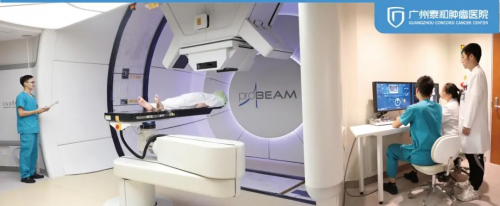
Core Viewpoint - Proton therapy is redefining breast cancer recovery by providing effective treatment without compromising the patient's future health and quality of life [1][5]. Group 1: Patient Experience and Benefits - A young HER2-positive breast cancer patient successfully underwent proton therapy, experiencing minimal side effects and expressing gratitude for the treatment's impact on her quality of life [1]. - Proton therapy has been successfully implemented for multiple breast cancer patients at Guangzhou Taihe Cancer Hospital, emphasizing its role in enhancing both longevity and quality of life [1]. Group 2: Suitable Patient Demographics - Proton therapy is particularly beneficial for left-sided breast cancer patients due to its ability to significantly reduce radiation exposure to the heart and coronary arteries [3]. - Patients requiring irradiation of the internal mammary lymph nodes, those with unique anatomical structures, young patients under 50, and those needing re-irradiation for local recurrence can also benefit from proton therapy [3][4]. Group 3: Advantages of Proton Therapy - The unique physical properties of proton therapy, such as the Bragg Peak, allow for precise targeting of tumors while minimizing damage to surrounding healthy tissues, which is crucial for protecting vital organs [5]. - Proton therapy reduces the risk of secondary cancers by limiting unnecessary radiation exposure to healthy tissues, making it especially important for younger patients with longer life expectancies [5][6]. - The treatment offers better dose distribution, potentially improving local control rates for complex cases [5]. Group 4: Treatment Applications - Proton therapy serves as an adjunctive treatment post-surgery, effectively targeting residual cancer cells while maximizing protection of the heart and lungs [7]. - It can be used as a curative option for patients unable to undergo surgery due to severe comorbidities, either alone or in combination with systemic therapies [8]. - Proton therapy can be integrated with other treatments, such as chemotherapy and targeted therapies, to enhance local toxicity control and optimize treatment outcomes [9].