布拉格峰

Search documents
“布拉格峰”改写抗癌逻辑 质子技术重塑肿瘤治疗新路径
Di Yi Cai Jing· 2025-11-28 09:29
Core Viewpoint - Proton therapy, recognized as a "precision weapon against cancer," is transforming traditional cancer treatment due to its ability to minimize side effects and enhance patient quality of life through the unique physical property known as "Bragg Peak" [1][2]. Summary by Sections Understanding "Bragg Peak" - Traditional photon therapies, such as X-rays, cause collateral damage to healthy tissues as they penetrate the body, leading to significant side effects [1]. - Proton therapy, utilizing the "Bragg Peak," allows for energy release that is concentrated at the tumor site, minimizing damage to surrounding healthy tissues [2]. Clinical Application and Case Study - A case study of a pancreatic cancer patient demonstrated that over 95% of the radiation dose was concentrated in the tumor, with significantly reduced exposure to surrounding organs, showcasing the protective benefits of "Bragg Peak" [3]. Special Populations and Treatment Efficacy - Proton therapy is particularly beneficial for children, as it reduces the risk of secondary tumors by over 50% compared to traditional therapies, thus preserving their long-term health and quality of life [4]. - The 5-year survival rate for pediatric patients treated with proton therapy is 15%-20% higher than that of traditional methods, with over 90% of children maintaining normal IQ levels post-treatment [4]. Limitations and Complementary Role - Proton therapy is not a universal solution; it has specific indications and cannot fully replace surgery or medication, as these modalities complement each other in cancer treatment [5][6]. - Certain advanced or moving tumors may not be suitable for proton therapy, and surgical intervention remains the preferred option for early-stage cancers [6]. International Comparison and Trends - The 5-year cancer survival rate in China is approximately 43.7%, significantly lower than Japan (66%) and the U.S. (69%), highlighting the need for improved diagnostic and treatment technologies [7]. - The increasing number of proton therapy centers in the U.S. (46 operational and 7 under construction) indicates a growing recognition of its importance in cancer treatment [7]. Patient Trends and Cost Considerations - There is a rising trend of Hong Kong residents seeking proton therapy in mainland China due to limited availability and high costs in Hong Kong, where treatment can exceed 500,000 HKD compared to approximately 300,000 RMB in mainland facilities [8]. - The cost-effectiveness of mainland proton therapy, combined with advanced technology and treatment protocols, is attracting more patients from Hong Kong [8]. Future Directions - The future of proton therapy is expected to focus on precision, localization, and affordability, with the potential for integration with targeted and immunotherapy treatments for mid to late-stage cancers [9].
“布拉格峰”改写抗癌逻辑,质子技术重塑肿瘤治疗新路径
Di Yi Cai Jing· 2025-11-28 09:09
Core Viewpoint - Proton therapy is recognized as a "precision cancer treatment tool" that significantly alters traditional cancer treatment methods, primarily due to its ability to minimize side effects and enhance patient quality of life through the "Bragg Peak" phenomenon [1][2]. Summary by Sections Understanding "Bragg Peak" - The "Bragg Peak" refers to the unique energy release pattern of charged particles like protons, which allows for concentrated energy delivery at the tumor site while sparing surrounding healthy tissues [1][2]. - Traditional photon therapies, such as X-rays, cause collateral damage to normal tissues, whereas proton therapy can be likened to a "precision missile" that targets only the tumor [2]. Clinical Examples and Efficacy - A case study of a pancreatic cancer patient demonstrated that over 95% of the radiation dose was concentrated in the tumor, with significantly reduced exposure to surrounding organs, showcasing the protective benefits of the "Bragg Peak" [3]. - Proton therapy has been shown to reduce the incidence of secondary tumors by over 50% in pediatric patients, making it a preferred option for treating childhood cancers [4]. Limitations and Complementary Role - Proton therapy is not a universal solution and has specific indications; it cannot replace surgery or medication but can complement them in certain scenarios [5][6]. - For advanced tumors with multiple metastases, proton therapy may have limited effectiveness, and surgical options remain the primary treatment for early-stage cancers [6]. International Comparison and Trends - The five-year cancer survival rates in China (43.7%) lag behind those in Japan (66%) and the U.S. (69%), attributed to differences in tumor types, early diagnosis rates, and treatment protocols [7]. - The increasing demand for proton therapy in mainland China is driven by its cost-effectiveness compared to Hong Kong, where treatment costs are significantly higher [8]. Future Directions - The future of proton therapy is expected to focus on "precision, localization, and accessibility," with advancements in domestic equipment and diversified payment systems anticipated to enhance its integration with targeted and immunotherapy options for mid to late-stage cancers [9].
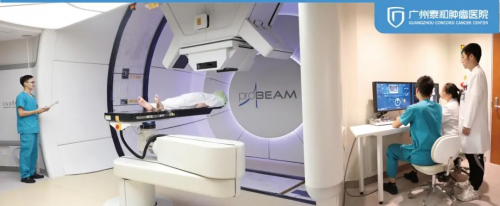
疗效与生活质量的双重提升!质子治疗精准剿灭乳腺癌
Sou Hu Wang· 2025-06-12 06:34
Core Viewpoint - Proton therapy is redefining breast cancer recovery by providing effective treatment without compromising the patient's future health and quality of life [1][5]. Group 1: Patient Experience and Benefits - A young HER2-positive breast cancer patient successfully underwent proton therapy, experiencing minimal side effects and expressing gratitude for the treatment's impact on her quality of life [1]. - Proton therapy has been successfully implemented for multiple breast cancer patients at Guangzhou Taihe Cancer Hospital, emphasizing its role in enhancing both longevity and quality of life [1]. Group 2: Suitable Patient Demographics - Proton therapy is particularly beneficial for left-sided breast cancer patients due to its ability to significantly reduce radiation exposure to the heart and coronary arteries [3]. - Patients requiring irradiation of the internal mammary lymph nodes, those with unique anatomical structures, young patients under 50, and those needing re-irradiation for local recurrence can also benefit from proton therapy [3][4]. Group 3: Advantages of Proton Therapy - The unique physical properties of proton therapy, such as the Bragg Peak, allow for precise targeting of tumors while minimizing damage to surrounding healthy tissues, which is crucial for protecting vital organs [5]. - Proton therapy reduces the risk of secondary cancers by limiting unnecessary radiation exposure to healthy tissues, making it especially important for younger patients with longer life expectancies [5][6]. - The treatment offers better dose distribution, potentially improving local control rates for complex cases [5]. Group 4: Treatment Applications - Proton therapy serves as an adjunctive treatment post-surgery, effectively targeting residual cancer cells while maximizing protection of the heart and lungs [7]. - It can be used as a curative option for patients unable to undergo surgery due to severe comorbidities, either alone or in combination with systemic therapies [8]. - Proton therapy can be integrated with other treatments, such as chemotherapy and targeted therapies, to enhance local toxicity control and optimize treatment outcomes [9].