
养老服务消费补贴券

Search documents
民政部:将“养老服务师”纳入新职业
21世纪经济报道· 2026-03-07 04:18
Core Viewpoint - The article discusses the Chinese government's efforts to reform and improve the elderly care service system, emphasizing the establishment of a comprehensive network and the enhancement of service quality and efficiency to address the challenges posed by an aging population [3][4][5]. Group 1: Policy Implementation - The Ministry of Civil Affairs has initiated a comprehensive elderly care service network, with public elderly care institutions established at the county level and over half of townships having regional elderly service centers [3]. - The government has focused on key issues faced by the elderly, such as food security, with 80,000 elderly meal assistance points established, serving over 3 million elderly individuals daily [3]. - A total of 495,000 family elderly care beds have been built, and 224,000 households with special difficulties have received home modifications for elderly care [3]. Group 2: Service Supply and Quality - The government aims to enhance the supply of inclusive elderly care services by promoting market participation and optimizing service offerings to meet diverse needs [4]. - There is a push for the development of smart elderly care and the establishment of national and industry standards for elderly services [4]. - Training and certification for elderly care professionals are being prioritized, with "elderly care workers" recognized as a new profession [4]. Group 3: Future Directions - The government plans to expand the elderly care service network over the next five years, aiming to establish a three-tiered service network at the county, township, and village levels by the end of the 14th Five-Year Plan [5]. - Efforts will be made to improve the quality of elderly care facilities and services, including updating equipment and enhancing safety management [5]. - The focus will also be on increasing the supply of inclusive elderly care institutions and supporting community-based elderly care services [5].


我市2026民政六大重点任务让服务更有温度
Zheng Zhou Ri Bao· 2026-02-09 00:51
Core Viewpoint - The Zhengzhou municipal government is focusing on enhancing social welfare and civil affairs through targeted policies and initiatives, aiming to improve the quality of life for residents and ensure effective implementation of social services [1][3]. Group 1: 2025 Achievements - The smart civil affairs system has successfully pushed 126,000 tasks for visiting vulnerable groups, covering 302,000 individuals and resolving 76 social issues, effectively replacing the need for citizens to seek assistance in person [2]. - Significant improvements in elderly care services include the transformation of 10 township nursing homes, establishment of 52 village meal service stations, and construction of 64 village-level elderly care service stations, along with 2,063 home modifications for the elderly [2]. - Basic social security measures have been enhanced, with urban and rural minimum living standards raised to 841 yuan per person per month, and support for rural orphans increased to 1,180 yuan per month [2]. Group 2: 2026 Key Focus Areas - The government plans to develop four key plans related to civil affairs, elderly care, and funeral services, ensuring effective monitoring and evaluation mechanisms are in place [3]. - In elderly care, the goal is to establish a network of facilities that meet at least 60% of county-level institutions to a tertiary standard, and to issue no less than 50,000 elderly care consumption subsidy vouchers targeting severely disabled seniors [3]. - The social assistance system will be improved with a focus on layered and categorized support, enhancing temporary and special assistance, and integrating platforms for homeless and beggar assistance [3]. Group 3: Social Affairs and Governance - The government is committed to deepening funeral reform by implementing a clear service project list and a "one-price" model, while promoting eco-friendly burial practices [4]. - Innovations in social governance include administrative district adjustments and the promotion of notable rural actions, aiming to cultivate social organizations in key areas [4]. - A concentrated effort will be made to rectify issues in the four key areas of funeral services, elderly care, charity, and assistance, ensuring the completion of 2026's key tasks [4].
更有“医”靠、更有乐趣、更加多元……多点发力用心守护最美“夕阳红”
Yang Shi Wang· 2025-10-29 09:57
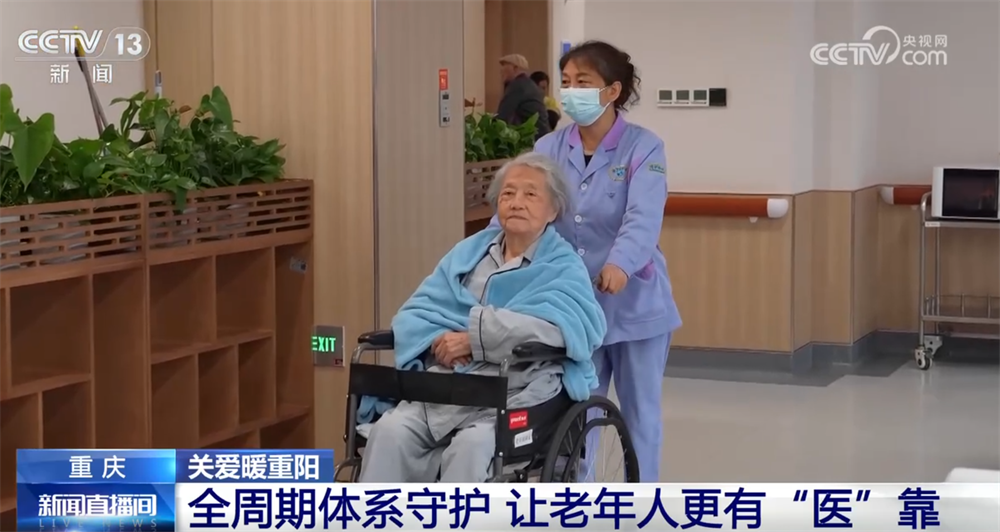
Core Insights - The article highlights the significance of the Double Ninth Festival, which is also recognized as the "Elderly Day" in China, emphasizing the growing elderly population and the need for comprehensive support systems for seniors [1][2] Group 1: Elderly Population Statistics - As of the end of last year, the elderly population aged 60 and above in China reached 310 million, accounting for 22.0% of the total population [1][2] - In Chongqing, the elderly population's proportion is even higher at 25.11%, indicating a more acute need for elderly care services in that region [2] Group 2: Healthcare Initiatives - Hospitals in Chongqing are adapting to the needs of elderly patients by integrating multiple specialties within the geriatric department, allowing for comprehensive treatment in one location [4] - A health management center in Chongqing provides mid-term and long-term care services, creating a full-cycle healthcare system for elderly patients [6] Group 3: Financial Support for Elderly Care - The "Elderly Care Service Consumption Subsidy Project" launched by the Ministry of Civil Affairs and the Ministry of Finance aims to support moderately disabled elderly individuals, with pilot programs in seven regions including Chengdu [7] - As of October 25, Chengdu has issued over 49,000 elderly care service vouchers, with 35,000 vouchers utilized, amounting to 17.5 million yuan in redeemed value [11] Group 4: Community and Lifestyle Enhancements - In Hangzhou, a newly established "Silver Street" caters specifically to the elderly, featuring various services and shops designed to enhance their daily lives [12] - The street includes unique offerings such as personalized photography services and specially designed meals that cater to the health and taste preferences of seniors [14][16] - The design of the street incorporates comfortable seating areas and improved public transport services, reflecting a commitment to creating a respectful and accommodating environment for the elderly [18] Group 5: Innovative Elderly Care Models - In Hangzhou's Yuhang District, embedded community elderly care centers provide diverse services right at residents' doorsteps, enhancing accessibility for seniors [20][22] - The district has established 175 embedded elderly care institutions, offering a range of services from dining to health monitoring, ensuring comprehensive support for the elderly [24]
14.6万余张补贴券,山东为失能老人“补”出了这些改变
Qi Lu Wan Bao Wang· 2025-09-22 14:39
Core Points - The implementation of consumption vouchers for elderly care services in Shandong province aims to alleviate the financial burden on families of moderately to severely disabled elderly individuals [1][2] - The program has led to increased participation from various elderly care institutions and organizations, viewing it as an opportunity for growth [1][6] Group 1: Voucher Distribution and Impact - As of September 19, over 146,000 consumption vouchers have been issued to eligible elderly individuals in Shandong, benefiting those in care facilities and those receiving home services [1][2] - The consumption vouchers allow families to reduce their out-of-pocket expenses significantly, with a reported monthly saving of over 700 yuan for some families [2][6] - The program has a high uptake rate among elderly individuals in care facilities, with over 70% of eligible residents in certain centers having claimed the vouchers [2][3] Group 2: Home Services and Voucher Utilization - Elderly individuals receiving home services can also benefit from consumption vouchers, which cover 40% of their self-paid costs, with a maximum monthly deduction of 500 yuan [4][5] - The process for claiming home service vouchers requires an initial assessment of the elderly individual's capabilities, which has been streamlined to facilitate access [4][5] - The introduction of these vouchers has increased awareness and demand for home services, leading to more inquiries and service requests from families [6][7] Group 3: Market Response and Future Plans - The consumption voucher initiative has prompted increased interest from families considering elderly care options, with some families making decisions to enroll their loved ones in care facilities due to the financial support [6][7] - Companies providing home services have reported a rise in clientele as families become more informed about available services through the voucher program [7] - The government plans to enhance the awareness and coverage of the elderly care service subsidy policy, ensuring more elderly individuals can benefit from these initiatives [7]
试点启动以来,山东中度以上失能老人领取养老服务消费补贴券14.6万余张
Da Zhong Ri Bao· 2025-09-22 01:05
Group 1 - The pilot program in Shandong has issued over 146,000 elderly care service consumption vouchers to moderately and severely disabled elderly individuals since its launch in August [2][3] - The consumption vouchers allow eligible elderly individuals to receive a 40% discount on their out-of-pocket expenses for care services, with a maximum monthly deduction of 800 yuan for institutional care and 500 yuan for home services [3][5] - The program has led to increased participation from various elderly care institutions and organizations, viewing it as an opportunity for service expansion and institutional development [2][7] Group 2 - The uptake of vouchers among elderly individuals residing in care institutions is notably high, with over 70% of eligible residents in certain facilities having claimed the vouchers [3][4] - The program has streamlined the assessment process for elderly individuals, eliminating the need for re-evaluation if they were assessed as moderately or severely disabled within the past year [4] - Home service vouchers have encouraged families to explore various services, such as bathing and cleaning, leading to increased awareness and utilization of these services among disabled elderly individuals [5][8] Group 3 - The consumption voucher initiative has stimulated new demand in the elderly care sector, with increased inquiries and interest from families considering institutional care for their elderly relatives [7] - Companies providing home services, such as bathing, have reported a rise in awareness and inquiries about their offerings due to the voucher program [8] - The Shandong government plans to enhance the awareness and coverage of the elderly care service consumption subsidy policy, aiming to connect more elderly individuals and families with professional care services [8]