
养老服务

Search documents
民政部:将“养老服务师”纳入新职业
21世纪经济报道· 2026-03-07 04:18
Core Viewpoint - The article discusses the Chinese government's efforts to reform and improve the elderly care service system, emphasizing the establishment of a comprehensive network and the enhancement of service quality and efficiency to address the challenges posed by an aging population [3][4][5]. Group 1: Policy Implementation - The Ministry of Civil Affairs has initiated a comprehensive elderly care service network, with public elderly care institutions established at the county level and over half of townships having regional elderly service centers [3]. - The government has focused on key issues faced by the elderly, such as food security, with 80,000 elderly meal assistance points established, serving over 3 million elderly individuals daily [3]. - A total of 495,000 family elderly care beds have been built, and 224,000 households with special difficulties have received home modifications for elderly care [3]. Group 2: Service Supply and Quality - The government aims to enhance the supply of inclusive elderly care services by promoting market participation and optimizing service offerings to meet diverse needs [4]. - There is a push for the development of smart elderly care and the establishment of national and industry standards for elderly services [4]. - Training and certification for elderly care professionals are being prioritized, with "elderly care workers" recognized as a new profession [4]. Group 3: Future Directions - The government plans to expand the elderly care service network over the next five years, aiming to establish a three-tiered service network at the county, township, and village levels by the end of the 14th Five-Year Plan [5]. - Efforts will be made to improve the quality of elderly care facilities and services, including updating equipment and enhancing safety management [5]. - The focus will also be on increasing the supply of inclusive elderly care institutions and supporting community-based elderly care services [5].


21社论丨多措并举,推动“能消费、敢消费、愿消费”
21世纪经济报道· 2026-03-05 00:10
Group 1 - The core viewpoint of the article emphasizes the importance of consumption as a key driver of economic growth, with a target for China's retail sales of consumer goods to exceed 50 trillion yuan by 2025, contributing 52% to economic growth [1] - The government plans to enhance consumer capacity through fiscal subsidies and policies aimed at increasing the coverage and effectiveness of consumer incentives, benefiting a broader population [1][2] - A sustainable increase in income is essential for boosting consumer confidence, with initiatives focused on promoting high-quality employment and income growth for residents [2] Group 2 - The article highlights the need for consumers to feel secure in their spending, which will be supported by legislative measures aimed at strengthening social safety nets, including laws on social assistance and healthcare [2] - Increased fiscal investment in public services such as education, healthcare, and elderly care is crucial for reducing consumer anxiety and encouraging spending [2] - The article discusses the importance of providing diverse and high-quality consumer choices to enhance consumer satisfaction, with ongoing upgrades in product and service offerings [3] Group 3 - The creation of an internationalized consumption environment and promotional activities are expected to enhance the attractiveness of the domestic market, contributing to a positive cycle of domestic consumption and international engagement [3] - The article concludes that the strategies to enable, encourage, and enhance consumer spending are vital for transitioning China's economy from investment-driven to consumption-driven growth, ultimately benefiting all citizens [3][4]

医药周报20260301:从锦欣康养上市申请看我国康养行业发展-20260301
Guolian Minsheng Securities· 2026-03-01 09:15
Investment Rating - The report maintains a "Recommendation" rating for the industry [4] Core Insights - Jin Xin Kang Yang is a leader in China's institutional elderly care market, focusing on elderly individuals aged 80 and above with urgent care needs [2][13] - The company operates 38 elderly care facilities with a total bed capacity of 8,333, primarily in the Sichuan-Chongqing region, which contributes 71.8% of its revenue [2][14] - The demand for elderly care services in China is driven by an aging population and increased payment capabilities, with the market shifting towards high-quality elderly living options [21][25] - The industry is expected to grow significantly, with the market size projected to increase from RMB 7.4 trillion in 2020 to RMB 14.1 trillion in 2024, reflecting a compound annual growth rate (CAGR) of 17.5% [29][30] Summary by Sections 1. Jin Xin Kang Yang's IPO and Industry Development - Jin Xin Kang Yang's strategic focus is on high-need elderly individuals, managing 38 facilities and achieving a revenue of RMB 605 million in 2024, a 23.8% increase year-on-year [2][13] - The company’s revenue growth is supported by both organic growth and acquisitions, with a stable gross margin between 21.7% and 24.5% [18][21] 2. Market Review and Trends - The pharmaceutical sector's performance has been mixed, with the medical and biological index increasing by 0.50% in the recent period, underperforming compared to other indices [41][46] - The industry is experiencing a structural shift, with a focus on innovation and international expansion expected to drive future growth [10][26] 3. Aging Population and Demand Growth - The elderly population in China is projected to grow significantly, with the number of individuals aged 80 and above expected to reach 79 million by 2035 [21][29] - Increased disposable income and changing consumer expectations are leading to a demand for higher-quality elderly care services [25][32] 4. Industry Challenges and Opportunities - The report highlights existing challenges in the elderly care sector, including supply-demand mismatches and a lack of standardized service quality [39][40] - The promotion of long-term care insurance is expected to enhance the payment system and address some of the industry's challenges [39][40]
西安市2026年30件为民实事出炉
Xi An Ri Bao· 2026-02-28 02:13
Core Viewpoint - The 2026 municipal plan for Xi'an includes 30 initiatives aimed at improving the quality of life for residents, focusing on various aspects such as elderly and child care, employment, education, health services, and community infrastructure. Group 1: Elderly and Child Care Services - Increase in elderly care services with the construction of 7 public nursing homes, 3 community service centers, and 10 meal assistance points [2] - Launch of a smart childcare information platform and the addition of 3,500 affordable childcare spots, raising the proportion of such spots to 43% [2] - Issuance of 90 million yuan in service vouchers for elderly care to alleviate financial burdens [3] - Annual childcare subsidies of 3,600 yuan per child for families with children under 3 years old, benefiting approximately 320,000 families [3] Group 2: Business Support and Economic Incentives - Temporary reduction in workers' compensation and unemployment insurance rates to ease the financial burden on employers and flexible workers [4] - Expansion of consumer incentive policies, including subsidies for purchasing new vehicles and appliances, and distribution of consumption vouchers [4] Group 3: Employment Initiatives - Over 400 employment and entrepreneurship service events planned, with vocational training for 68,000 individuals and the creation of over 160,000 new urban jobs [5] - Special initiatives to support employment for college graduates, offering 100,000 market-oriented positions and 20,000 internship opportunities [5] - Assistance for 21,000 unemployed individuals and 3,000 people facing employment difficulties, along with a minimum of 200 million yuan in entrepreneurial loans [5] Group 4: Education Quality Improvement - Construction and expansion of 3 regular high schools, adding 15,000 new student places [6] - Integration of physical education into the curriculum with a target of 90% health monitoring compliance among students [6] - Implementation of comprehensive mental health education programs in schools, including 500 outreach events [6] Group 5: Health Services Enhancement - Development of a municipal medical insurance imaging cloud platform to streamline medical services and reduce patient burden [7] - Free HPV vaccinations for over 30,000 girls aged 13 and under, and vision checks for 90% of children aged 0-6 [8] Group 6: Community and Infrastructure Development - Construction of 60 community service facilities to enhance local services [9] - Implementation of a "vegetable basket" project to provide fresh produce directly to communities [9] - Launch of an integrated government service platform to simplify administrative processes for citizens and businesses [9] Group 7: Transportation Improvements - Adjustment of 40 bus routes to improve connectivity with metro services and address local transportation needs [10] - Construction of 12,000 new public parking spaces and 500 non-motorized vehicle parking areas [10] Group 8: Safety and Security Enhancements - Upgrading of municipal gas and heating infrastructure, including 70 kilometers of new gas pipelines [11] - Improvement of water supply systems with 25 kilometers of new pipelines and enhancements to rural water quality for 85,400 residents [11] Group 9: Housing and Living Conditions - Acceleration of housing renovation projects with 39 completed resettlement projects and 342 resettlements achieved [12] - Provision of 3,500 affordable rental units and 1,500 public rental homes to meet housing needs [13] Group 10: Cultural and Recreational Activities - Organization of over 300 cultural events and 2,000 community cultural activities to enhance public engagement [14] - Hosting of 500 sports events and 100 fitness guidance sessions to promote community health [14]
山东消费季:烟火气里藏动能,民生暖处见担当
Qi Lu Wan Bao· 2026-02-27 04:11
Group 1 - The core idea of the news is that the Shandong Consumption Season aims to boost economic growth and improve people's livelihoods through a series of targeted initiatives and financial investments totaling over 27 billion yuan [1][2][3] - The Shandong Consumption Season emphasizes a comprehensive approach that goes beyond simple promotions, focusing on policy empowerment, scenario upgrades, and full-area collaboration to create a robust consumption ecosystem [1][2] - The provincial government has allocated over 27 billion yuan specifically for key areas such as consumer goods replacement and elderly service consumption, with a special subsidy of 7.5 billion yuan for shopping, cultural tourism, and dining [1][2] Group 2 - The initiatives during the consumption season are designed to enhance consumer experience in both urban and rural areas, with services such as home appliance exchanges and live-streaming sales events to engage a wide audience [2][3] - The collaboration between government, enterprises, and local communities is crucial for sustaining the momentum of the consumption market, as evidenced by the significant sales growth in categories like home appliances and mobile phones [2][3] - The Shandong Consumption Season demonstrates that boosting consumption is not only an economic issue but also a matter of public welfare, aligning consumer needs with development goals to foster a positive cycle of economic growth and improved living standards [3]
2035年我国银发经济市场规模有望达到30万亿元
Jin Rong Jie· 2026-02-27 03:20
Core Insights - The State Council held its first executive meeting of the new year on February 24, focusing on advancing the silver economy and the development of elderly care services [1] - Predictions indicate that by 2035, the market size of China's silver economy will reach 30 trillion yuan, accounting for approximately 10% of GDP [1] Group 1 - The meeting emphasized the importance of promoting the silver economy and elderly care services [1] - The projected market size of the silver economy by 2035 is 30 trillion yuan [1] - The silver economy is expected to represent around 10% of China's GDP by 2035 [1]
2026年养老消费券解读,如何领取?怎样使用?
Sou Hu Cai Jing· 2026-02-26 15:03
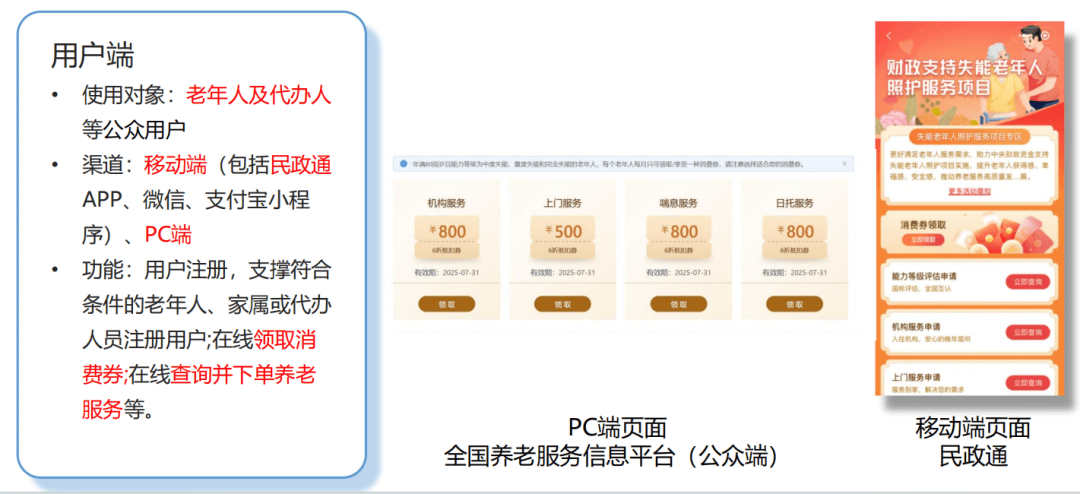
Core Points - The electronic consumption vouchers can offset 30%-60% of the elderly care service expenses within the subsidy project scope, with specific rates and amounts detailed in the vouchers [1] - The Ministry of Civil Affairs and the Ministry of Finance will adjust the offset rates and amounts based on specific circumstances [1] Subsidy Process - Individuals, including elderly individuals with moderate to severe disabilities or their representatives, can apply for the elderly service consumption subsidy through the "Minzheng Tong" online platform [2] - A capacity assessment must be conducted based on the "Elderly Capacity Assessment Standards" (GB/T42195-2022), and those assessed within the last 12 months do not need to be reassessed [2] - Starting from January 2026, eligible elderly individuals will receive the first month's electronic consumption voucher within 5 working days after approval, with subsequent vouchers issued on the first day of each month [2] Voucher Validity - The electronic consumption vouchers are valid for one month, expiring at the end of the month in which they are issued [4] - If an elderly individual no longer meets the subsidy criteria due to health changes, the relevant parties must inform the local civil affairs department to stop the issuance of vouchers [4] Case Example - An example is provided where an elderly individual, rated as severely disabled, incurs a monthly care cost of 5,100 yuan, receives an 800 yuan voucher, and pays 4,300 yuan, saving 9,600 yuan annually [4] Participating Institutions - The Jinhuayuan Street Elderly Service Center, Yuntan Elderly Service Center, and Le Wan International Rehabilitation Center under Guiyang Health Investment Co., Ltd. accept the elderly consumption vouchers [6]
新政加码银发经济:4亿老年市场潜力如何释放?
Sou Hu Cai Jing· 2026-02-26 13:16
Core Viewpoint - The State Council of China emphasizes the need to develop the silver economy and elderly care services, aiming to enhance consumption among the elderly and create new consumption scenarios and business models [2] Group 1: Demographic Trends - By the end of 2025, the population aged 60 and above in China is projected to reach approximately 320 million, accounting for 23% of the total population, with those aged 65 and above reaching about 224 million, or 15.9% [2] - It is predicted that by around 2035, the elderly population (60 and above) will exceed 400 million, representing over 30% of the total population, marking a transition to a severely aging society [2] Group 2: Economic Impact - The silver economy in China is currently valued at approximately 7 trillion yuan, with projections estimating it could grow to 19.1 trillion yuan by 2035, and potentially reach 30 trillion yuan according to other studies [5][6] - From 2025 to 2040, the total consumption expenditure of individuals aged 60 and above is expected to increase by over 300%, while the overall population's consumption expenditure is projected to grow by 136% [5][6] Group 3: Elderly Care Services - The current elderly care system in China is still in the exploratory phase, with about 90% of elderly individuals opting for home care [4] - As of the end of 2025, there are approximately 41,700 elderly care institutions in China, employing around 722,000 people, with private institutions making up 52.2% of the total [8] Group 4: Policy and Support Measures - The government has introduced various fiscal, land, tax, and financial support policies to promote the integration of public and private elderly care institutions [5] - Recent measures include enhancing the supply of elderly care services and supporting technology-driven solutions in elderly care [10] Group 5: Market Dynamics - The rapid economic growth over the past 40 years has led to increased savings among the elderly, with a notable shift in their consumption patterns towards health, culture, tourism, and smart products [10] - The elderly population's consumption is expected to become a significant growth point for the national economy in the coming years, with a focus on health, wellness, and leisure spending [10]

锦欣康养,来自四川成都,递交IPO招股书,拟赴香港上市,中金公司、广发证券联席保荐
Xin Lang Cai Jing· 2026-02-26 09:52
Core Viewpoint - Jinxin Eldercare Industry Group Limited is preparing for an IPO on the Hong Kong Stock Exchange, reporting a 31% year-on-year decline in net profit, with a focus on its leadership in the eldercare service market in China [1][11]. Company Overview - Jinxin Eldercare was established in 2012 and is a leader in the institutional eldercare service market, providing a range of services through a network of medical and eldercare facilities [2][15]. - The company ranks first among major players in China's institutional eldercare service industry, with an 85% occupancy rate for elderly residents with mobility impairments in medical-elderly integrated facilities [2][19]. Business Operations - Jinxin Eldercare operates 23 medical-elderly integrated facilities, offering comprehensive services including accommodation, professional care, nutritional management, social and cultural activities, medical services, rehabilitation, and on-demand services [3][16]. - The company reviews its service pricing every six months, with standard fees including bed fees, care fees, and meal fees [4][17]. Financial Performance - For the fiscal year ending December 31, 2023, Jinxin Eldercare reported revenues of RMB 488.5 million and a net profit of RMB 27.1 million, with projected revenues of RMB 604.8 million for 2024 [11][23]. - The company’s net profit for the first nine months of 2025 is estimated at RMB 26.1 million, reflecting a decline compared to previous periods [11][23]. Shareholder Structure - Jinxin Investment holds a controlling stake of 68.60% in Jinxin Eldercare, with various entities and individual shareholders involved [19][20]. Management Team - The board of directors consists of 10 members, including three executive directors: Mr. Zhong Yong (Chairman), Mr. Yan Yun (Vice Chairman), and Mr. Yuan Jingtao (CEO) [8][22].

支持地方和企业积极探索打造新增长点
Mei Ri Jing Ji Xin Wen· 2026-02-25 11:29
Group 1 - The core focus of the meeting is to enhance the development of the silver economy and elderly care services in response to China's aging population, emphasizing the need for innovative management and support measures [1][2] - The meeting highlights the significant potential of the silver economy, with projections indicating that the population aged 60 and above will reach 320 million by 2025 and exceed 400 million by 2035, leading to an expected market size of over 30 trillion yuan [2] - There is a call to improve the consumption capacity of the elderly demographic by creating new consumption scenarios and enhancing the quality and accessibility of elderly care services [2][3] Group 2 - The meeting emphasizes the importance of addressing both financial and time constraints for the elderly to stimulate consumption, suggesting a focus on service consumption alongside product consumption [3] - It is noted that the elderly care industry is not only a vital public welfare sector but also a sunrise industry with immense growth potential [2] - The meeting also stresses the need for safety management in elderly care institutions and the importance of combating fraudulent activities that target the elderly [3] Group 3 - The meeting outlines the necessity for effective implementation of key tasks, urging departments to quickly organize efforts and develop targeted policies to enhance market vitality and improve public welfare [4] - A focus on grassroots fire safety management is also discussed, highlighting the need for preventive measures and public awareness to mitigate fire risks [4] Group 4 - The meeting discusses the revision of the Water Law, aiming to strengthen water resource management and ensure sustainable development through coordinated efforts across departments [5]