
农用酵素

Search documents
(乡村行·看振兴)山西长子:校地合作深化 “农用酵素”技术赋能乡村振兴
Zhong Guo Xin Wen Wang· 2025-09-04 23:34
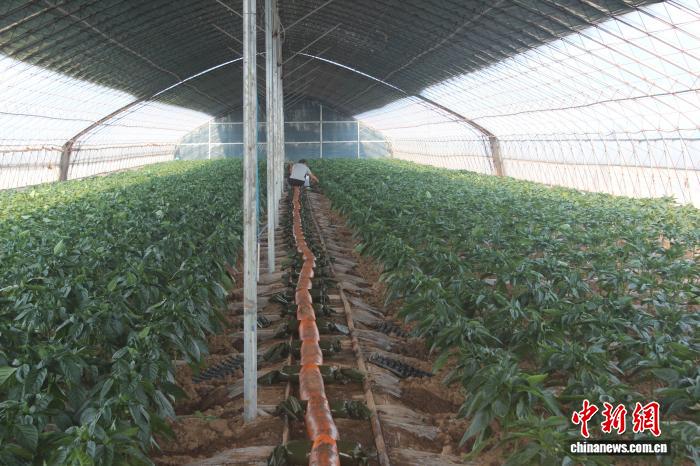
Core Insights - The collaboration between Changzi County and China Agricultural University since 2021 focuses on utilizing "agricultural enzymes" technology to promote the recycling of agricultural waste and facilitate the transformation of scientific research achievements into practical applications for organic agriculture and rural revitalization [1][3]. Group 1: Technology and Implementation - The "agricultural enzymes" technology involves fermenting discarded fruits and vegetables with sugar and water to create a nutrient-rich organic fertilizer, significantly enhancing soil quality and crop yield [3][4]. - The technology has shown a notable increase in crop yields, with zucchini yielding an additional 73.28 kg per mu and yellow bell peppers increasing by 100 kg per mu compared to traditional farming methods [4]. Group 2: Economic and Environmental Impact - The promotion of agricultural enzymes has led to a reduction in fertilizer costs and improved nutrient absorption, with nitrogen content in organic compost increasing by 31.4% and nitrogen loss decreasing by 26.8% [5]. - Over 60 demonstration entities and 37 agricultural parks have participated in the production of over 130 tons of agricultural enzymes, indicating widespread adoption and significant impact on local agriculture [7]. Group 3: Community Engagement and Education - The initiative includes hands-on guidance from university teams to local farmers, enhancing their understanding and acceptance of the technology, which is simple to learn and implement [5][7]. - The project has fostered a sense of achievement among agricultural students and local farmers, highlighting the transformative power of technology in agriculture [7].

土壤配备“医生” 污水变成“财富”
Ke Ji Ri Bao· 2025-05-23 01:06
Core Viewpoint - The establishment of the "Organic Agricultural Technology Institute" in Lingqiu County, Shanxi Province, is significantly enhancing agricultural productivity and farmer income through the use of agricultural enzymes and innovative farming techniques [1][2][3]. Group 1: Agricultural Innovation - The "Organic Agricultural Technology Institute" focuses on a "low-cost, high-quality county-level organic agriculture engineering technology system" that integrates scientific research with practical farming [1]. - The enzyme planting demonstration area utilizes a "plant-animal-microbe" organic planting system developed by China Agricultural University, which transforms kitchen waste and agricultural by-products into beneficial microbial strains for high-efficiency fertilizers [2]. - The use of enzymes has led to a 3%-4% increase in protein content in millet and a 55.7%-137.5% increase in lycopene content in tomatoes, showcasing the effectiveness of this approach [2]. Group 2: Economic Impact - The cost of fertilizers for millet cultivation has decreased from 300 yuan to 110 yuan per mu, while the selling price of millet has risen from 2 yuan to 3.5 yuan per jin, resulting in a profit increase of 768 yuan per mu compared to traditional methods [2]. - The implementation of the "toilet revolution + organic dry farming" project has transformed waste management in rural areas, producing 1714 tons of organic fertilizer annually and saving significant amounts of irrigation water [4]. - The operational cost of the waste treatment facility is only 53,900 yuan per year, generating direct economic benefits of 165,000 yuan and boosting related industries by over 5 million yuan [4]. Group 3: Sustainable Development - The agricultural enzymes not only serve as fertilizers but also act as "soil doctors," enhancing soil health and promoting sustainable farming practices [3]. - The technology has been successfully promoted to neighboring counties, with nearly 400 demonstration households and over 2000 mu of land benefiting from the enzyme planting method [3]. - The team aims to further develop pathways for organic agriculture, focusing on waste classification and the application of agricultural enzymes to create replicable and scalable solutions for nationwide organic farming [6].