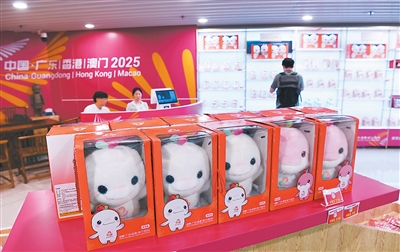
十五运会吉祥物喜洋洋

Search documents
广州准备打造十五运会吉祥物永久IP公园
Zhong Guo Xin Wen Wang· 2025-12-01 00:54
Core Insights - Guangzhou is preparing to create a permanent IP park for the "Great Bay Chicken," the mascots of the 15th National Games, aiming to establish it as a lasting IP in the Guangdong-Hong Kong-Macao Greater Bay Area [1][2] - The 15th National Games have generated significant consumer interest, with over 2,800 licensed products launched, leading to a sales revenue exceeding 800 million RMB [1] - The city is implementing strategies to convert event traffic into long-term economic benefits, including a series of cultural and tourism activities and discounts for ticket holders [2] Group 1 - The "Great Bay Chicken" IP park will enhance the appeal of the Greater Bay Area, allowing visitors to experience the charm of the 15th National Games [2] - The event has led to a notable increase in flight bookings and hotel reservations, contributing to a more than 20% rise in overall cultural and tourism consumption in Guangzhou [2] - The city plans to continue leveraging the excitement from the events to promote long-term fitness and wellness initiatives [2]
这场体育盛会,“好劲”!
Ren Min Ri Bao Hai Wai Ban· 2025-11-13 22:10
Group 1: Event Overview - The 15th National Games commenced on November 9 in Guangzhou, Guangdong, marking the first time the event is co-hosted by Guangdong, Hong Kong, and Macau [1][5] - The opening ceremony was praised for its creativity and aesthetic appeal, showcasing the cultural and sporting spirit of the Greater Bay Area [5][6] Group 2: Mascot Design and Popularity - The mascots "Xiyangyang" and "Lerongrong," inspired by the Chinese white dolphin, have gained significant popularity among netizens [1][3] - The design team from Guangzhou Academy of Fine Arts, known for creating the Beijing Winter Olympics mascot, emphasized the cultural significance of the dolphin in the region [3] - The mascots have led to a surge in related cultural products, with over 2,800 licensed items developed and more than 700 retail stores opened [4] Group 3: Sustainable Event Management - The event is notable for not constructing new large venues, with over 90% of competition venues being upgraded from existing facilities, significantly reducing costs [7][9] - The use of green electricity during the games is projected to exceed 188 million kilowatt-hours, equating to a reduction of approximately 160,000 tons of carbon emissions [8][9] - The Guangdong Olympic Sports Center underwent significant renovations to meet event requirements while promoting future urban development [8][9]