千里马

Search documents
马年说马,马是如何起源演化而来?
Zhong Guo Xin Wen Wang· 2026-02-16 02:18
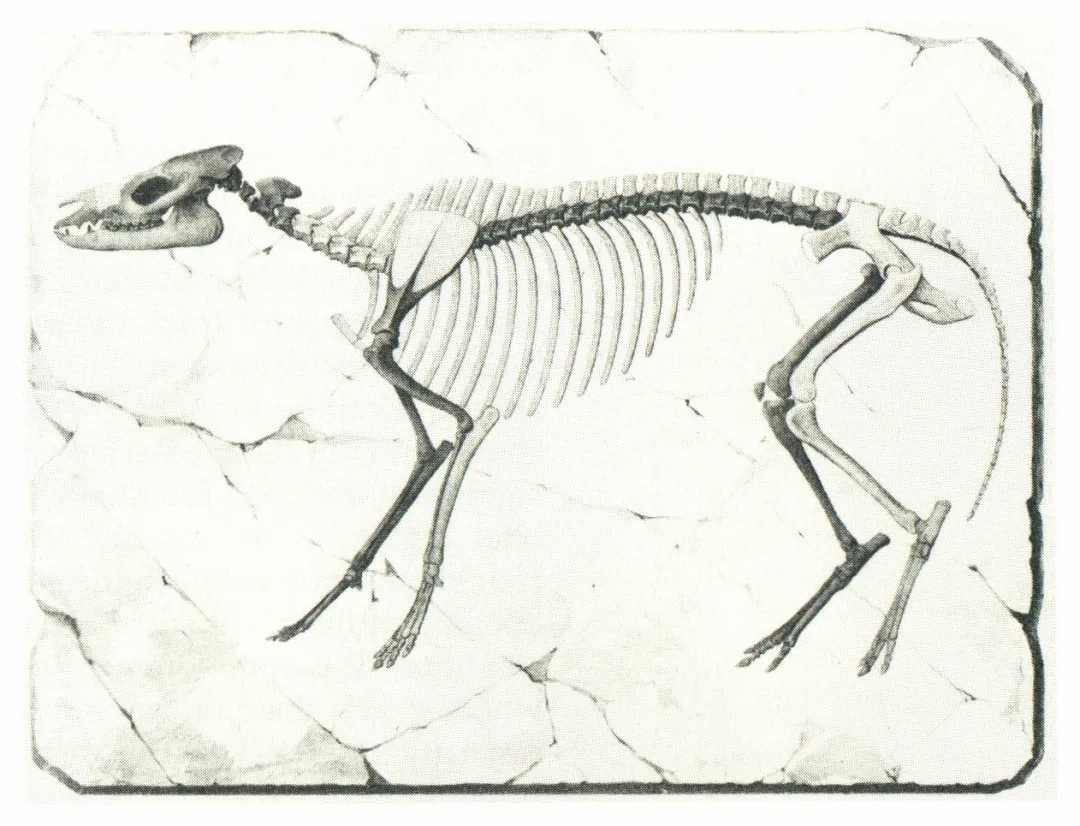
Core Viewpoint - The article discusses the origin and evolution of horses, highlighting their significance in human civilization and their adaptation over millions of years [1][2][5]. Group 1: Scientific Definition and Classification - Horses belong to the animal kingdom, phylum Chordata, class Mammalia, order Perissodactyla, family Equidae, and genus Equus, with the domestic horse as the model species [2]. - Modern horses have a unique structure with only the third toe remaining, adapted for speed and endurance, capable of running at speeds of 60-70 km/h and sprinting up to 80 km/h [2][3]. Group 2: Evolutionary History - The evolution of the horse family began approximately 56 million years ago with the ancestor horse, which underwent significant changes in size, toe number, and dental structure, transitioning from browsing on shrubs to grazing on grasses [5][7]. - Key evolutionary stages include the early horse (56 million years ago), the middle horse (40 million years ago), the grassland horse (18 million years ago), the late horse (10 million years ago), and the true horse (4.5 million years ago) [9][10]. Group 3: Fossil Distribution and Research - Horse fossils are primarily found in North America, with significant discoveries in Europe and Asia, including the earliest horse fossils in North America and notable finds in China [10][11]. - China has made substantial contributions to horse fossil research, with discoveries such as the Ding's dawn horse and the E horse, which is the largest known horse species [11][20]. Group 4: Domestication and Cultural Significance - Horses were first domesticated around 5,500 years ago in northern Kazakhstan, with evidence of their use for meat and milk, and later for riding and pulling carts [14][15]. - The domestication process involved several stages, including hunting, early domestication, and the development of specialized breeds during the Bronze Age [14][15]. Group 5: Future Research Directions - Future research will focus on the evolutionary history of horses, their response to environmental changes, and the implications of their evolution for understanding broader ecological dynamics [20].