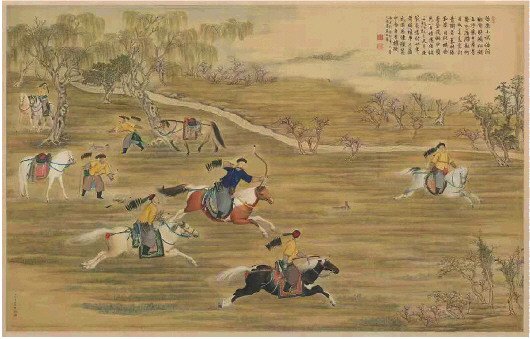
赤兔马

Search documents
名将配名马
Xin Lang Cai Jing· 2026-02-16 17:14
Core Viewpoint - The stories of famous generals and their horses throughout Chinese history illustrate a deep bond and mutual loyalty, transcending mere companionship to symbolize ideals of loyalty, bravery, and honor [1][2][3][4][5] Group 1: Historical Figures and Their Horses - Xiang Yu, the Western Chu overlord, is famously associated with his black steed, the "Wu Zhu," which played a crucial role in his military campaigns and symbolizes his tragic fate [1] - The legendary "Chi Tu" horse of the Three Kingdoms period, known for its loyalty, served both Lü Bu and Guan Yu, highlighting the themes of loyalty and honor in their narratives [1][2] - Qin Qiong's yellow horse, despite its frail appearance, exemplified the bond between man and horse, showcasing their shared struggles and triumphs [2] Group 2: Cultural Significance - The stories of these horses often blend historical fact with artistic embellishment, transforming them into cultural symbols that embody virtues such as loyalty and bravery [4] - The artistic representations of war horses, such as the six steeds of Emperor Taizong of Tang, serve as a testament to the martial spirit and the deep emotional connections between generals and their mounts [2][4] - The narratives surrounding these horses reflect a broader cultural appreciation for the values they represent, making them enduring symbols in Chinese literature and history [4][5]
马年说马,马是如何起源演化而来?
Zhong Guo Xin Wen Wang· 2026-02-16 02:18
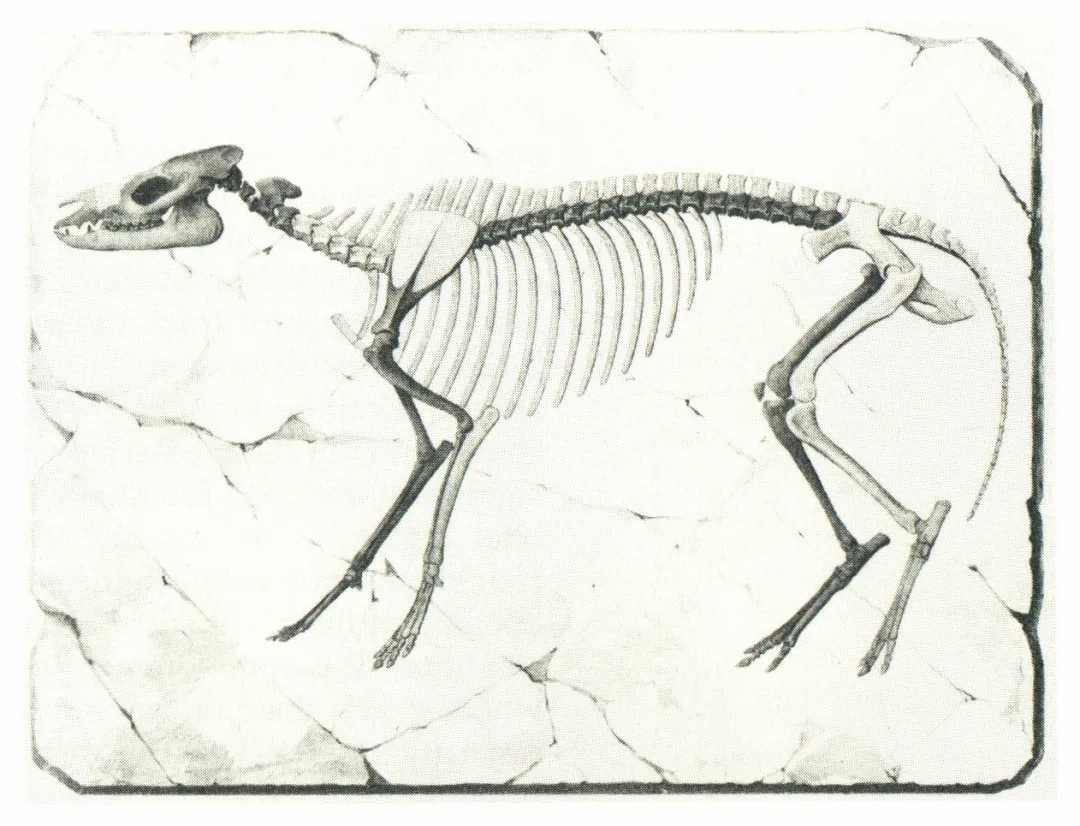
Core Viewpoint - The article discusses the origin and evolution of horses, highlighting their significance in human civilization and their adaptation over millions of years [1][2][5]. Group 1: Scientific Definition and Classification - Horses belong to the animal kingdom, phylum Chordata, class Mammalia, order Perissodactyla, family Equidae, and genus Equus, with the domestic horse as the model species [2]. - Modern horses have a unique structure with only the third toe remaining, adapted for speed and endurance, capable of running at speeds of 60-70 km/h and sprinting up to 80 km/h [2][3]. Group 2: Evolutionary History - The evolution of the horse family began approximately 56 million years ago with the ancestor horse, which underwent significant changes in size, toe number, and dental structure, transitioning from browsing on shrubs to grazing on grasses [5][7]. - Key evolutionary stages include the early horse (56 million years ago), the middle horse (40 million years ago), the grassland horse (18 million years ago), the late horse (10 million years ago), and the true horse (4.5 million years ago) [9][10]. Group 3: Fossil Distribution and Research - Horse fossils are primarily found in North America, with significant discoveries in Europe and Asia, including the earliest horse fossils in North America and notable finds in China [10][11]. - China has made substantial contributions to horse fossil research, with discoveries such as the Ding's dawn horse and the E horse, which is the largest known horse species [11][20]. Group 4: Domestication and Cultural Significance - Horses were first domesticated around 5,500 years ago in northern Kazakhstan, with evidence of their use for meat and milk, and later for riding and pulling carts [14][15]. - The domestication process involved several stages, including hunting, early domestication, and the development of specialized breeds during the Bronze Age [14][15]. Group 5: Future Research Directions - Future research will focus on the evolutionary history of horses, their response to environmental changes, and the implications of their evolution for understanding broader ecological dynamics [20].

骁腾有如此,万里可横行
Xin Lang Cai Jing· 2026-01-30 18:43
Core Insights - The article explores the historical significance of famous horses in Chinese history, illustrating how these steeds symbolize the ambitions of emperors and the fate of empires [2][3][4][6][7][10][12][13][14][15] Group 1: Historical Context - The obsession of Emperor Wu of Han with the "Heavenly Horse" from the Western Regions reflects his strategic vision for controlling the Xiongnu and expanding the empire [3][4] - The story of the "Red Hare" during the Three Kingdoms period highlights the personal connection between heroes and their horses, emphasizing loyalty and the tragic fate of both [6][12] - The "Six Steeds of Zhao Ling" serve as a testament to the military achievements of Emperor Taizong of Tang, with each horse representing a significant battle [7][8][9] Group 2: Cultural Significance - The horses of the Tang dynasty, such as "Jade Flower" and "Night White," symbolize the cultural and artistic flourishing of the era, showcasing the integration of equestrianism into courtly life [10][11][14] - The "Eight Steeds of Changling" from the Ming dynasty reflect the legacy of military prowess and the continuity of equestrian symbolism across dynasties [13] - In the Qing dynasty, horses became central to political rituals, with Emperor Qianlong using them to reinforce loyalty and governance among the Manchu and Mongolian tribes [14][15]