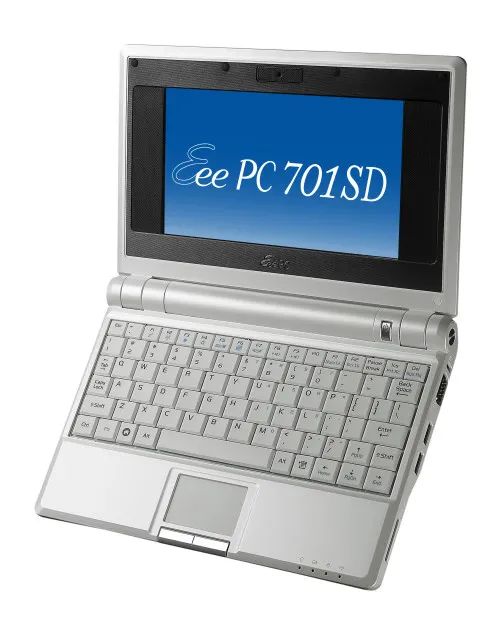
华硕Eee PC

Search documents
上网本,为何消失了?
3 6 Ke· 2026-01-21 11:02
Core Viewpoint - The rise and fall of the ASUS Eee PC, which pioneered the netbook category, illustrates the rapid evolution of consumer electronics and the impact of market dynamics on product lifecycle [1][10][43] Group 1: Rise of the Netbook - In 2006, ASUS became the world's second-largest OEM, primarily manufacturing computers and servers for Dell and HP, but faced anxiety over its heavy reliance on OEM business [1] - The launch of the ASUS Eee PC in 2007 marked a significant shift, creating a new product category known as netbooks, which peaked at nearly 40 million units sold globally [1][10] - The Eee PC was priced at $299, significantly lower than traditional laptops, which contributed to its rapid adoption [4][10] - By 2008, netbook sales reached 10.8 million units, and by 2010, they exceeded 39 million units, capturing over 10% of the PC market [3][10] Group 2: Market Dynamics - The global financial crisis in 2007 led to decreased consumer spending, further enhancing the appeal of low-cost netbooks as alternatives to traditional laptops [7] - The entry of various manufacturers, including Acer and numerous smaller companies, drove down production costs and increased competition in the netbook market [6][10] - Netbooks found a niche in the education sector, particularly in developing countries, where their affordability made them an attractive option for governments looking to enhance educational resources [9][10] Group 3: Decline of the Netbook - Despite initial success, netbook sales began to decline sharply after 2010, with sales dropping to 2.94 million units in 2011 and further to 1.41 million in 2012 [10][12] - The rapid evolution of technology and consumer preferences, including the rise of tablets and smartphones, contributed to the decline of netbooks, as these devices offered better performance and portability [30][34] - By 2013, major manufacturers, including ASUS and Acer, ceased production of new netbook models, marking the end of the product category [12][13] Group 4: Legacy and Impact - The netbook's brief existence highlighted the importance of price, portability, and internet connectivity in consumer electronics, influencing the design and marketing of future devices [41][43] - Innovations inspired by the netbook, such as ultrabooks and Chromebooks, emerged as manufacturers sought to fill the gaps left by the decline of netbooks [43] - The netbook phenomenon serves as a case study in how market needs and technological advancements can rapidly change the landscape of consumer electronics [43]


最短命电子产品:谁杀死了上网本?
3 6 Ke· 2025-04-23 08:23
Core Viewpoint - The rise and fall of the ASUS Eee PC, which pioneered the netbook category, illustrates the rapid evolution of consumer electronics and the impact of market dynamics on product lifecycle [1][13][43] Group 1: Product Launch and Market Impact - ASUS became the world's second-largest OEM in 2006, primarily manufacturing computers and servers for Dell and HP [1] - The launch of the ASUS Eee PC in 2007 marked the beginning of the netbook revolution, achieving nearly 40 million units sold at its peak [1][9] - The Eee PC was priced at $299, significantly lower than traditional laptops, which contributed to its rapid adoption [4][9] Group 2: Market Dynamics and Consumer Behavior - The global financial crisis in 2007 amplified the appeal of low-cost netbooks as consumers sought affordable alternatives to traditional laptops [7][9] - The entry of various manufacturers, including Acer and numerous low-cost producers in Shenzhen, further drove down prices and expanded the netbook market [6][9] - Netbooks found a niche in the education sector, particularly in developing countries, where they were seen as a cost-effective solution for providing students with computers [9][12] Group 3: Decline and Technological Evolution - Despite initial success, netbook sales began to decline sharply after 2010, with sales dropping from 39.4 million units in 2010 to just 1.4 million by 2013 [10][13] - The emergence of tablets and smartphones, which offered better performance and portability, contributed to the decline of netbooks [30][36] - The rapid advancement of technology, as described by Moore's Law, led to increased performance in traditional laptops, making them more competitive against netbooks [26][29] Group 4: Legacy and Industry Influence - The netbook phenomenon highlighted consumer demand for lightweight, affordable computing solutions, influencing the design and marketing of future products like ultrabooks and Chromebooks [42][43] - Although netbooks were short-lived, their impact on the industry was significant, prompting manufacturers to explore new market segments and innovate in product design [42][43]