南方东英沙特ETF

Search documents
沙特股市大涨5%,外资持股限制或将放宽
Xin Lang Cai Jing· 2025-09-24 23:53
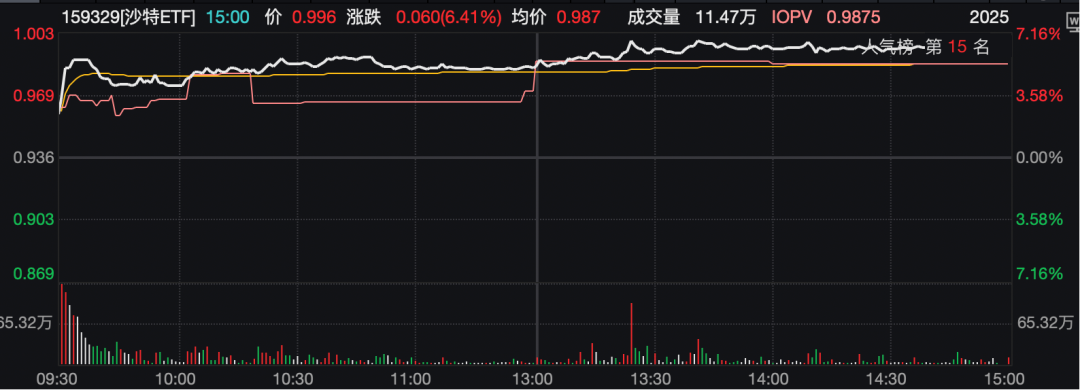
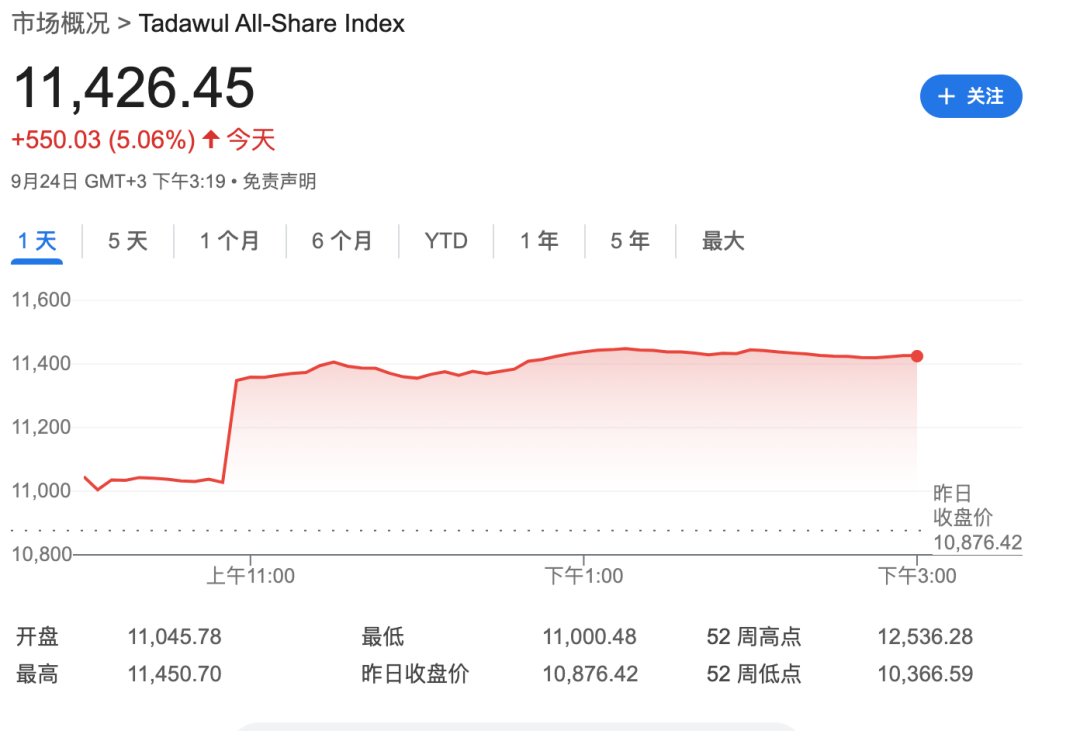
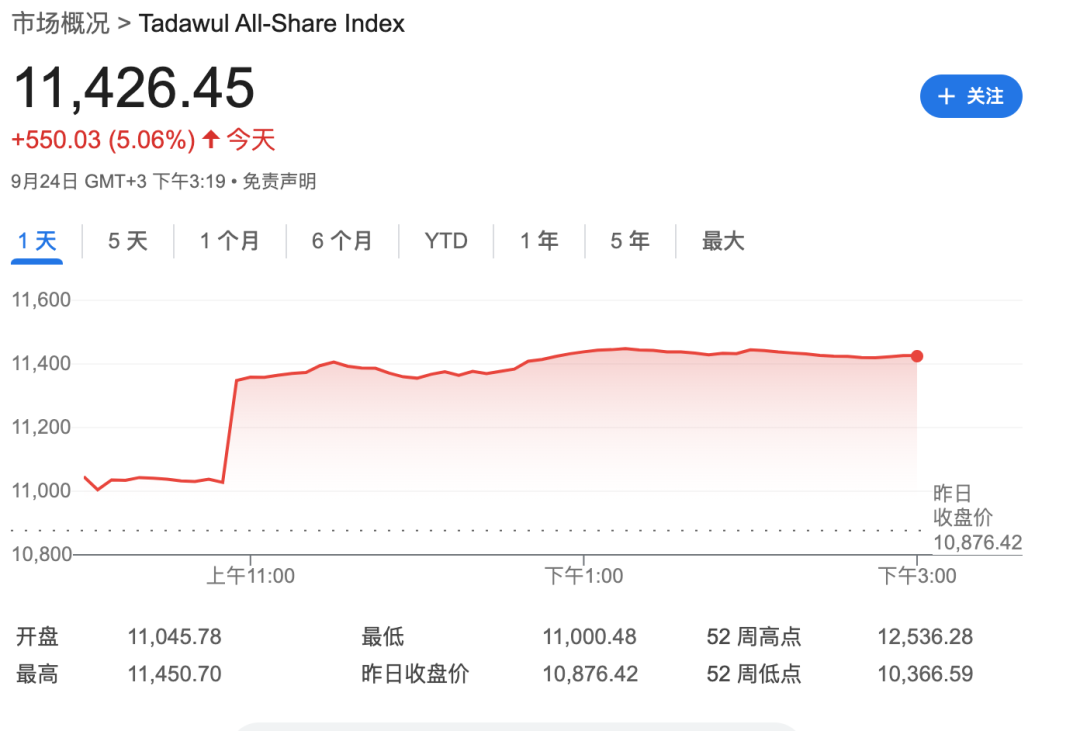
Core Insights - Saudi Arabia's benchmark stock index TASI surged by 5%, marking the largest single-day increase since 2020, driven by expectations of potential easing of foreign ownership limits [1] - If the policy is implemented, Saudi Arabia's stock market could attract nearly $10 billion in new foreign investment [1] - Al Rajhi Bank's stock price rose by 10%, reaching its maximum allowable daily increase, while Saudi National Bank also saw a 10% increase, the largest since its listing in 2014 [1] - Two ETFs in the Saudi market experienced gains exceeding 6%, reflecting strong investor enthusiasm for foreign capital inflow [1] Regulatory Changes - The Saudi Capital Market Authority (CMA) currently restricts foreign investors to a maximum of 49% ownership in any listed company, but is nearing an agreement to relax this limit [1] - CMA board member Abdulaziz Abdulmohsen Bin Hassan indicated that the policy could be effective by the end of the year [1] - The exact percentage of foreign ownership that may be allowed remains uncertain, but any adjustment above 50% would be significant for international investors [1] Market Impact - Franklin Templeton's Sara Shamma noted that lifting foreign ownership limits could release over $10 billion in passive funds and lead to significant weight adjustments in MSCI and FTSE indices, potentially increasing Saudi Arabia's weight in emerging market indices by nearly 100 basis points [2] - Currently, Saudi Arabia's market capitalization of $2.3 trillion accounts for 3.3% of the MSCI Emerging Markets Index [2] - Despite positive sentiment regarding potential policy changes, the sustainability of the Saudi stock market's performance depends on fundamental market conditions and overall economic outlook [2] - The Saudi stock market has faced challenges this year, previously declining nearly 10%, making it the worst-performing market in the Middle East, while the MSCI Emerging Markets Index has risen by 25% [2]
沙特股市飙升 百亿美元闸门将打开?
Guo Ji Jin Rong Bao· 2025-09-24 16:24
Core Insights - Saudi Arabia is likely to soon relax foreign ownership limits on listed companies, potentially attracting nearly $10 billion in new investments into its stock market [3][4] - The announcement has led to significant stock price increases for major Saudi banks, with Al Rajhi Bank and Saudi National Bank both rising by 10%, marking their largest percentage gains in nearly two decades [3] - The Capital Market Authority (CMA) is nearing a decision to ease the current 49% foreign ownership cap, with expectations that this policy could be implemented by the end of the year [3] Market Impact - The potential removal of ownership restrictions could release over $10 billion in passive fund inflows, significantly impacting the MSCI and FTSE indices and increasing Saudi Arabia's weight in emerging market indices by nearly 100 basis points [4] - Currently, Saudi Arabia's $2.3 trillion main exchange accounts for 3.3% of the MSCI Emerging Markets Index [4] - Despite the potential for a strong technical rally, the sustainability of the Saudi stock market's performance will depend on market fundamentals and the overall economic outlook, especially given concerns over geopolitical tensions and low oil prices [4] Recent Performance - The Saudi stock index has experienced a decline of nearly 10% this year, making it the worst-performing market in the Middle East, in contrast to the MSCI Emerging Markets Index, which has risen by 25% [4]

沙特股市大幅上涨,主要ETF表现强劲
Xin Lang Cai Jing· 2025-09-24 15:59
Group 1 - The Saudi Arabian stock market experienced a significant rebound on September 24, with major indices rising by 4.42%, and several heavyweight stocks increasing by over 9% [1] - The primary driver of this rally is the upcoming relaxation of foreign ownership restrictions in local companies by the Saudi Capital Market Authority (CMA), which is considering raising the foreign ownership limit from the current 49% [1] - The CMA is expected to approve a major amendment by the end of the year, which will greatly facilitate foreign capital inflow, particularly benefiting companies with a significant presence in the MSCI index [1] Group 2 - Year-to-date, the Saudi stock market has underperformed, with major indices down 9.6%, making it the worst-performing market in the Gulf region, in stark contrast to the MSCI Emerging Markets Index, which has risen by 25% during the same period [2] - Analysts suggest that if the CMA allows foreign ownership to exceed 50%, it could significantly enhance the relative weight of Saudi stocks in global capital markets, attracting more international investors and driving market recovery and growth [2] - The CMA's initiative is expected to improve the investment environment in Saudi Arabia and potentially reshape the investment landscape in the Gulf region amid current global financial market volatility [2]
沙特股市飙升,百亿美元闸门将打开?
Guo Ji Jin Rong Bao· 2025-09-24 15:19
Core Viewpoint - Saudi Arabia is likely to soon relax foreign ownership limits on listed companies, potentially attracting nearly $10 billion in new investments into its stock market [3][4] Group 1: Market Impact - The stock prices of major Saudi banks, including Al Rajhi Bank and Saudi National Bank, surged by 10%, marking their largest percentage increase in nearly two decades and since their listings, respectively [3] - Two Saudi ETFs listed on domestic exchanges saw gains exceeding 6% following the news [3] - The Capital Market Authority (CMA) currently restricts foreign investors to a maximum of 49% ownership in any listed company, but is nearing a decision to relax this rule [3] Group 2: Potential Investment Flow - Franklin Templeton's Middle East and North Africa equity investment head, Sara Shamma, indicated that a complete removal of restrictions could release over $10 billion in passive fund inflows, significantly adjusting the weights of MSCI and FTSE indices [4] - Saudi Arabia's main stock exchange, with a market capitalization of $2.3 trillion, currently accounts for 3.3% of the MSCI Emerging Markets Index [4] Group 3: Market Performance Concerns - Despite the potential for a strong technical rally, the sustainability of the Saudi stock market's performance will depend on market fundamentals and the overall economic outlook [4] - The Saudi stock index has faced challenges, with a decline of nearly 10% this year, making it the worst-performing market in the Middle East compared to a 25% increase in the MSCI Emerging Markets Index [4]
沙特股市突然大涨 这两只ETF也飙升!
Zheng Quan Shi Bao· 2025-09-24 14:34
Group 1 - The Saudi stock market index has risen by 4.42%, with several major stocks increasing by over 9% [1] - Two Saudi ETFs, the Southern Fund Southern Dongying Saudi ETF (159329.SZ) and Huatai-PB Southern Dongying Saudi ETF (520830.SH), have seen gains exceeding 6% [1] Group 2 - The Saudi Capital Market Authority (CMA) is considering allowing foreign investors to own a majority stake in local companies, with a proposed amendment to increase the foreign ownership limit from 49% [3] - CMA board member Abdulaziz Abdulmohsen bin Hassan indicated that the regulatory body is nearly ready for this step, pending approval from relevant government entities, with expectations for the decision to take effect by the end of the year [3] - Allowing foreign ownership above 50% could increase the weight of Saudi stocks in the MSCI index, potentially attracting significant capital inflow, as companies with foreign ownership restrictions have lower index weights [3] - The main Saudi stock index has declined by 9.6% this year, making it the worst performer in the region, while the MSCI Emerging Markets benchmark index has risen by 25% in USD terms [3]