南阳烙画

Search documents
火笔绘出东方美
Xin Lang Cai Jing· 2026-02-15 00:02
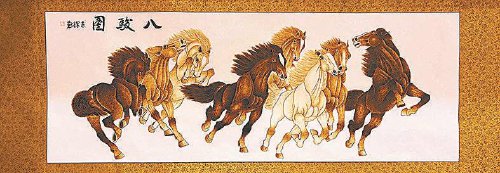
Core Viewpoint - The article highlights the preservation and promotion of Nanyang lacquer painting, a national intangible cultural heritage, through the efforts of local artisans and legal support from the Wolong District Procuratorate, which has led to a reduction in counterfeit products and an expansion of training programs for new artisans [4][5][7]. Group 1: Cultural Heritage and Artisanship - Nanyang lacquer painting, also known as "烙花" or "fire pen painting," has a history of over 2000 years and is recognized as a representative school of Chinese lacquer painting [4]. - The Nanyang lacquer painting factory serves as a national-level protection unit for this intangible cultural heritage, producing works that have participated in international exhibitions and won awards [4]. - Artisans at the factory are currently focused on creating popular works featuring horse elements for the upcoming Spring Festival [4]. Group 2: Legal Support and Anti-Counterfeiting Efforts - The Wolong District Procuratorate has initiated a "public interest litigation + intangible cultural heritage protection" model to address issues of counterfeiting, leading to the discovery of over 20 illegal merchants and administrative penalties for more than 10 individuals [5]. - Following the legal actions, the situation regarding counterfeit Nanyang lacquer paintings has significantly improved, allowing artisans to focus on their creative work [7]. Group 3: Training and Expansion - The factory has expanded its training programs, establishing teaching sites in regions such as Xinjiang and Guangdong, training nearly 100 apprentices across more than 20 batches [7]. - The product range has diversified from simple lacquered chopsticks to include silk, wooden boards, and gourd lacquer paintings, with products now exported to over 50 countries and regions [7].

文化中国行丨300℃到800℃里烙出一张中国画
Yang Shi Xin Wen Ke Hu Duan· 2025-04-27 07:13
Core Viewpoint - The article highlights the significance of Nanyang Luohua (burning painting) as a traditional Chinese art form, emphasizing its historical roots, unique techniques, and contemporary adaptations to attract younger audiences [1][19]. Group 1: Historical Background - Nanyang Luohua originated in the Western Han Dynasty and reached its peak during the Ming and Qing Dynasties [5]. - In 2021, Luohua was recognized as a national-level intangible cultural heritage [1]. Group 2: Artistic Techniques - The creation of Luohua involves several key processes including composition, material selection, burning patterns, and mounting [5]. - The core techniques of Luohua include "outline, texture, dot, and burn," which are influenced by traditional Chinese painting [9]. - The temperature control during the burning process is critical, ranging from 300°C to 800°C, especially for delicate materials like silk and rice paper [11]. Group 3: Contemporary Innovations - Recent creations have incorporated modern elements and themes that resonate with younger audiences, such as animated works and three-dimensional forms [17]. - The integration of practical applications, from large screen paintings to small decorative items, showcases the blend of art and utility in Luohua [19]. Group 4: Preservation and Promotion - Local initiatives include hosting exhibitions, training programs, and collaborations with universities to promote Luohua and engage the community [19]. - Government support through subsidies aims to encourage young people to participate in the preservation of Luohua techniques [21].