受阻胺光稳定剂(HALS)

Search documents
全球与中国受阻胺光稳定剂 (HALS)市场现状及未来发展趋势2026版
QYResearch· 2026-03-12 01:13
Core Viewpoint - The article discusses the global development and market size of hindered amine light stabilizers (HALS), highlighting their efficiency in preventing photodegradation in polymers and their growing market presence, particularly in China. Market Size and Growth - The global HALS market is projected to reach USD 986 million by 2025 and USD 1.317 billion by 2032, with a compound annual growth rate (CAGR) of 4.44% from 2026 to 2032 [6] - China's HALS market is expected to grow from USD 228.98 million in 2025 (23.22% of the global market) to USD 345.53 million by 2032 (26.25% of the global market) [6] - In terms of consumption, China is the largest market, holding a 29.32% share in 2025, followed by Europe (23.88%) and North America (17.07%) [6] - The Southeast Asian region is anticipated to experience the fastest growth, with a CAGR of approximately 4.14% from 2026 to 2032 [6] Product and Application Insights - Monomer-type HALS is expected to dominate the market, with a projected share of 75.91% by 2032 [7] - The plastic application segment is forecasted to account for about 60.24% of the market in 2025, with a CAGR of approximately 4.53% in the coming years [7] Competitive Landscape - Key global manufacturers of HALS include BASF, Sabo SpA, Suqian Liansheng Chemical, Syensqo, and Suqian Zhenxing Chemical [10] - The first-tier manufacturers, including BASF and Suqian Liansheng Chemical, are expected to hold about 37.61% of the market share by 2025, while second-tier manufacturers will account for 39.24% [10] - The market is becoming increasingly differentiated, with leading companies consolidating their positions in the high-end market while emerging firms intensify competition in the mid-to-low-end sectors [10] Industry Development Opportunities and Drivers - The rise in penetration of new energy vehicles is driving the growth of modified composite plastics, with global automotive sales projected to reach 9.5 million units by 2025 [11] - China's HALS production capacity covers approximately 60%-70% of global demand, with a geographical shift in demand due to the global supply chain transition [11] - The agricultural modernization trend is increasing the demand for HALS in agricultural applications, particularly for products that can withstand harsh conditions [11][13] - The need for high-end and functional requirements in various sectors, including automotive and electronics, is pushing the demand for advanced HALS [11] Industry Policy Analysis - The petrochemical industry is a crucial pillar of the national economy, with a projected increase in value added to 14.9% of industrial output by 2024 [15] - The "14th Five-Year Plan" aims to enhance the quality and efficiency of the petrochemical industry, focusing on innovation and the development of high-end differentiated products [15]

光稳定剂领域的“破局者”
Xin Lang Cai Jing· 2026-01-26 16:55
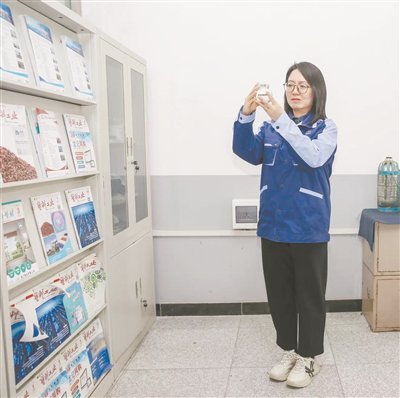
Core Viewpoint - The article highlights the achievements of Chen Wei, a leading engineer at Beijing Tiangang Additives Co., Ltd., who has significantly contributed to the development of light stabilizers in the chemical industry, breaking foreign monopolies and promoting high-quality regional development through innovation and collaboration [3][4][9]. Group 1: Innovation and Market Impact - Chen Wei joined Beijing Tiangang Additives in 2010, focusing on the research and development of light stabilizers, which were previously dominated by foreign brands, addressing performance and environmental concerns [4][5]. - The team successfully developed a series of new hindered amine light stabilizers, including the patented HS-625, which achieved annual sales exceeding several million yuan, breaking foreign technical monopolies and revitalizing the domestic light stabilizer industry [5][6]. Group 2: Industry Standards and Collaboration - As the chief engineer, Chen Wei emphasizes market-driven innovation, leading the development of various series of light stabilizers while optimizing production processes to enhance efficiency and reduce costs [7]. - Chen Wei has actively participated in drafting 12 national standards and 4 industry standards, providing crucial technical support for product quality and application norms, thus promoting industry standardization and structural optimization [7]. Group 3: Talent Development and Environmental Responsibility - Chen Wei is committed to nurturing talent, having guided numerous graduate students and trained technical staff within the company, contributing to the construction of a skilled workforce in the chemical industry [8]. - The company integrates ecological priorities into its research and development processes, exemplified by a project that repurposes by-products into valuable resources, achieving zero waste emissions and promoting green production practices [8].
研判2025!中国抗老化剂行业产业链、市场规模及发展趋势分析:行业加速从规模扩张转向质量提升,技术迭代推动高性能产品更新[图]
Chan Ye Xin Xi Wang· 2025-12-09 01:53
Core Insights - The Chinese anti-aging agent industry is in a golden development period, with the market size expected to reach approximately 12.8 billion yuan in 2024, representing a year-on-year growth of 18.52% [1][8] - Traditional sectors such as plastics, rubber, and coatings continue to show steady demand for anti-aging agents, while emerging fields like new energy vehicles, high-end building materials, and healthcare are driving new growth [1][8] - The industry is transitioning from "scale expansion" to "quality improvement," supported by both traditional and emerging demand, as well as technological advancements and green transformation [1][8] Industry Overview - Anti-aging agents are chemical additives that inhibit degradation of materials caused by environmental factors, thereby prolonging product lifespan and maintaining mechanical properties [2] - The main categories of anti-aging agents include antioxidants, light stabilizers, and thermal stabilizers [2] Industry Chain - The upstream of the anti-aging agent industry includes raw materials such as alkyl phenols, fatty alcohols, and various production equipment [4] - The midstream involves the production and manufacturing of anti-aging agents, while the downstream includes applications in rubber, plastics, coatings, adhesives, food, and cosmetics [4] Market Size - The market for anti-aging agents in China is rapidly expanding, with significant contributions from both traditional and emerging sectors [1][8] - The demand for high-performance and environmentally friendly anti-aging agents is increasing, particularly in new energy vehicles and healthcare [1][8] Key Companies - Lianlong is a leading company in the industry, with a comprehensive product matrix and global presence [8] - Suqian Liansheng focuses on light stabilizers, while Fengguang Co. specializes in antioxidants [8] - Yuanli Chemical Group emphasizes research and development of bio-based products and has established partnerships with numerous global companies [9] Industry Development Trends 1. **Technological Innovation**: The industry is focusing on technological advancements to drive product high-endization and specialization, with companies like Lianlong leading the way [10] 2. **Green Transformation**: The shift towards bio-based and biodegradable anti-aging agents is becoming a core research direction, driven by stricter environmental regulations [11] 3. **Market Demand Structure Upgrade**: The demand for high-performance anti-aging agents is increasing, leading to industry consolidation and global expansion strategies among leading companies [12]


大咖分享 | 蔡智奇博士:高温工程塑料耐候老化机理与创新解决方案
DT新材料· 2025-05-21 15:38
Core Viewpoint - Nylon (polyamide) is a key engineering plastic with high strength, wear resistance, and chemical corrosion resistance, widely used in automotive, electronics, textiles, and new energy sectors. However, its inherent aging issues, such as yellowing and mechanical performance degradation, remain industry pain points [1][3]. Group 1: Aging Mechanism of Nylon - The aging of nylon is caused by both internal and external factors, including the amide bond structure and alkyl chain that are susceptible to free radical reactions under heat, light, oxygen, and water [4]. - External factors like UV radiation, high-temperature processing, and humid environments significantly accelerate material degradation, especially in applications like electric vehicles and outdoor engineering [4]. - Key aging mechanisms include thermal oxidation leading to free radical chain reactions, photodegradation triggered by UV light, and hydrolysis catalyzed by water molecules [4][5]. Group 2: Solutions to Aging Issues - The core strategy to delay nylon aging involves blocking heat sources, isolating oxygen, and eliminating free radicals, with additives playing a crucial role in interrupting these reaction chains [5]. - New materials technology company has developed a range of weather-resistant additives, including antioxidants and light stabilizers, to enhance nylon's durability [5][10]. Group 3: Product Innovations - High-performance antioxidants like AO-3398 and P-EPQ have been introduced, improving thermal stability and resistance to hydrolysis, with temperature resistance exceeding 300°C [10][11]. - New multifunctional nylon additives, such as H3391, enhance processing stability and reduce breakage rates during nylon spinning, while also improving heat aging performance [13]. - The high-temperature yellowing agent H3311 effectively protects nylon products from oxidation and yellowing during processing, especially under high shear and temperature conditions [15]. Group 4: Domestic Technology Breakthroughs - The company has successfully developed a domestic solution for a patented product, reducing market prices from 300,000 yuan/ton to around 100,000 yuan/ton, with an annual production capacity of 300-400 tons [16]. - The company aims to not only replace imports but also address industry pain points through original design [16][17]. Group 5: Industry Trends and Opportunities - The nylon industry in China is accelerating towards high-end and low-carbon transformation, driven by the domestic production of key raw materials and breakthroughs in synthesis technologies for high-temperature and long-chain nylons [19]. - Emerging applications in electric vehicles, electronics, and intelligent robotics present significant opportunities and challenges for nylon modification and additive industries [19].