含氟新材料产品

Search documents
2025年十大财务造假公司
Cai Jing Wang· 2026-01-14 09:37
Core Viewpoint - The article discusses the increasing scrutiny and enforcement actions by regulatory bodies in China against financial fraud in publicly listed companies, highlighting a significant rise in the number of cases and the decline in the amount of inflated revenue reported by these companies [1][2]. Regulatory Actions - Since July 2024, the China Securities Regulatory Commission (CSRC) has handled 159 financial fraud cases, resulting in 111 administrative penalties totaling 8.1 billion yuan [2]. - The regulatory framework has been strengthened to include criminal referrals and civil claims against third parties involved in financial fraud, ensuring a comprehensive accountability system [1][2]. Trends in Financial Fraud - In 2025, approximately 43 companies were penalized for inflating revenue, with a total inflated revenue of about 15 billion yuan, a significant decrease from over 600 billion yuan in 2024 [2][3]. - The number of companies involved in financial fraud is increasing, but the total amount of inflated revenue has decreased significantly, indicating a potential improvement in compliance [2][3]. Common Fraud Techniques - Common methods of financial fraud include fictitious business operations, premature revenue recognition, and transactions with related parties lacking commercial substance [3][4]. - Companies have also been found to underreport costs and expenses to inflate profits, with some instances of fraud lasting several years before detection [3][4]. Case Studies of Fraudulent Companies - Notable cases include: - Evergrande Group, which inflated revenue by over 560 billion yuan [3]. - ST Huawen, which inflated revenue by 3.62 billion yuan through improper accounting practices [4][5]. - ST Chuangyi, which inflated revenue by 3.93 billion yuan by misreporting income from sales [6][7]. - ST Meichen, which inflated revenue by 14.39 billion yuan over five years through fraudulent procurement practices [13][14]. Impact of Regulatory Actions - The regulatory crackdown has led to the delisting of several companies, including ST Meichen and ST Huawen, due to severe financial misconduct [12][21]. - The enforcement actions have resulted in a more stringent environment for financial reporting, with companies facing significant penalties and reputational damage for non-compliance [2][20].



ST联创上市12周年:归母净利润累计下降59.82%,市值较峰值蒸发84.90%
Sou Hu Cai Jing· 2025-08-01 00:19
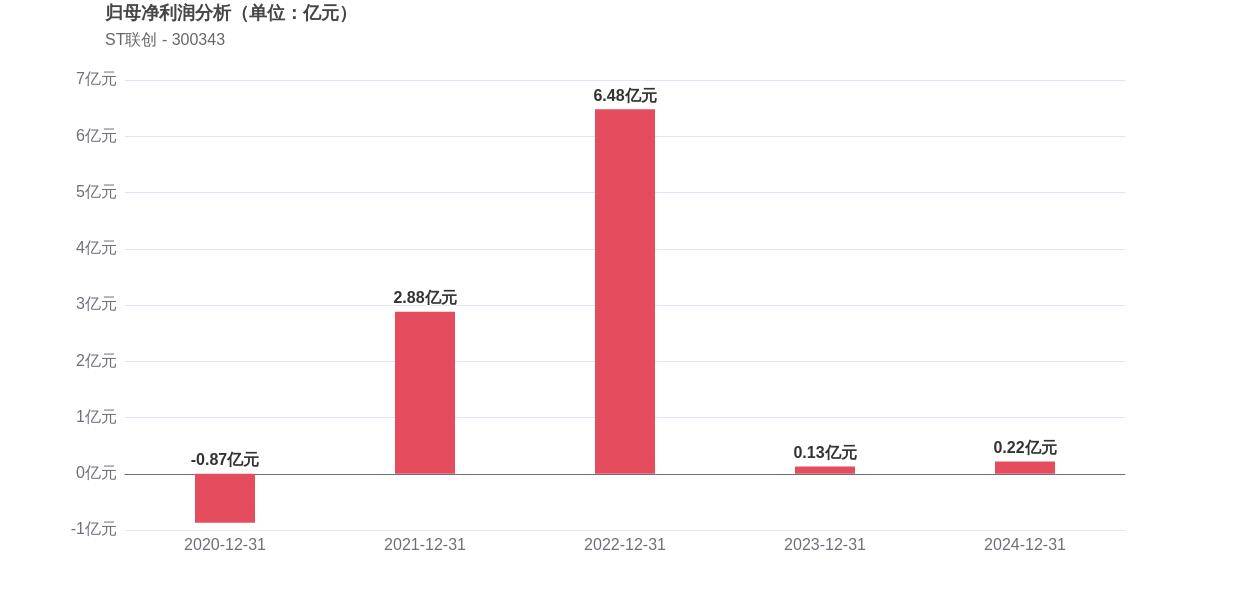
Group 1: Core Business and Revenue Structure - The main business of ST Lianchuang includes the research, production, and sales of fluorine-containing new materials and polyurethane new materials, with fluorine-containing products accounting for 71.34% of revenue and polyurethane products 28.66% [2] - In 2020, ST Lianchuang achieved a revenue of 1.738 billion yuan, which decreased to 869 million yuan by 2024, indicating a declining trend in revenue [3] Group 2: Profitability Analysis - The company reported a net profit attributable to shareholders of -87 million yuan in 2020, which improved to 22 million yuan in 2024, showing fluctuations in profitability [4] - Over the 13 years since its listing, ST Lianchuang has recorded losses in 3 years, while achieving profit growth in 10 years, representing a 76.92% profit growth rate [2] Group 3: Market Capitalization and Stock Performance - Since its listing, ST Lianchuang's market capitalization has increased by 2.91 times, peaking at 34.612 billion yuan on September 23, 2021, with a stock price of 29.9 yuan [6] - As of July 31, the stock price was 4.89 yuan, and the market capitalization was 5.227 billion yuan, reflecting a decrease of 29.385 billion yuan from its peak, equating to an 84.90% loss in market value [6]