国内航线旅客运输

Search documents
国内航线燃油附加费元旦后下调
第一财经· 2025-12-29 07:26
山东航空等航司今日下发通知,自2026年1月5日零时起,下调国内航线旅客运输燃油附加费征收标 准。其中800公里(含)以下航段收取燃油费10元,800公里以上航段20元,分别较之前下调10元和20 元。 编辑 |心一 记者| 陈姗姗 ...

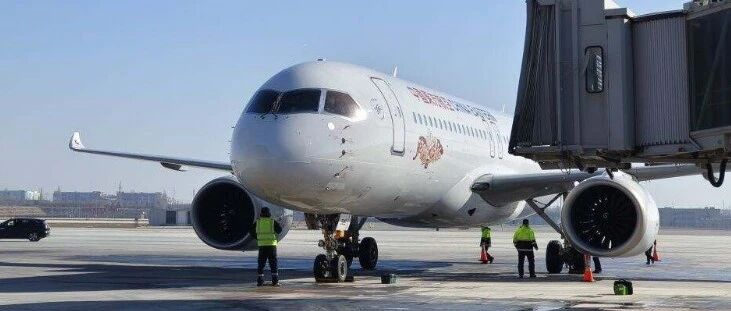
国内航线燃油附加费元旦后下调
Di Yi Cai Jing· 2025-12-29 07:15
Core Viewpoint - Airlines such as Shandong Airlines have announced a reduction in the fuel surcharge for domestic passenger transport starting from January 5, 2026, which reflects a significant adjustment in pricing strategy to enhance competitiveness in the market [1] Group 1: Fuel Surcharge Changes - For segments of 800 kilometers or less, the fuel surcharge will be reduced to 10 yuan, down by 10 yuan from the previous rate [1] - For segments exceeding 800 kilometers, the surcharge will be set at 20 yuan, which is a reduction of 20 yuan from the prior charge [1]

油价大跌航空业迎利好 三大航司有望增厚50亿利润
Sou Hu Cai Jing· 2025-06-03 00:10
Group 1 - The core viewpoint is that the airline industry's operating profits are expected to improve due to falling oil prices and a stable recovery in demand, with a projected net profit margin of 3.7% in 2025, up from 3.4% in 2024 [1] Group 2 - Fuel costs are expected to decrease significantly, with the average fuel price projected at $86 per barrel in 2025, down from $99 per barrel in 2024. Total fuel costs are estimated at $236 billion, accounting for 25.8% of total operating costs, representing a 9.6% decrease from $261 billion in 2024 [3] - The decline in fuel prices is beneficial for airlines, as fuel costs constitute about one-third of total operating costs. For example, in 2024, the fuel costs for major Chinese airlines were approximately 53.72 billion yuan, 45.50 billion yuan, and 54.99 billion yuan, respectively, making up around 34.46% to 35.97% of their total costs. A 10% drop in fuel prices could potentially increase profits by about 5 billion yuan for these airlines [3] Group 3 - Airlines are enhancing operational efficiency by optimizing capacity deployment, improving marketing strategies, and increasing passenger load factors to boost unit revenue. The domestic fuel surcharge mechanism also helps mitigate fuel price volatility risks [4] - The domestic airline industry's passenger load factor reached a recent high in 2024, with major airlines reporting load factors of approximately 85.37% to 85.58%, reflecting an increase of 2.5 to 4.4 percentage points year-on-year. The overall load factor for the domestic aviation sector reached 83.3%, a 5.4 percentage point increase compared to previous years [4]