图案的奇迹:卢浮宫印度

Search documents
奔流日记|江海关、大歌剧院和万国学舍
Xin Lang Cai Jing· 2025-12-31 02:26
Group 1 - The Jiangnan New Village redevelopment project in Xuhui District involves the relocation of residents from 2,374 housing units, covering a total construction area of approximately 110,000 square meters [2] - Jiangnan Shipyard has a historical significance, having built 837 ships totaling 300,000 tons from 1865 to 1949, and 1,100 ships totaling 3.4 million tons from 1949 to 1995, indicating a significant increase in shipbuilding capacity post-liberation [3] - The Jiangnan Shipyard Museum showcases various historical maritime artifacts, including China's first submarine and the first self-designed 10,000-ton ship, highlighting the shipyard's contributions to naval history [3] Group 2 - The International Monetary Fund (IMF) Shanghai Center has opened to provide policy references for emerging markets and middle-income countries, enhancing dialogue and research in relevant policy areas [7] - IMF President Kristalina Georgieva emphasized the need for China to transition from an export-driven growth model to a consumption-driven one, citing challenges such as slowing productivity growth and high debt levels [8] - The Shanghai Center's establishment reflects China's ongoing engagement with the IMF and the importance of international cooperation in economic policy [8] Group 3 - The Shanghai Bund has seen the establishment of a new outdoor performance venue capable of hosting 30,000 to 50,000 attendees, filling a long-standing gap in high-standard outdoor event spaces in the central urban area [9] - The venue is part of a broader initiative to create a world-class performing arts cluster in the Pudong area, which includes several other cultural and sports facilities [9] Group 4 - The Jianghai Customs Museum is set to open in 2026, highlighting the historical significance of customs in Shanghai's trade and administrative history, dating back to the establishment of the customs office in 1685 [10][11] - The museum will focus on the evolution of customs management in Shanghai, including its role in international trade and local governance [11] Group 5 - The Shanghai Museum is hosting an exhibition on the history of the qipao, featuring 274 pieces from the collection of a prominent figure, showcasing the cultural significance of this traditional garment [17] - The exhibition aims to highlight the craftsmanship and historical context of the qipao, linking it to broader themes of fashion and identity in Shanghai [17]

卢浮宫上海办大展,浦东美术馆里有哪些伊斯兰艺术珍品?
Di Yi Cai Jing· 2025-12-15 02:48
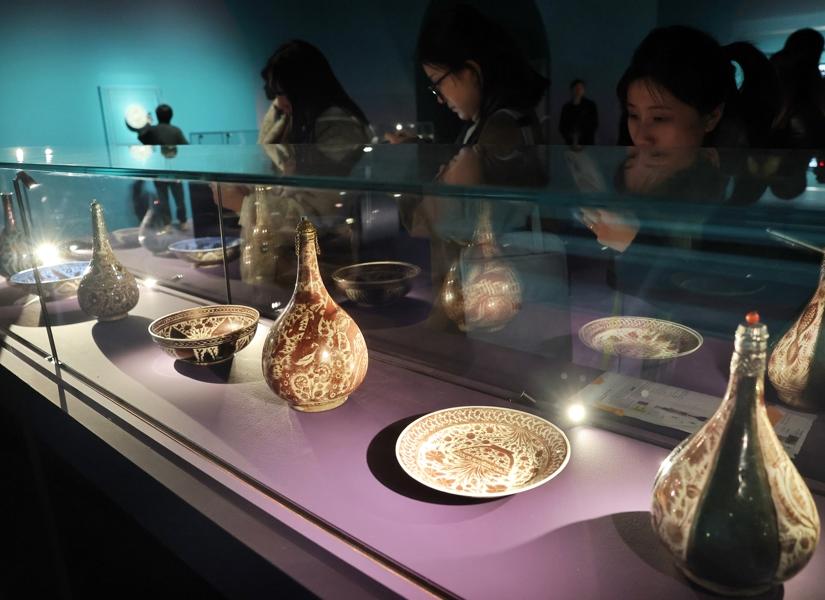
Core Viewpoint - The exhibition "The Miracle of Patterns: Masterpieces of Indian, Iranian, and Ottoman Art from the Louvre" will be held at the Pudong Art Museum from December 13 to May 6 of the following year, marking the first large-scale exhibition by the Louvre in Shanghai [1] Group 1: Exhibition Overview - The exhibition features three major empires that represent Islamic culture: the Mughal Empire, the Safavid Empire, and the Ottoman Empire, showcasing their unique aesthetic while sharing a common artistic language [3] - The exhibition is divided into three sections, highlighting Indian art (Mughal Empire), Iranian art (Safavid and Qajar dynasties), and Ottoman art, with connections to Chinese art evident throughout [6] Group 2: Historical Context and Influences - The exhibition begins with pieces from King Louis XIV's collection, which includes artifacts from the Mughal and Ottoman empires that were used to decorate royal palaces, forming a core part of the Louvre's collection [4] - The Safavid period saw a flourishing of artistic creation driven by increased trade and mass production, with ceramics reflecting a variety of motifs and techniques, including imitations of Chinese blue-and-white porcelain [6][8] - Ottoman artisans in Iznik drew inspiration from Chinese porcelain, starting around 1470, and their ceramics evolved to include a rich color palette while initially mimicking Chinese styles [8] Group 3: Artistic Traditions and Literature - The exhibition illustrates the deep literary traditions of these empires, with artifacts depicting poetic scenes that reflect the cultural significance of poetry in their daily lives [11] - Calligraphy held a prominent place in Ottoman art, with documents showcasing intricate designs that serve both decorative and symbolic purposes [13] - The final section of the exhibition emphasizes the unique and rich aesthetic of these cultures, which continues to inspire contemporary art and design, as seen in the works of modern designers like Louis Cartier [15]

携手卢浮宫和毕加索博物馆 浦东美术馆年末推重磅双展
Jie Fang Ri Bao· 2025-12-05 01:49
Core Insights - The article highlights the upcoming major international exhibitions at the Pudong Art Museum, featuring collaborations with the Louvre Museum and the Picasso Museum, showcasing significant art collections from India, Iran, and the Ottoman Empire, as well as works by Pablo Picasso [1][2][3] Group 1: Exhibition Details - The exhibition "The Miracle of Patterns" is the Louvre's first exhibition in Shanghai, featuring around 300 pieces of art, including ceramics, jewelry, and paintings, spanning from the 16th to the 19th century [2] - The exhibition is designed to provide an immersive experience, with a focus on the artistic atmospheres of different cultures, and includes reconstructed rooms reflecting Ottoman architecture [2] - The second exhibition, "Very Picasso: Paul Smith's New Perspective," showcases over 80 works from Picasso's career, including various mediums such as oil paintings and sculptures, and is the only stop in China for this international tour [3][5] Group 2: Design and Cultural Products - Paul Smith serves as the artistic director for the "Very Picasso" exhibition, aiming to create a contemporary viewing experience that departs from traditional exhibition formats [5] - The Pudong Art Museum has announced a new cultural product series related to both exhibitions, featuring over 300 items that blend the intricate patterns of the Louvre with Picasso's bold visual language [6] - The combination of these two exhibitions is described as the "strongest lineup" in the museum's history, appealing to diverse audiences and extending through May of the following year [6]