
图纸

Search documents
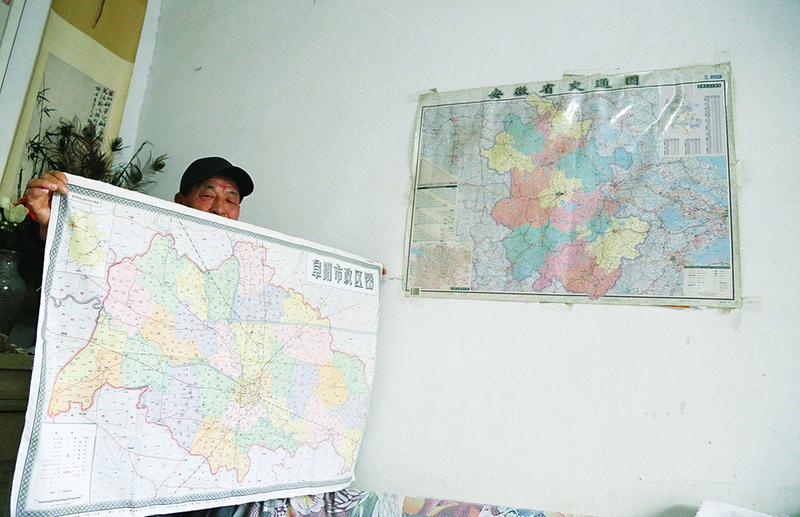
“农民绘图师”手绘千幅图纸
Xin Lang Cai Jing· 2026-01-16 17:03
Core Insights - The article highlights the journey of Wang Yongzhang, a self-taught mapmaker from Fuyang City, who has created over 1,000 maps since 1992, showcasing his dedication and skill in cartography [3][4][5]. Group 1: Background and Early Career - Wang Yongzhang, aged 69, began his career in a rural cultural station at the age of 29, where he developed skills in art and drawing, which later led him to self-study cartography [4]. - His initial work involved creating sketches and maps for archaeological purposes, which he pursued by subscribing to relevant magazines [4]. Group 2: Map Creation Process - The map-making process involves creating rough sketches, professional proofreading, and meticulous hand-drawing using various fonts and sizes, with a limit of about 100 characters per day due to the labor-intensive nature of the work [4][5]. - Wang would often measure distances personally to ensure the accuracy of the maps, especially when dealing with geographical features and village boundaries [4]. Group 3: Recognition and Achievements - In 1992, Wang was recommended to create a municipal map for the original county-level Fuyang, standing out as a farmer among larger organizations [5][6]. - His design was ultimately chosen for its balanced size and visual impact, leading to the printing of 3,000 copies in November 1994, with the copyright given to the government [6]. - Despite leaving the cultural station due to institutional reforms, Wang continued to produce various maps, primarily for water conservancy projects, totaling over 1,000 maps to date [6].

跨部门不扯皮,从“看懂一张图纸”开始
3 6 Ke· 2025-07-29 00:49
Core Viewpoint - The article emphasizes the critical role of technical drawings in the manufacturing process, highlighting that understanding these drawings is essential for all personnel involved in product development and production [2][10]. Group 1: Importance of Technical Drawings - Technical drawings serve as a universal language in manufacturing, facilitating clear communication among various departments [9][19]. - The ability to read and interpret drawings is not limited to designers; it is a fundamental skill required by quality assurance, production, and procurement personnel [19][23]. - Drawings help prevent misunderstandings and errors that can lead to production issues, quality problems, and customer complaints [2][24]. Group 2: Manufacturing Process Steps - The manufacturing process consists of three main steps: conceptualization, production, and sales [4][8]. - Each step requires collaboration among different departments to ensure that everyone understands their roles and responsibilities [5][8]. - The process of creating a technical drawing involves multiple stages, including planning, conceptualization, design, and review [11][13]. Group 3: Drawing Creation Process - The creation of technical drawings begins with defining product requirements based on market needs, followed by sketching and formalizing the design [13][15]. - Drawings undergo a rigorous review process to ensure accuracy and completeness before production begins [16][29]. - The final drawings must meet standardized criteria to ensure they convey all necessary information clearly and consistently [25][27]. Group 4: Standardization and Quality Control - The ISO GPS standard provides a unified framework for technical drawings, ensuring that all stakeholders interpret them consistently [24][25]. - Standardization is crucial for maintaining quality across various manufacturing processes, as it minimizes the risk of miscommunication [27][30]. - Quality checks are performed on drawings to identify any potential issues before they are used in production [30].