在线北美外教一对一课程

Search documents
在线英语大课包重现
Bei Jing Shang Bao· 2025-11-13 15:45
Core Viewpoint - The article discusses the issues surrounding the sale of large course packages by online education institutions, particularly LingoAce, which are seen as a means of binding consumers to long-term commitments and potentially violating regulatory guidelines on prepayment for educational services [1][10][11]. Group 1: Course Package Issues - Many parents report difficulties in finding smaller course packages, with institutions primarily promoting large packages that exceed 60 hours, contrary to regulations [1][3][10]. - LingoAce previously offered a smaller package of 36 hours but discontinued it due to low demand, indicating a trend towards larger packages [4]. - Other institutions also offer large packages, with some reaching up to 186 hours and costing over 30,000 yuan, reinforcing the trend of promoting long-term commitments [5]. Group 2: Consumer Rights and Regulatory Compliance - Parents express concerns that the lack of smaller packages limits their choices and may be driven by the institutions' desire to secure cash flow and customer retention [5][6]. - Legal experts highlight that institutions must comply with domestic regulations, which prohibit charging for more than 60 hours of instruction at once, regardless of whether they operate cross-border [10][11]. - The article notes that institutions may not adequately inform consumers about course expiration dates and mandatory consumption rules, potentially infringing on consumer rights [7][9]. Group 3: Regulatory Framework - The Ministry of Education has established clear guidelines regarding prepayment for educational services, emphasizing that institutions must not charge for more than 60 hours at a time [10][11]. - Institutions like LingoAce are criticized for using promotional courses to artificially inflate total hours, which could be seen as a violation of these regulations [11].


被爆炒的线上英语一对一|万元大课包频现,有效期内学不完作废
Bei Jing Shang Bao· 2025-11-13 12:07
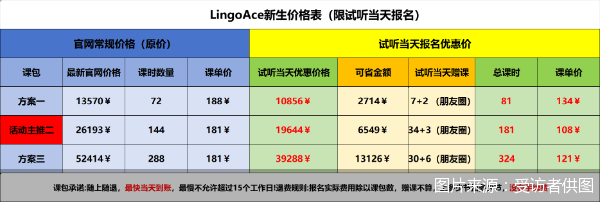
Core Viewpoint - The article highlights concerns regarding online education institutions, particularly LingoAce, which are accused of violating regulations by promoting large course packages that exceed the allowed 60 class hours, effectively binding consumers to long-term commitments [1][10][11]. Group 1: Course Package Issues - Many parents report difficulties in finding smaller course packages, with institutions primarily promoting large packages that often exceed 60 hours, contrary to regulations [2][4]. - LingoAce's smallest course package reportedly consists of 72 hours, which, when including bonus classes, totals 81 hours, indicating a trend towards larger packages [3][4]. - Institutions justify the promotion of large packages by claiming that long-term learning is necessary for effective education, which some parents view as a means to ensure cash flow and customer retention [5][6]. Group 2: Regulatory Compliance - The Ministry of Education has issued clear guidelines prohibiting the collection of fees for more than 60 class hours at once, which many institutions, including LingoAce, appear to violate [10][11]. - Legal experts assert that regardless of whether an institution operates cross-border, it must comply with domestic regulations when providing services within China [11]. - The practice of offering large packages with bonus classes is seen as a way to circumvent the regulations, leading to potential legal repercussions for the institutions involved [11]. Group 3: Consumer Rights and Transparency - There are allegations that sales personnel do not adequately inform parents about the terms of course packages, including expiration dates and mandatory consumption rules, which could infringe on consumer rights [6][7]. - The lack of transparency regarding course expiration and mandatory usage requirements has led to complaints from parents who feel pressured to complete courses within tight timelines [6][7]. - Legal interpretations suggest that failure to disclose such critical information may violate consumer rights under Chinese law, allowing for potential complaints to regulatory bodies [7]. Group 4: Institutional Responses - LingoAce has stated that it is working on local compliance measures to align its offerings with Chinese regulations, indicating an awareness of the regulatory landscape [5][11]. - The company claims that its course structure and pricing strategies are designed to provide a consistent learning experience across different regions, but this has raised questions about its adherence to local laws [5][11].