地铁快巴

Search documents
广州首批10条“地铁快巴”上线运营 市民可关注相关小程序
Xin Lang Cai Jing· 2026-01-11 23:24
Core Insights - Guangzhou Bus Group has launched the first batch of 10 "Metro Express Bus" demonstration routes to address the "last mile" commuting challenges for citizens [1] - The "Metro Express Bus" features a demand-oriented design with the core characteristics of "three short and five fast," aiming to enhance commuting efficiency [1] Group 1: Service Features - The routes are short (within 5 kilometers), have few stops (no more than 5), and short transfer distances (within 50 meters of metro stations) [1] - The service aims to provide quick departures, fast stops, rapid transfers, prompt information feedback, and improved commuting efficiency [1] Group 2: Coverage and Accessibility - The initial 10 demonstration lines cover key metro stations including Hedong East, Lijiao, Huangcun, and others, connecting surrounding industrial parks, schools, and large communities [1] - Citizens can access information about the routes and schedules through offline announcements at metro stations and online via the "Guangzhou Bus Community" mini-program [1] Group 3: Customization Options - Communities, organizations, or schools in need can initiate personalized travel requests through the "Guangzhou Bus Community" WeChat mini-program to customize their "Metro Express Bus" services [1]
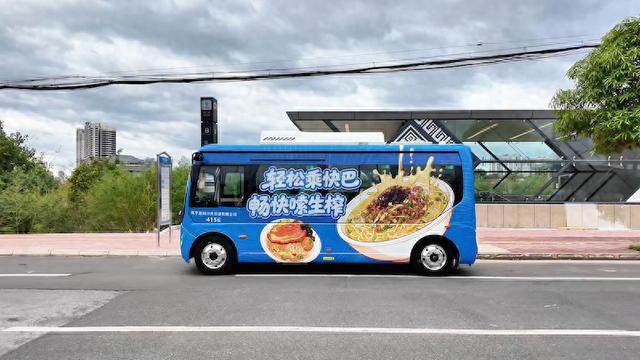
从嗦粉专线到数智调度 南宁公交以新场景点亮“民生路”
Xin Lang Cai Jing· 2025-12-25 15:18
Core Viewpoint - Nanning Public Transport is transforming from traditional capacity to precise service, leveraging digital intelligence to enhance public transport efficiency and meet citizen needs [2][5][8]. Group 1: Transformation and Innovation - Nanning Public Transport has launched various specialized bus lines, such as the "Suo Fen Line" and "Vegetable Basket Line," to connect citizens with local food and agricultural markets [2][5][7]. - The company has invested 1.2 million yuan in smart safety facilities, emphasizing the integration of technology in public transport [3]. - The implementation of AI-driven systems for real-time passenger flow analysis and dynamic scheduling has significantly improved operational efficiency [10]. Group 2: Integration and Collaboration - The integration of metro and bus services has resulted in a 25% increase in daily passenger volume over three years, with significant cost savings for the government [7][10]. - Nanning's public transport system has achieved a 91.51% coverage rate of bus stops within 50 meters of metro stations, enhancing connectivity [10]. - The establishment of a multi-level organizational structure for community engagement has strengthened the service delivery model [7]. Group 3: Future Outlook and Strategic Goals - Nanning Public Transport aims to explore new business models, including automated buses and hydrogen-powered vehicles, to diversify revenue streams and enhance resilience [12]. - The company is focused on developing a comprehensive public transport system that integrates various modes of transport, aiming for seamless passenger experiences [10][12]. - Future initiatives will include the promotion of smart transportation technologies and collaboration with industries to enhance service quality and operational efficiency [11][12].

南宁公交是如何打造“一流城市综合服务商”的|一线调研
Di Yi Cai Jing· 2025-12-19 05:54
Core Viewpoint - Nanning's public transportation system has achieved remarkable growth despite challenges, establishing a replicable model for public transport integration and becoming a national demonstration city for public transport development [1][11]. Group 1: Public Transportation System Overview - Nanning has developed a public transportation system that integrates various modes, with a backbone of rail transit and a main network of conventional buses, featuring five operational rail lines with a maximum daily ridership of 1.8236 million, ranking 12th among 54 cities with rail transit in China [2]. - The city operates three main public transport companies, each with distinct roles: Nanning Yongcheng Public Transport Co., Nanning Baima Public Transport Co., and Nanning Yongning Public Transport Co., covering diverse travel needs [3]. Group 2: Operational Performance - The three operating companies manage a fleet of 2,985 buses, with a total passenger volume of 156 million in the first ten months of the year, averaging 520,000 passengers daily, comparable to similar cities [4]. - Nanning's public transport model focuses on multiple operators to enhance service quality and market vitality, supported by government policies and subsidies to ensure fair revenue distribution among operators [4][12]. Group 3: Service Innovations - Nanning has launched various specialized bus services, including 27 express bus lines, 18 senior citizen lines, and 161 customized school bus routes, with over 50% of motorized trips made via public transport [5][9]. - The integration of rail and bus services has led to a 91.51% connection rate within 50 meters of metro stations, achieving seamless transfers and enhancing commuter convenience [8]. Group 4: Future Developments and Strategic Goals - Nanning aims to further enhance its public transport system by integrating agricultural transport services, optimizing routes for farmers, and promoting cultural tourism through public transport [13][15]. - The city is also focusing on smart operations, with advanced monitoring systems improving maintenance efficiency and reducing costs [10].