
三网融合

Search documents
全国政协委员钟章队:算力需求扩容催生能源新布局
中国能源报· 2026-03-09 11:03
Group 1 - The core viewpoint is that the integration of energy infrastructure and computing power networks is essential for supporting the expansion of AI capabilities in China, with a focus on renewable energy sources like wind and solar power [2][3]. - China's non-fossil energy consumption has exceeded 20%, and with the accelerated construction of renewable energy facilities and ultra-high voltage transmission networks, a nationwide renewable energy network compatible with AI computing power is expected to be established in the next 15 years [3]. - The transportation infrastructure in China is extensive, with approximately 200,000 kilometers of highways and over 50,000 kilometers of high-speed rail, which can synergistically support the deployment of renewable energy facilities [3]. Group 2 - The computing power network is evolving from supercomputing and intelligent computing to edge computing, which relies heavily on distributed energy support [3][4]. - Edge computing scenarios, such as stations and traffic rest areas, will become important carriers for the layout of renewable energy facilities, with full coverage of charging stations on highways and ongoing construction on regular roads [3]. - The number of mobile communication base stations in China has reached millions, and the expansion of 5G and 6G networks will further integrate base stations with renewable energy, providing distributed energy support for computing power development [3][4]. Group 3 - The explosive growth of computing power creates new consumption scenarios for renewable energy, while the large-scale supply of renewable energy lays a solid foundation for the green development of computing power [4]. - The integration of three networks (transportation, energy, and information) and the collaboration of edge computing and renewable energy will be key to fostering new productive forces and promoting the deep integration of the digital economy and green economy [4]. - This synergy is expected to facilitate high-quality collaborative development between the computing power industry and the renewable energy industry in China [4].


锚定项目赋能年,建设综合立体交通网
Qi Lu Wan Bao· 2026-01-21 13:41
Core Viewpoint - In 2026, Jinan's transportation sector aims to focus on "Project Empowerment Year" by advancing 115 key transportation projects, including the Jinan-Binzhou High-speed Railway and the second phase of Jinan Airport expansion, to enhance the quality of urban mobility for citizens [1][2]. Group 1: Key Transportation Projects - Jinan will accelerate the construction of the Jizhao High-speed Railway and ensure the completion of the Jinan-Binzhou High-speed Railway, while also starting the comprehensive passenger transport hub project at Jinan Railway Station [1]. - The second phase of Jinan Airport expansion will be completed this year, establishing a solid hardware foundation for the regional aviation hub [1]. - Seven highway projects, including the expansion of the southern ring road, will be promoted to ensure the Jinan to Ningjin highway is operational [2]. Group 2: Urban Road Network Improvement - The city will enhance its urban road network by constructing the Phoenix Yellow River Bridge south extension and the second phase of Huanghe Avenue, ensuring the completion of the industrial northern road extension [3]. - A total of 58 urban roads will be newly constructed or renovated, and 20 congestion points will be optimized to improve traffic flow [3]. - Eleven pedestrian overpasses will be built to facilitate smoother commuting for citizens [4]. Group 3: Public Transport and Integration - Jinan's rail transit will continue to expand, with the western section of Line 6 expected to open this year and the first phase of Line 9 aimed for completion within the same timeframe [3]. - The city will enhance the integration of public transport systems, focusing on a "three-network integration" approach that combines rail, bus, and non-motorized transport [3][4]. - A variety of bus services will be introduced, including community buses and "five-minute buses," to cater to diverse commuting needs [3]. Group 4: Digital Transformation and Smart Transportation - Jinan will focus on governance efficiency and smart upgrades in transportation, launching initiatives to modernize industry governance and improve the business environment [6]. - The city plans to implement a digital transportation system that includes a unified travel service platform, enabling data sharing between public transport and rail systems [6]. - Efforts will be made to develop low-altitude transportation services and conduct trials for various low-altitude applications [6]. Group 5: Commitment to Public Service - Jinan's transportation strategy emphasizes continuous improvement in public service, with a commitment to addressing issues through a problem-oriented approach and integrating development efforts [7]. - The city aims to enhance the overall quality of transportation services to meet the needs of its citizens and support the modernization of the province [7].
星星充电三网融合,以数字化重构城市能源生态
Jing Ji Guan Cha Wang· 2026-01-13 07:45
Core Insights - Wanbang Digital Energy Co., Ltd. (brand "Xingxing Charging") is a leading unicorn in the digital energy sector in Asia, focusing on smart charging equipment development, energy operation services, and digital energy ecosystem construction since its establishment in 2014 [1] - The company has sold over 2 million charging terminals across more than 300 cities in China, establishing a comprehensive service system covering "cloud-management-terminal" [1] - The platform has approximately 40 million registered users and serves over 18,000 operators, becoming a benchmark enterprise in the electric vehicle charging sector [1] Group 1 - The company addresses core pain points in the energy industry, such as supply-demand imbalance and low operational efficiency, by focusing on digital upgrades across the entire energy chain [2] - The platform features an integrated system comprising three sub-platforms and a data middle platform, enhancing operational management through AI-driven lifecycle management of charging stations [2] - The smart charging operation management platform integrates TB-level data resources and millions of daily orders, achieving a data consistency rate of 98% [2] Group 2 - The implementation of the three-network integrated intelligent operation management platform has led to significant improvements in energy industry efficiency and green transformation [4] - The platform connects over 2.2 million charging facilities, significantly reducing reliance on manual operations and enhancing the response speed and equipment utilization of charging stations [4] - The company aims to continue deepening the technological iteration of the three-network integration and expand applications in various energy segments, contributing to national energy security and low-carbon development [4]
精彩纷呈这一年,我们与您携手走过
Xin Lang Cai Jing· 2025-12-30 20:11
Core Viewpoint - Chengdu's public transportation system has undergone significant upgrades, enhancing the commuting experience for residents through improved bus services and integration with metro lines [1][2][5]. Group 1: Enhanced Commuting Experience - The launch of Chengdu's first automated driving bus line has reduced commuting time significantly, providing a direct service from the metro station to workplaces, cutting travel time from over 40 minutes to approximately 25 minutes [2]. - The establishment of a new bus transfer station near Chengdu West Station has improved the waiting environment and reduced peak waiting times from 8 minutes to under 2 minutes [3]. - A total of 45 bus transfer stations have been built, with over 60 metro connecting lines in operation, serving around 100,000 passengers daily [3]. Group 2: Efficient Bus Services - Chengdu plans to optimize 60 "Rongcheng Microbus" metro connecting lines by 2025, aiming to enhance the integration of metro and bus services with reduced waiting times [4]. - The introduction of 10 new bus express lines in December effectively connects key metro stations, improving transportation for residents [5]. Group 3: Innovative Solutions - The "Minle Mode" has been implemented to alleviate congestion at busy metro stations by redesigning bus stop layouts and improving passenger flow [7]. - Customized school bus lines have been introduced, providing direct routes for students, with over 280 such lines now operational across more than 120 schools [8]. Group 4: Cultural Integration - Chengdu's public transport has evolved into a cultural ambassador, with themed buses like the "Fire Pot Bus" and "Night Tour Jinjiang Bus" becoming popular among tourists [13]. - The launch of the "Fun Travel Bus" brand integrates transportation with cultural and tourism resources, enhancing the city's unique character [13]. Group 5: Event Support - During the Chengdu World University Games, the public transport system provided comprehensive support, ensuring smooth transportation for over 10,000 attendees with a well-coordinated fleet and service lines [11].
四川“十四五”完成水路投资311亿元
Zhong Guo Xin Wen Wang· 2025-12-29 12:01
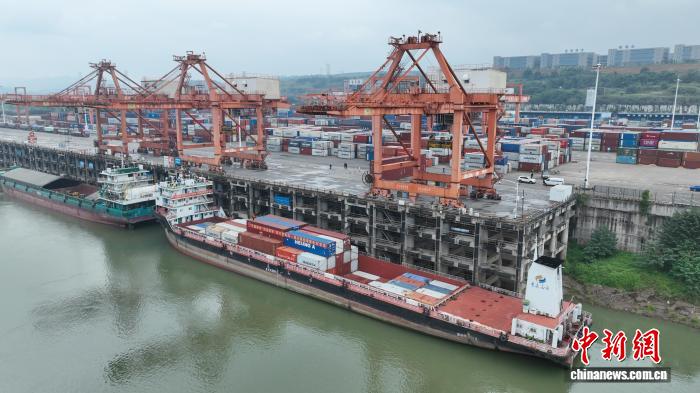
Core Insights - Sichuan Province has completed a total investment of 31.1 billion yuan in waterway transportation during the "14th Five-Year Plan" period, with an expected investment of 6.09 billion yuan in 2025 [1] Group 1: Investment and Infrastructure - The total fixed asset investment in Sichuan's waterway transportation is projected to reach 31.1 billion yuan by the end of the "14th Five-Year Plan" [1] - As of now, the high-grade waterway mileage in Sichuan has reached 2,054 kilometers [1] Group 2: Cargo and Transportation Volume - The expected waterway cargo volume in Sichuan for 2025 is 75 million tons, with a cargo turnover of 32.6 billion ton-kilometers [2] - Long-distance transportation of bulk goods has exceeded 27 million tons, showing a year-on-year increase of 42% [2] - The average transport distance for goods has extended to 480 kilometers, highlighting the cost-effectiveness of water transport for long-distance and bulk logistics [2] Group 3: Port and Trade Performance - Port throughput in Sichuan is expected to exceed 51 million tons in 2025, with container throughput nearing 400,000 TEUs, both reaching new highs during the "14th Five-Year Plan" [2] - From January to November 2025, Sichuan's foreign trade container throughput has increased by over 22%, with exports of new energy vehicles reaching 2,352 TEUs [2] Group 4: Environmental Initiatives - Sichuan has built 110 new energy vessels and established 22 "zero-carbon" ferry terminals, achieving zero discharge of ship pollutants in four major navigable rivers [2]
从经济热词看影响四川的“变量”
Xin Lang Cai Jing· 2025-12-28 20:28
Core Viewpoint - The article emphasizes the importance of expanding domestic demand and enhancing the role of the private economy in driving China's economic growth, particularly in the context of the upcoming "15th Five-Year Plan" and the challenges posed by external economic environments [2][11]. Group 1: Domestic Demand Growth - The current economic environment shows a significant contradiction between strong supply and weak demand, necessitating a focus on expanding effective domestic demand [2][3]. - The central economic work meeting has prioritized the construction of a strong domestic market, indicating a strategic shift towards internal circulation [2][3]. - In 2024, China's consumer rate was reported at 39.9%, which is significantly lower than that of developed countries by 10 to 30 percentage points, highlighting the potential for growth in domestic consumption [2]. Group 2: Investment in Human Capital - The concept of "investing in people" is highlighted as a crucial strategy for economic development, emphasizing the need to allocate more resources to education, healthcare, and social security [5][6]. - This approach aims to enhance human capital and improve living standards, which are essential for driving sustainable economic growth [6][7]. - The integration of "investment in people" with "investment in material" is seen as a necessary step to address supply-demand imbalances and promote high-quality development [7]. Group 3: Private Economy Development - The private economy is recognized as a vital force for modernization and high-quality development, with significant contributions to job creation and GDP [11][12]. - In 2024, the private economy in Sichuan achieved a value-added of 36,461.1 billion yuan, accounting for 56.4% of the province's GDP [11]. - There is a need for targeted policies to address the challenges faced by the private sector, including improving the business environment and supporting innovation [12][13]. Group 4: Regional Coordination - The article discusses the importance of regional coordination and urban-rural integration as key tasks for economic development in 2026 [14][15]. - Sichuan aims to enhance inter-provincial cooperation, particularly with Chongqing, to foster balanced development and optimize resource allocation [14][15]. - The focus on building a modern urban system and improving infrastructure is essential for supporting regional economic growth [15][16]. Group 5: Cultural and Tourism Integration - The integration of culture and tourism is identified as a strategic priority for Sichuan, aiming to leverage its rich cultural resources to enhance economic development [24][25]. - The shift from resource-driven to value-creation in the tourism sector is necessary to address existing challenges and improve the overall quality of tourism offerings [25][26]. - The article emphasizes the need for innovative approaches to enhance the cultural tourism experience and drive economic growth [26][27]. Group 6: Water Resource Management - The "Yin Da Ji Min" project is a significant cross-basin water diversion initiative aimed at addressing water resource distribution issues in Sichuan [28][29]. - This project is expected to provide essential water supply for industrial and agricultural needs, supporting sustainable development in the region [29][30]. - The initiative aligns with national strategies for water security and ecological protection, contributing to the overall resilience of the region's water management system [30][31]. Group 7: Public Service Mapping - The development of a public service "population map" is proposed to enhance the precision of service delivery in response to demographic changes [32][33]. - This innovative approach aims to improve the allocation of public resources and ensure that services are tailored to the needs of the population [33][34]. - The initiative represents a shift towards data-driven governance, enhancing the efficiency and effectiveness of public service provision [34].
从嗦粉专线到数智调度 南宁公交以新场景点亮“民生路”
Xin Lang Cai Jing· 2025-12-25 15:18
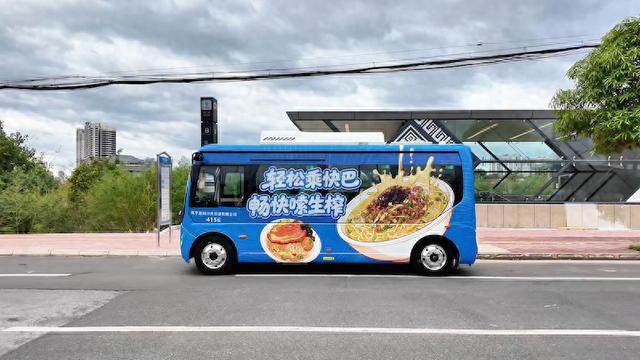
Core Viewpoint - Nanning Public Transport is transforming from traditional capacity to precise service, leveraging digital intelligence to enhance public transport efficiency and meet citizen needs [2][5][8]. Group 1: Transformation and Innovation - Nanning Public Transport has launched various specialized bus lines, such as the "Suo Fen Line" and "Vegetable Basket Line," to connect citizens with local food and agricultural markets [2][5][7]. - The company has invested 1.2 million yuan in smart safety facilities, emphasizing the integration of technology in public transport [3]. - The implementation of AI-driven systems for real-time passenger flow analysis and dynamic scheduling has significantly improved operational efficiency [10]. Group 2: Integration and Collaboration - The integration of metro and bus services has resulted in a 25% increase in daily passenger volume over three years, with significant cost savings for the government [7][10]. - Nanning's public transport system has achieved a 91.51% coverage rate of bus stops within 50 meters of metro stations, enhancing connectivity [10]. - The establishment of a multi-level organizational structure for community engagement has strengthened the service delivery model [7]. Group 3: Future Outlook and Strategic Goals - Nanning Public Transport aims to explore new business models, including automated buses and hydrogen-powered vehicles, to diversify revenue streams and enhance resilience [12]. - The company is focused on developing a comprehensive public transport system that integrates various modes of transport, aiming for seamless passenger experiences [10][12]. - Future initiatives will include the promotion of smart transportation technologies and collaboration with industries to enhance service quality and operational efficiency [11][12].
中国产业经济行业 现状格局与投资规划分析报告2026年版
Sou Hu Cai Jing· 2025-12-20 13:41
Core Insights - The report provides a comprehensive analysis of the current state and future prospects of various industries in China, focusing on investment opportunities and macroeconomic factors influencing these sectors [3][4][5]. Group 1: Macroeconomic Environment - The report discusses the macroeconomic environment for industrial investment in China, including policies, economic growth, and foreign direct investment trends [3][4]. - It highlights the GDP growth forecast for 2025, indicating a positive outlook for economic expansion [3]. - The analysis includes fixed asset investment scale from 2020 to 2025, showing significant growth trends [3][4]. Group 2: Industry-Specific Investment Opportunities - The real estate sector is analyzed for its investment environment, including policy impacts and market conditions, with a focus on urban complexes and tourism real estate as key opportunities [5][6]. - The internet industry is identified as a strategic emerging sector, with investment opportunities in mobile payment and e-commerce [5][6]. - The energy sector is highlighted for its investment potential, particularly in renewable energy resources and processing [6][7]. Group 3: Mergers and Acquisitions - The report outlines the trends in mergers and acquisitions within various industries, noting increased regulatory scrutiny and the rise of private equity as a driving force [4][5]. - It discusses the active merger activities in cultural media and real estate sectors, indicating a dynamic market environment [4][5]. Group 4: Emerging Industries - New energy and new materials industries are emphasized for their growth potential, supported by government policies and increasing market demand [15][16]. - The biotechnology sector is also highlighted, with a focus on investment opportunities arising from policy support and market trends [15][16]. Group 5: Regional Investment Analysis - The report provides a detailed analysis of investment environments across different regions in China, identifying specific opportunities in provinces like Guangdong and Jiangsu [20][21]. - It emphasizes the importance of regional characteristics in shaping investment strategies and opportunities [20][21].

腾讯入局押注下一代RNA制药;三大国家队资本罕见联手押注汽车芯片“特色工艺” | 每周十大股权投资
Sou Hu Cai Jing· 2025-12-15 08:14
Financing Transactions - Hongxin Biotech completed Series A financing, attracting top venture capital firms such as IDG Capital, Jingwei Venture Capital, and Tencent Investment, indicating strong market confidence in China's original RNA platform technology [1] - Jita Semiconductor completed Series D financing with investments from CITIC Capital, China International Capital Corporation, and China Electronics, highlighting its strategic position in the national semiconductor industry chain [2] - Weilian Star completed Series C financing of 400 million RMB, with investors including Hongtai Fund and CICC, focusing on next-generation communication applications in the 5G-A/6G era [3] - Zongwei Technology completed Series C financing of several hundred million RMB, with investments from Innovation Works and BlueRun Ventures, recognized as a key player in industrial automation [4] - Yundongchu Technology completed Series C financing of 500 million RMB, with a strong lineup of investors, establishing itself as a leader in commercializing quadruped robots [5] - Beidou Zhili completed Series B financing of several hundred million RMB, with investments from GAC Group and Shangqi Capital, recognized for its integration of high-precision positioning and intelligent cockpit technologies [6] - Houmo Intelligent completed Series B financing, focusing on a disruptive "storage-computing integration" architecture to challenge traditional chip performance [7] - Unconventional AI raised $475 million in seed funding from top venture capital firms, exploring AI simulation computing based on semiconductor physical properties [8] - Castelion completed $350 million in Series B financing, with significant investment from Silicon Valley funds, focusing on hypersonic technology [9] - BlossomHill Therapeutics completed $48 million in B+ financing, addressing drug resistance in cancer and autoimmune diseases through innovative drug design [10]
2025明湖论坛聚焦“十五五”可持续交通发展
Zhong Guo Jing Ji Wang· 2025-12-10 16:14
Core Insights - The "2025 Minghu Forum" focused on sustainable transportation development in China, emphasizing the importance of integrating various transportation modes to build a robust transportation network [1][2][4] Group 1: Infrastructure Development - The effectiveness and resilience of the transportation infrastructure network are crucial for building a strong transportation nation, requiring attention to overall efficiency and structural balance [2] - The development of multimodal transport and the enhancement of "soft connections" are essential for achieving integrated transportation [2][3] Group 2: Technological Innovation - Technological innovation is key to modernizing the transportation industry, with a focus on smart transportation systems, including intelligent railways, smart roads, and digital twin transportation networks [2][4] - The integration of green transportation and the acceleration of clean energy applications in the transportation sector are necessary for sustainable development [2] Group 3: Financial Support - Long-term and stable financial support is vital for the construction of a strong transportation nation, necessitating a multidimensional financial service system that includes policy guidance and collaborative empowerment [2] Group 4: Logistics and Market Dynamics - Full-chain and multimodal transport are important for reducing logistics costs and improving overall logistics efficiency, with a need for a market-oriented pricing system to maintain stable railway freight rates [3] - Enhancing water transport safety standards and promoting high-quality development in inland shipping are critical for the overall transportation system [3] Group 5: Integration of Infrastructure Networks - The integration of transportation, information, and energy infrastructure networks is essential for modern development, facing challenges such as technological bottlenecks and the need for collaborative mechanisms [4] - Coordinated planning and infrastructure upgrades are necessary for the successful integration of these networks, which will support the modernization of the country [4] Group 6: Research and Development - The forum highlighted research on sustainable transportation and its global impact, including the evaluation of the Belt and Road Initiative's railway projects and their debt sustainability [5] - The forum serves as a significant platform for discussing key issues related to China's "14th Five-Year Plan" and sustainable transportation development [5]