城市绿地

Search documents
绿地上新 出门踏青去
Xin Lang Cai Jing· 2026-02-25 07:37
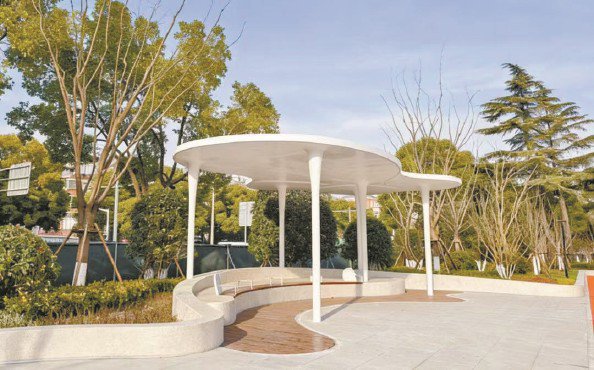
Core Insights - A new batch of green spaces has been launched in various districts, including high-quality ecological spaces that serve innovation parks and reflect local culture [4] - The North Cai Town Yubridge Science and Technology Innovation Park green space aims to create a high-quality urban green area that combines ecological aesthetics, practical functionality, and an innovative atmosphere [5] Group 1: North Cai Town Yubridge Science and Technology Innovation Park Green Space - The green space covers approximately 53,086.70 square meters and is strategically located to support the innovation park [5] - Features include a sunlit lawn, diverse vegetation, a children's play area, and a colorful fitness path that enhances the modern vibrant feel [6] - The design includes resting platforms and tiered seating to accommodate business meetings, casual breaks, and small events, catering to the daily needs of the innovation community [6] Group 2: Wu Jing Town Community Party-Mass Service Center Shared Green Space - This green space spans 5,640 square meters and is designed based on the classic Chinese garden philosophy, creating a natural landscape that blends human-made and natural elements [7] - It serves as an ecological shared space that links nature and culture, featuring various functional areas for interactive, leisure, elderly activities, and children's education [7] Group 3: Hu Qingping Highway South Side Green Space - Located at the intersection of Hu Qingping Highway and Hangyun Road, this green space covers about 4,143 square meters [8] - The design incorporates elements of the 318 National Highway culture, enhancing the humanistic landscape and promoting fitness among citizens [8] - The area includes a variety of activity spaces such as a children's science play area, an artistic rest theater, and aromatic flower beds, catering to all age groups [8]

中国城市公园数量最新排行,你的城市上榜了吗
Xin Jing Bao· 2025-03-26 02:43
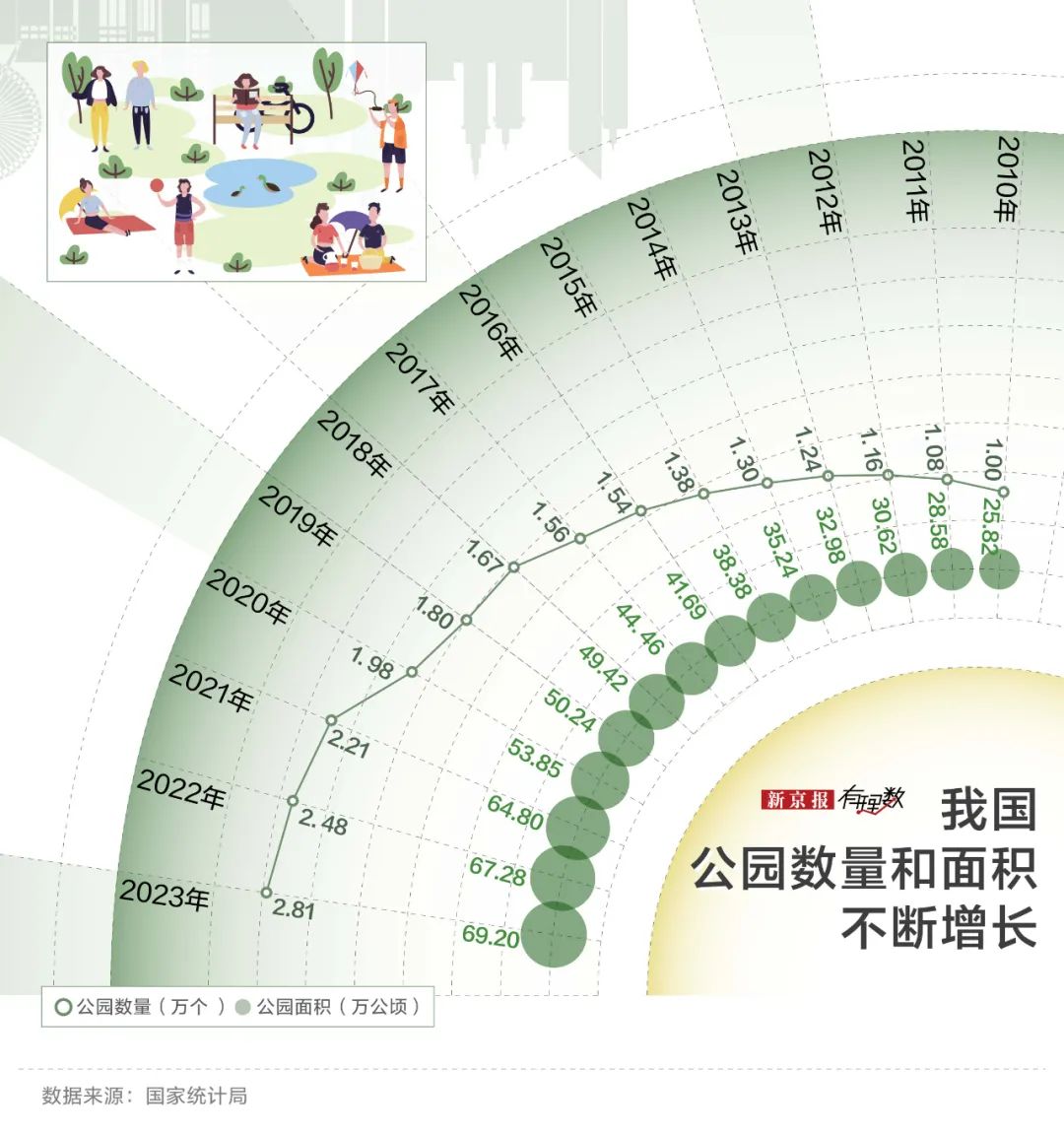
Core Insights - The number of urban parks in China has tripled from 2010 to 2023, reaching 28,000 parks with a total area of 692,000 hectares, larger than the entire area of Palestine [2][4] - Urban parks are becoming essential for enhancing the quality of life in cities, serving as ecological spaces, social hubs, and educational venues [4][5] - There is a significant regional disparity in park distribution, with Guangdong leading in quantity and Beijing having the largest per capita area [5][11] Group 1: Growth and Statistics - From 2010 to 2023, urban parks in China grew at a rate of approximately 1,400 parks per year, with park area increasing by 30,000 hectares annually [2][4] - In 2023, Guangdong has 6,408 parks, accounting for about 1 in every 4.4 parks nationwide, with a density of one park per 28 square kilometers [5][7] - Beijing's average park size is 59.47 hectares, significantly larger than the average size of parks in other cities [11][8] Group 2: Urban Park Characteristics - Urban parks are viewed as "green add-ons" that help regulate climate and serve as social routers, reflecting a city's livability and development quality [4][12] - Shenzhen leads in park quantity with 1,343 parks, but its per capita park area is lower due to the prevalence of smaller community parks [12][15] - The concept of "per capita park guarantee" indicates that cities with a higher percentage of areas exceeding 5 square meters per person have better park resource availability [15][16] Group 3: Regional Disparities - While Guangdong has the highest number of parks, Qinghai has only 72 parks spread over 720,000 square kilometers, highlighting the stark contrast in park density [7][11] - In terms of per capita park area, Beijing excels, while Shanghai has a low average of 1.79 square meters per person, equivalent to half a mahjong table [11][20] - The overall urban green space in Shanghai, including other types of green land, reaches 69.66 square meters per person, ranking first nationally [20][22] Group 4: Future Considerations - The challenge lies in balancing the growth of park quantity with quality improvements and ensuring policies meet citizen needs [26]