城市公园

Search documents
马年春节,山东文旅消费跑出“加速度”
Qi Lu Wan Bao· 2026-02-27 12:01
Core Insights - The consumption performance during the extended Spring Festival holiday in Shandong is impressive, with daily sales revenue in consumption-related industries increasing by 14.8% year-on-year, indicating a significant shift in public tourism psychology and behavior [1] Group 1: Tourism Consumption Trends - Tourism consumption in Shandong has evolved from traditional sightseeing to experiences that are diversified, personalized, and of higher quality [1] - Daily revenue from urban parks and amusement parks increased by 27.7% and 5.6 times respectively, while camping services grew by 4.2 times and transportation services surged by 5.8 times, reflecting a concentrated release of travel demand and an upgrade in tourism psychology [1] - The combination of returning home and traveling has made short trips and nearby travel mainstream, leading to significant revenue growth for budget hotels, fast food, and cafes, aligning with tourists' demand for convenience and lifestyle [1] Group 2: Future Directions for the Tourism Industry - The core trend will be "experience-oriented," with immersive, personalized, and interactive tourism products continuing to gain popularity, and niche scenarios like camping and theme parks will see greater development [2] - Short-distance and lifestyle travel modes will persist, necessitating the tourism industry to deepen local market engagement and enhance surrounding travel support, creating "poetry and distance at the doorstep" [2] - The integration of the entire tourism chain is inevitable, with deep connections between tourism, accommodation, dining, and transportation driving the upgrade from single scenic area consumption to comprehensive consumption [2] - The vibrant performance of Shandong's tourism during the Spring Festival exemplifies the industry's adaptation to market demand, emphasizing the need to continuously enrich product offerings, optimize service experiences, and explore cultural connotations to sustain tourism consumption growth [2]
重庆“见缝插绿” “十四五”期间建成“口袋公园”370余座
Zhong Guo Xin Wen Wang· 2025-10-13 07:28
Core Viewpoint - During the "14th Five-Year Plan" period, Chongqing has successfully built over 370 "pocket parks," transforming previously unused spaces into vibrant urban areas, enhancing the quality of urban life [1][2]. Group 1: Pocket Parks Development - Chongqing has integrated the construction of "pocket parks" into special initiatives like "Yucheng Medical Assistance" and "Yucheng School Protection," prioritizing their placement around hospitals and schools [1]. - The city has created 370+ small and exquisite "pocket parks," which serve as "urban living rooms" for residents [1]. - The initiative aims to provide convenience for parents picking up children by developing parks, public toilets, and waiting areas near schools and kindergartens [1]. Group 2: Urban Green Space Enhancement - Over the past five years, Chongqing has renovated 358 old parks, updating facilities and optimizing landscape vegetation to improve comfort and accessibility [2]. - The city has identified and opened 356 shared spaces within 235 urban parks, enhancing public amenities like toilets, drinking water, and seating areas [2]. - Chongqing has added 7.273 million square meters of urban green space, making greenery a part of daily life for residents [2]. Group 3: Nature Integration in Urban Planning - The city has developed 396 distinctive flower beds and 563 kilometers of green pathways, emphasizing the integration of natural features into urban development [2]. - The transformation of 210,000 square meters of slopes from barren land to green spaces has created recreational areas and scenic spots [2]. - Chongqing's urban planning focuses on utilizing its mountainous terrain and riverbanks to create a harmonious "mountain-water city" [2].
习近平总书记关切事丨北京的树
Xin Hua She· 2025-10-08 12:29
Core Points - The article highlights the significant transformation of Beijing's urban landscape through extensive afforestation and green space development, reflecting a commitment to ecological civilization and improving residents' quality of life [1][4][10] Group 1: Urban Greening Initiatives - Since 2012, Beijing has added approximately 2.45 million acres of new forest, equivalent to 238 Olympic Forest Parks, increasing the city's forest coverage from 38.6% in 2012 to 44.95% by the end of 2024 [3] - The city has constructed over 1,100 parks, creating an ecological service network that allows residents to access green spaces within 300 meters and parks within 500 meters [3][9] - The development of parks and green spaces has been a response to urban challenges, with initiatives focusing on transforming underutilized land into vibrant ecological areas [3][6] Group 2: Community Engagement and Benefits - Local residents have reported improved air quality and increased green spaces, contributing to a more pleasant living environment [2][9] - The establishment of parks has fostered community engagement, with activities such as tree planting becoming popular among citizens [2][9] - The integration of cultural and recreational facilities within parks enhances community experiences, promoting a sense of belonging and well-being [8][10] Group 3: Economic and Ecological Impact - The green transformation is not only an environmental initiative but also aims to boost local economies by attracting tourism and creating job opportunities in green sectors [4][6] - The Beijing Garden Expo Park, once a site of pollution and waste, has been revitalized into a major attraction, demonstrating the economic potential of ecological restoration [5][6] - The development of the Beijing Garden Digital Economy Industrial Park illustrates the merging of green spaces with economic activities, promoting sustainable urban development [7]
美丽中国就在你我身边 “公园+”模式让城市空间更有活力
Yang Shi Wang· 2025-10-06 00:44
Core Insights - The article highlights the increasing popularity and development of pocket parks in urban areas, showcasing a shift in public space usage towards more accessible and multifunctional green spaces [1][5][12] Group 1: Urban Park Development - In recent years, new pocket parks have emerged alongside traditional parks, contributing to a more vibrant urban landscape [1][5] - The Shanghai World Expo Cultural Park has become a popular destination, featuring a large lawn area for outdoor events and leisure activities [3] - Shenzhen's Qianhai Stone Park has quickly gained traction among young people, offering a 12-kilometer coastline and designed recreational spaces [5] Group 2: Policy and Planning - The construction of parks is supported by national policies aimed at promoting a "Beautiful China," with specific guidelines for pocket park development issued by the Ministry of Housing and Urban-Rural Development [5][6] - As of mid-2023, over 54,000 pocket parks and 142,000 kilometers of greenways have been established across the country [6][8] - Urban park green space per capita has increased from 11.8 square meters in 2012 to 15.91 square meters, indicating a significant improvement in urban green space accessibility [8] Group 3: Innovative Park Features - Modern parks are integrating technology, such as 5G smart tracks and drone delivery systems, enhancing user experience [10] - Parks are increasingly blending with commercial, cultural, and sports elements, creating multifunctional spaces that serve diverse community needs [12][13] - The concept of "park + commercial" is gaining traction, allowing seamless transitions between shopping and recreational areas [12][13] Group 4: Rural Park Development - Rural parks are being developed with a focus on natural beauty and cultural heritage, exemplified by the bamboo art village in Sichuan [15][20] - The integration of local culture and ecology in rural park design is fostering community engagement and revitalization [20] - The green coverage rate in rural areas has reached 32.01%, reflecting the successful implementation of rural revitalization strategies [20] Group 5: Funding and Sustainability - Diverse funding mechanisms are being explored to ensure the sustainability of park projects, moving beyond reliance on government financing [24][25] - The Chengdu ring road greenway project exemplifies a collaborative approach, combining government guidance with social participation for park development [24][25]

SKP实锤了?广州这宗“王炸”地块即将登场!
Sou Hu Cai Jing· 2025-05-23 09:07
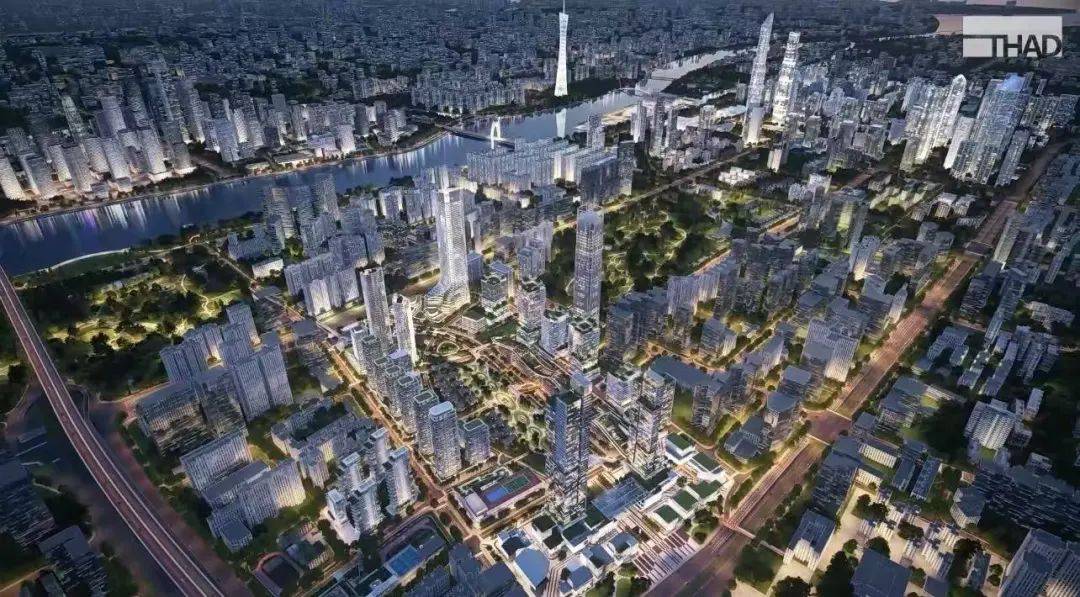
Core Insights - The Guangzhou real estate market is set to see significant changes with the upcoming listing of the Pearl River New Town Racecourse site, which will include high-end residential and large commercial complexes, potentially featuring the luxury SKP shopping mall [1][3][9] Group 1: Project Details - The Racecourse site covers an area of 380,000 square meters, equivalent to 53 international standard football fields, and is planned to be a mixed-use development including luxury retail, high-end offices, upscale residences, and urban parks [5] - The site is positioned as a key hub connecting the Pearl River New Town CBD and the Financial City, enhancing the area's overall development [5] Group 2: Market Impact - The residential component of the project is estimated to be comparable to nearly four times the size of the China Overseas Flower City Bay, which will significantly impact the already scarce residential market in Pearl River New Town [7] - Initial pricing estimates for the residential units are projected to be around 120,000 to 140,000 yuan per square meter, which will directly compete with existing high-priced second-hand properties in the area [7] Group 3: Competitive Landscape - The introduction of this new high-end residential project is expected to intensify competition among real estate developers, with a focus on luxury offerings [7] - The limited scenic resources of the site may hinder the development of ultra-luxury properties, suggesting that the market may not see prices escalate dramatically despite the competitive environment [7]
中国城市公园数量最新排行,你的城市上榜了吗
Xin Jing Bao· 2025-03-26 02:43
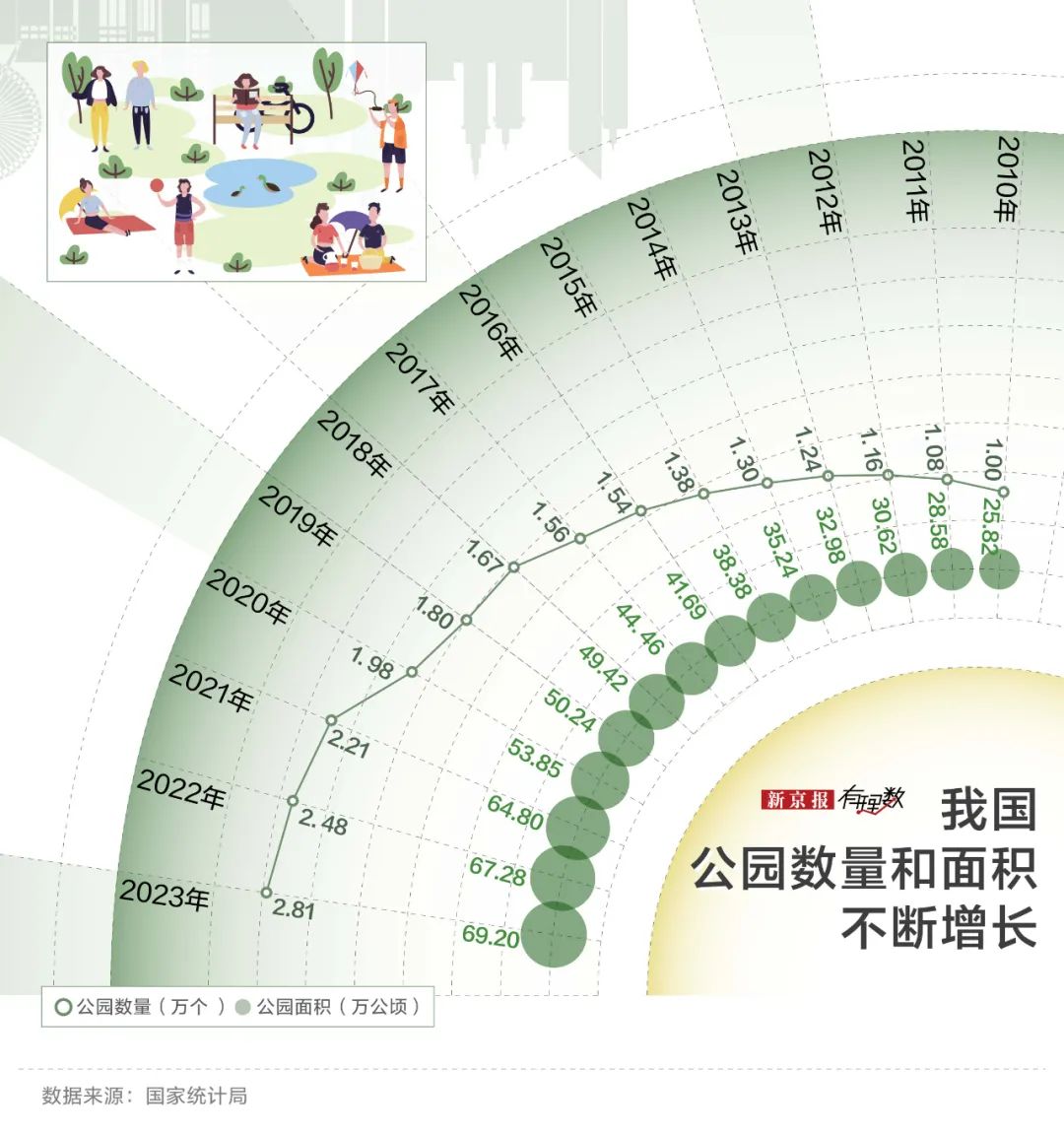
Core Insights - The number of urban parks in China has tripled from 2010 to 2023, reaching 28,000 parks with a total area of 692,000 hectares, larger than the entire area of Palestine [2][4] - Urban parks are becoming essential for enhancing the quality of life in cities, serving as ecological spaces, social hubs, and educational venues [4][5] - There is a significant regional disparity in park distribution, with Guangdong leading in quantity and Beijing having the largest per capita area [5][11] Group 1: Growth and Statistics - From 2010 to 2023, urban parks in China grew at a rate of approximately 1,400 parks per year, with park area increasing by 30,000 hectares annually [2][4] - In 2023, Guangdong has 6,408 parks, accounting for about 1 in every 4.4 parks nationwide, with a density of one park per 28 square kilometers [5][7] - Beijing's average park size is 59.47 hectares, significantly larger than the average size of parks in other cities [11][8] Group 2: Urban Park Characteristics - Urban parks are viewed as "green add-ons" that help regulate climate and serve as social routers, reflecting a city's livability and development quality [4][12] - Shenzhen leads in park quantity with 1,343 parks, but its per capita park area is lower due to the prevalence of smaller community parks [12][15] - The concept of "per capita park guarantee" indicates that cities with a higher percentage of areas exceeding 5 square meters per person have better park resource availability [15][16] Group 3: Regional Disparities - While Guangdong has the highest number of parks, Qinghai has only 72 parks spread over 720,000 square kilometers, highlighting the stark contrast in park density [7][11] - In terms of per capita park area, Beijing excels, while Shanghai has a low average of 1.79 square meters per person, equivalent to half a mahjong table [11][20] - The overall urban green space in Shanghai, including other types of green land, reaches 69.66 square meters per person, ranking first nationally [20][22] Group 4: Future Considerations - The challenge lies in balancing the growth of park quantity with quality improvements and ensuring policies meet citizen needs [26]