增稠剂

Search documents
研判2025!中国增稠剂行业政策汇总、产业链、发展现状及未来前景展望:行业应用领域持续拓展,天然来源增稠剂逐渐成为市场主流[图]
Chan Ye Xin Xi Wang· 2025-11-18 01:21
Core Insights - The demand for thickeners is expected to continue growing due to increasing consumer expectations for product quality and performance, particularly in the food and cosmetics sectors [1][6] - The thickeners industry is closely linked to the food industry and is influenced by national macroeconomic policies and consumption regulations, with recent laws creating a favorable environment for development [1][4] - The market size of China's thickeners industry is projected to reach 7.0 billion yuan in 2024 and further increase to 8.33 billion yuan in 2025 [1][6] Industry Overview - Thickeners, also known as gelling agents, are substances that increase the viscosity of liquids and are widely used in various sectors including food, cosmetics, and pharmaceuticals [2][3] - There are over 40 commonly used thickeners, categorized by chemical structure, ionic nature, source, and molecular weight [3] Industry Policies - Recent government policies have imposed strict regulations on the production and operation of food additives, ensuring the safe development of the thickeners industry [4] - Key policies include the "Food Business License and Filing Management Measures" and the "Implementation Plan for the Innovative Development of the Fine Chemical Industry (2024-2027)" [4] Industry Chain - The thickeners industry consists of an upstream segment (natural and synthetic raw materials), a midstream segment (production and manufacturing), and a downstream segment (application in various industries) [5] Current Industry Status - The global demand for thickeners is increasing, with production expected to rise from 216,000 tons in 2017 to 229,000 tons in 2024 [6] Competitive Landscape - Major international players like Dow and BASF dominate the high-end market, while local companies lead the mid-to-low-end segments [7] - Domestic companies include Zhejiang Tianwei Biotechnology Co., Qingdao Test Technology Co., and others [7][8] Industry Development Trends - The application of thickeners is expanding beyond traditional food uses to include pharmaceuticals, cosmetics, and environmentally friendly products [9] - The industry is experiencing consolidation, with smaller companies facing challenges due to technological advancements and regulatory compliance [10] - Natural thickeners are becoming mainstream due to their health benefits and consumer preference for natural ingredients [11]


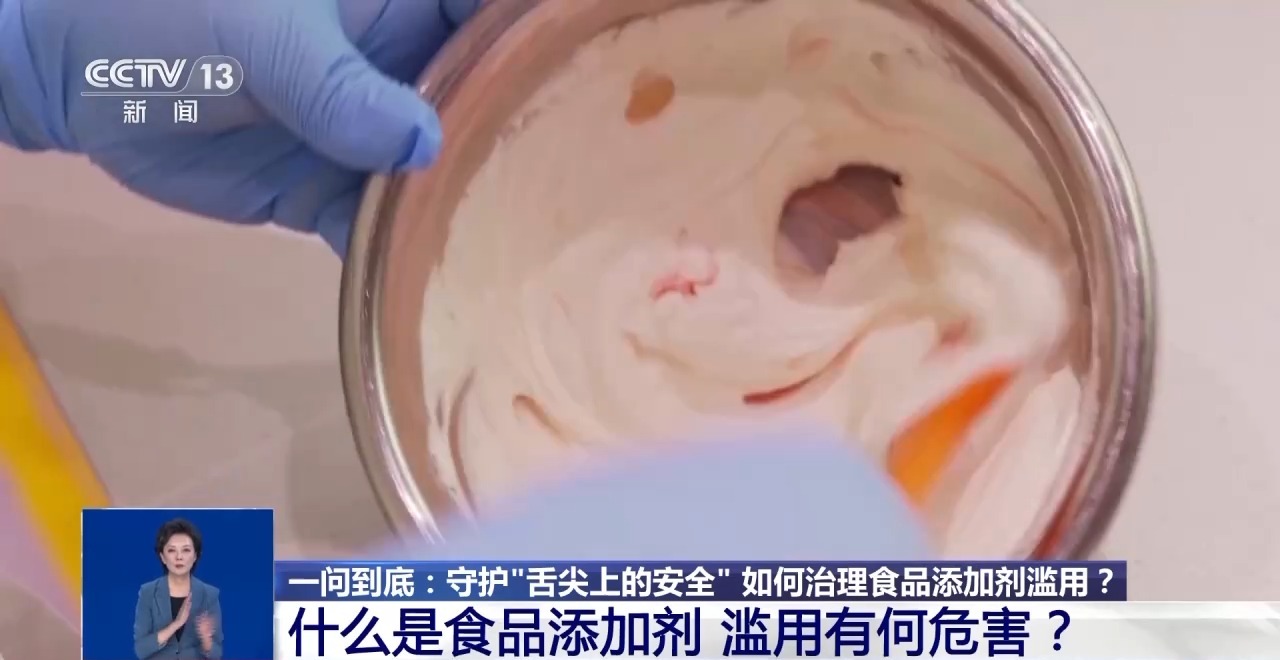
什么是食品添加剂?滥用有何危害?六部门联合出击守护“舌尖上的安全”
Yang Shi Xin Wen· 2025-05-10 12:16
Core Viewpoint - The Chinese government has initiated a comprehensive governance action to address the abuse of food additives, emphasizing the importance of food safety and consumer health [1][5]. Group 1: Definition and Importance of Food Additives - Food additives are substances added to food to enhance its quality, flavor, and preservation, categorized into 23 types including sweeteners and preservatives [3]. - Proper use of food additives is crucial for modern food production, providing benefits such as preservation, flavor enhancement, and resource savings [3]. Group 2: Governance Action Overview - The governance action targets the abuse of food additives, defined as exceeding the permitted scope and limits, which poses health risks [5]. - The action plan involves multiple departments, including agriculture, industry, customs, health, and market regulation, to ensure comprehensive oversight from production to consumption [7][30]. Group 3: Regulatory Focus Areas - Key areas of focus include: - Strict enforcement against illegal agricultural inputs in food production [7]. - Enhanced management of chemical products and industrial raw materials [7]. - Increased scrutiny of imported food additives for compliance with regulations [7]. - Development of a dynamic management system for food additive varieties [7]. - Rigorous monitoring of food additive production, sales, and usage [7]. Group 4: Specific Regulatory Measures - Local market regulatory authorities are conducting inspections of food additive production facilities, focusing on compliance with supplier management and production standards [9][11]. - The regulatory framework includes the prohibition of certain additives in specific food products, such as preservatives in canned foods and certain baked goods [14][21]. Group 5: Restaurant and Food Service Regulations - The governance action also emphasizes the regulation of food additives in the restaurant sector, requiring compliance with national safety standards and transparency in ingredient usage [22][25]. - Specific banned substances in the restaurant industry include industrial oxalic acid, nitrites, and other illegal additives [25][27]. Group 6: Import Food Safety Measures - Customs authorities are implementing strict checks on imported food products to ensure adherence to the new national standards for food additives [30][31]. - Measures include the rejection or destruction of products that violate additive regulations and thorough review of foreign production facility registrations [31].