
食品添加剂

Search documents
“无菌蛋”靠谱吗?专家:很难达到绝对无菌,营养与普通鸡蛋无异
Yang Shi Xin Wen· 2026-01-09 03:18
Group 1: Food Safety and Quality - The increasing consumer focus on food safety highlights the importance of eggs as a key protein source in Chinese households, with "sterile eggs" being marketed as "safer," "more nutritious," and "healthier" [1] - Professor Liu Jingbo from Jilin University states that achieving absolute sterility in eggs is difficult, and the term "sterile eggs" should more accurately be referred to as "edible raw eggs," which can meet safety standards for consumption [1] - There are currently no national or industry standards for edible raw eggs in China, although group standards have been established to regulate them [1] Group 2: Food Additives and Regulations - The excessive use of food additives, particularly composite phosphates in shrimp products, has raised public concern, as highlighted by the "water-retaining shrimp" incident [2] - The national standard GB 2760-2024 specifies that water-retaining agents can be used in frozen aquatic products, with a maximum limit of 5 grams per kilogram [2] - Experts emphasize the need for companies to adhere to food safety responsibilities and to innovate in technology to enhance the quality of frozen aquatic products [2] Group 3: Supply Chain and Traceability - There is a call for stricter regulation of the shelf life and cold chain transport conditions for key raw materials like frozen meat and seafood [3] - Increased sampling inspections of food supply materials and the use of new technologies to improve inspection levels are recommended [3] - A transparent regulatory network involving multiple stakeholders is essential for public trust in food safety [3] Group 4: Salmonella Prevention in Egg Production - In the breeding phase, it is crucial to ensure that eggs are free from Salmonella, requiring monthly testing of feed, water, and the environment [4] - Edible raw eggs must be transported and stored under cold chain conditions, with specific temperature and humidity requirements [4] - The recommended consumption period for raw eggs is within 15 days of production, and vulnerable populations should avoid consuming raw eggs [4]
长保食品也营养、无菌蛋并非真无菌 2025食品安全与健康热点解读会回应民生关切
Zhong Guo Jing Ji Wang· 2026-01-07 11:04
Core Viewpoint - The conference organized by the China Food Science and Technology Society focused on ten major food safety and health issues, providing scientific guidance for industry development and regulatory improvement [1] Group 1: Food Safety Issues - The "water-retaining shrimp" incident highlighted the serious violation of food additive usage principles by involved companies, emphasizing the need for responsible and compliant use of food additives [2] - The introduction of new food labeling regulations aims to enhance transparency and consumer safety, including mandatory allergen labeling and an updated nutrition facts format [3] - The need for strengthened full-chain supervision in food safety was discussed, addressing regulatory gaps in transportation, delivery, and cross-border e-commerce [4] Group 2: Emerging Food Technologies - The approval of D-allohexose as a new food ingredient signifies advancements in synthetic biology technology within the food sector, indicating a mature application of these technologies [6] Group 3: Specific Food Safety Concerns - The issue of lead contamination in children due to illegal additives underscores the importance of strict adherence to food safety laws and the need for enhanced training and supervision in food handling [7] - The risk of botulinum toxin contamination from improperly processed foods remains a significant food safety concern, necessitating better control measures from production to storage [9] - The debate over the safety and nutritional value of long-shelf-life foods suggests that modern processing techniques can ensure both safety and nutrition [10] Group 4: Nutritional Needs and Market Opportunities - The concept of "age-appropriate foods" for the elderly is gaining attention, with a significant market demand for products that meet the nutritional needs of older adults, highlighting a gap in current market offerings [12] - The safety of campus dining is critical, with calls for improved raw material control and a comprehensive traceability system to ensure food safety for students [11]
终于学会了火腿肠的正确打开方式!(别再用牙咬了)
Xin Lang Cai Jing· 2026-01-01 23:52
Core Viewpoint - The article discusses the necessity of aluminum rings at both ends of hot dog sausages, explaining their role in sealing and preserving the product while also providing tips on how to open them easily. Group 1: Importance of Aluminum Rings - Hot dog sausages require aluminum rings for sealing due to the high-temperature cooking process, which necessitates a secure closure to prevent bacterial contamination and maintain quality [3][6]. - Aluminum rings are preferred because they can be tightly compressed around the sausage casing, effectively blocking air and bacteria from entering [6]. Group 2: Packaging Material - The packaging material used for hot dog sausages is polyvinylidene chloride (PVDC), which offers excellent heat resistance, oxygen and moisture barrier properties, and maintains the product's flavor [5]. - PVDC cannot be self-sealed due to its melting and decomposition temperatures being very close, making aluminum rings essential for proper sealing [5][6]. Group 3: Health Considerations - Concerns about aluminum consumption are addressed, noting that while excessive intake can have negative health effects, occasional exposure from hot dog rings is not a significant risk [8][9]. - The World Health Organization has established a safe weekly intake limit for aluminum, indicating that occasional consumption of small amounts is generally safe [8]. Group 4: Tips for Opening Hot Dog Sausages - Several methods are provided for easily opening hot dog sausages, including using a toothpick to puncture the casing, cutting below the aluminum ring, and using various techniques to create an opening without damaging the sausage [11][15][19]. - The article also warns against microwaving sausages with aluminum rings, as this can cause sparks and potential fire hazards [22].


烤鸡少年用“肉宝王”引热议!院士:合法合规使用安全,但不宜滥用
Xin Lang Cai Jing· 2025-12-25 14:16
Core Viewpoint - The article discusses the increasing use of food additives in modern cuisine, highlighting the popularity of a specific compound seasoning called "Meat Treasure King" and the safety concerns surrounding food additives in general [3][4][6]. Group 1: Food Additives and Their Usage - The market for food additives is diverse, with products like "Meat Treasure King" gaining attention for enhancing flavors in cooked meats [3][4]. - "Meat Treasure King" is a compound seasoning that is legally approved for use in food, particularly in marinated and grilled meat products, with recommended usage of 1-2 grams per kilogram of meat [4][5]. - The main ingredients of "Meat Treasure King" include maltodextrin, edible salt, monosodium glutamate, food flavoring, and a coloring agent [5]. Group 2: Safety and Regulations - Experts, including academic authorities, assert that legally produced food additives are safe when used according to regulations, but there are concerns about their potential misuse to mask spoiled meat [6][7]. - The Chinese government has issued guidelines for the proper management of food additives in the restaurant industry, prohibiting the use of non-food-grade additives like nitrites [7][8]. - Consumers are advised to be cautious and not overly pursue products with excessive visual appeal or strong aromas, as these may indicate the presence of harmful additives [8][9]. Group 3: Consumer Awareness - Consumers should maintain a rational approach when selecting food products, avoiding those that appear excessively bright or have unusually strong scents [8][9]. - The article mentions other common food additives, such as tenderizing powders and yeast extracts, which are also widely used in the food industry [8][9].
更短的配料表就更“干净”吗?专家:这是误区
Yang Guang Wang· 2025-12-19 10:02
Core Viewpoint - The concept of "clean label" has become a significant selling point for food products, emphasizing simple and natural ingredient lists without unnecessary additives [1][2] Group 1: Clean Label Definition and Market Trends - "Clean label" foods are characterized by a simple ingredient list, prioritizing natural components, and avoiding unnecessary chemical additives [1] - A specific product example is a "clean label" egg tart priced at 16.9 yuan per box, which is double the price of regular egg tarts, and has attracted over 50,000 orders within a month [1] - The clean label concept originated in Europe and lacks a unified standard, leading to various interpretations and marketing claims by companies [2] Group 2: Safety and Nutritional Implications - There is no direct correlation between fewer additives and greater safety or nutrition; appropriate food additives can enhance food quality and safety [2][3] - The use of food additives is regulated under a whitelist system, ensuring that only safe additives are used within specified limits [3] - Consumers often mistakenly believe that shorter ingredient lists indicate cleaner products, but this can be misleading as some products may require multiple additives to achieve desired qualities [3][4] Group 3: Consumer Perception and Pricing - Many consumers perceive "clean label" products as healthier, leading to higher prices, often two to three times that of regular products [3] - Companies may leverage the clean label trend for marketing purposes, even when the production process naturally results in simpler ingredient lists [3][4] - Understanding ingredient lists and nutritional information is crucial for consumers, as many may not fully comprehend the implications of what they are purchasing [4]
金禾实业:公司目前拥有氯化亚砜产能8万吨/年
Mei Ri Jing Ji Xin Wen· 2025-12-19 08:44
Core Viewpoint - The company, Jinhe Industrial, is currently assessing the market demand for thiodiglycol and is considering the strategic deployment of its additional production capacity in the downstream new energy sector [1] Group 1: Production Capacity - The company currently has a production capacity of 80,000 tons per year for thiodiglycol, which is sufficient to meet the majority of the production needs for sucralose [1] - An additional production capacity of 100,000 tons per year for thiodiglycol is under construction [1] Group 2: Market Applications - Thiodiglycol is an important chemical raw material widely used in various fields, including new energy, food additives, and pharmaceuticals [1] - The company is actively monitoring downstream application opportunities, including those in the new energy sector [1] Group 3: Strategic Development - The company plans to advance the construction of the new production capacity steadily, taking into account industry development trends and changes in market demand [1] - The company commits to timely information disclosure in accordance with legal and regulatory requirements if there are significant developments [1]

食品配料表并非越短越好,小心掉进“清洁标签”的营销陷阱
Xin Lang Cai Jing· 2025-12-19 07:27
Core Viewpoint - The trend of "clean label" foods is gaining popularity, emphasizing simple ingredient lists and the absence of unnecessary additives, but this does not necessarily equate to better safety or nutrition [1][2] Group 1: Clean Label Foods - "Clean label" foods are characterized by simple ingredient lists, prioritizing natural components, and avoiding unnecessary chemical additives [1] - A specific "clean label" egg tart product priced at 16.9 yuan per box has attracted over 50,000 orders within a month, indicating strong consumer interest [1] - The concept of "clean label" lacks a universal standard, functioning more as a marketing idea rather than a strict guideline [1] Group 2: Food Additives - Experts indicate that the presence of food additives does not inherently compromise safety or nutrition; appropriate additives can enhance food quality and safety [1][2] - There is a common misconception among consumers that shorter ingredient lists indicate cleaner foods, which can be misleading [3] - The price of "clean label" foods is often significantly higher than that of regular products, with some items costing two to three times more [3]
“零添加”指不添加什么?配料表越短越健康吗?
Xin Hua Wang· 2025-12-08 02:15
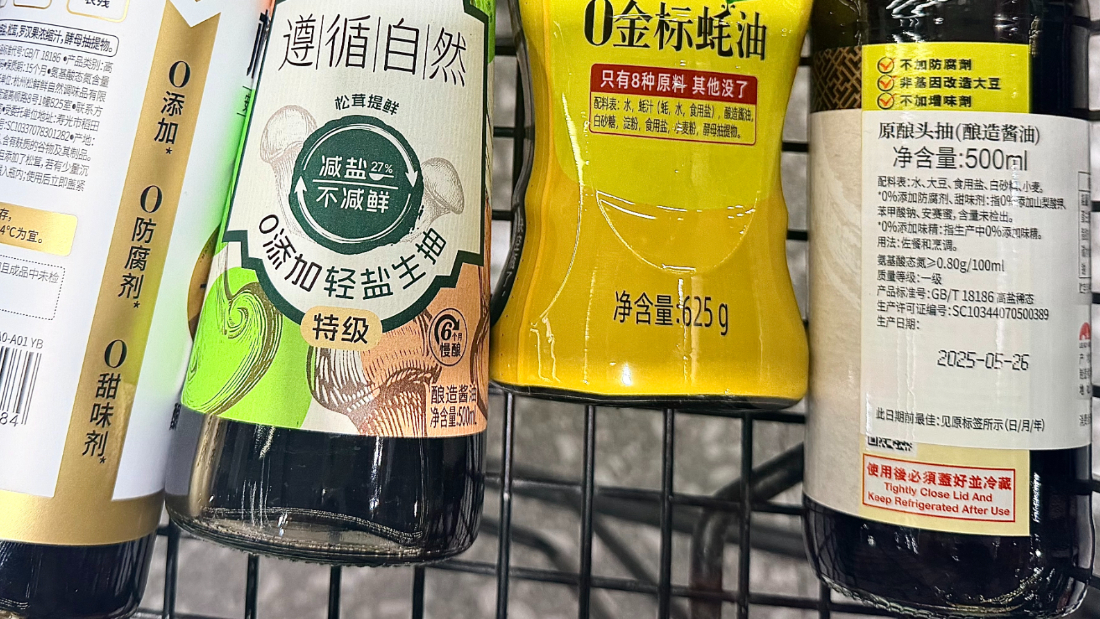
Group 1 - The term "zero additives" is increasingly popular among consumers, but its definition is vague and lacks a strict standard in China [3][5] - "Zero additives" typically means no additional food additives are intentionally added during production, but does not guarantee the absence of certain substances that may occur naturally [4][5] - The new food labeling standard (GB7718-2025) will prohibit misleading terms like "0 additives" and "no additives," aiming to reduce unfair competition and improve consumer understanding [5][7] Group 2 - Consumers are advised to focus on the order of ingredients on labels, as they are listed in descending order of quantity, which can indicate the actual content of key ingredients [8] - The nutritional information panel is crucial for assessing the health value of food products, with particular attention to energy, protein, fat, carbohydrates, and sodium [8][9] - Awareness of hidden sugars and sodium in processed foods is essential, as high intake of these can lead to chronic health issues [9]
新华网财经观察丨“零添加”不等于更健康
Xin Hua Wang· 2025-12-08 01:32
Group 1 - The concept of "zero additives" is becoming increasingly popular among consumers, who often associate shorter ingredient lists with safety and health [2][4] - There is no clear definition of "zero additives" in current food safety standards, leading to potential misinterpretations by consumers [4][5] - The term "zero additives" does not mean the absence of certain substances, as natural fermentation or processing can still produce these components [4][5] Group 2 - New regulations are set to prohibit misleading terms like "0 additives" and "no additives" to prevent unfair competition in the food industry, with a transition period until March 2027 [6][7] - Experts warn that completely eliminating additives can compromise food safety and quality, as some additives are necessary for preservation [6][9] - Consumers are encouraged to focus on understanding ingredient lists and nutritional information rather than being swayed by marketing terms like "zero additives" [9][10]

百龙创园(605016):单季度业绩继续创新高,利润率不断提升
Changjiang Securities· 2025-11-09 14:11
Investment Rating - The investment rating for the company is "Buy" and it is maintained [8]. Core Insights - The company reported a revenue of 970 million yuan for the first three quarters of 2025, representing a year-on-year increase of 18.1%. The net profit attributable to shareholders reached 260 million yuan, up 44.9% year-on-year, and the net profit after deducting non-recurring gains and losses was also 260 million yuan, reflecting a 50.4% increase year-on-year. In Q3 alone, the company achieved a revenue of 320 million yuan, a 10.6% increase year-on-year but a 4.8% decrease quarter-on-quarter. The net profit for Q3 was 95 million yuan, up 50.5% year-on-year and 7.3% quarter-on-quarter [2][6]. Summary by Sections Financial Performance - For Q1-3 2025, the company achieved a total revenue of 970 million yuan, with a net profit of 260 million yuan, and a net profit after deducting non-recurring items also at 260 million yuan. Q3 revenue was 320 million yuan, with a net profit of 95 million yuan and a net profit after deducting non-recurring items of 93 million yuan [2][6]. Product Performance - The company's prebiotic series products generated a revenue of 96 million yuan in Q3, a year-on-year increase of 17.9% but a quarter-on-quarter decrease of 8.6%. The dietary fiber series products achieved a revenue of 170 million yuan, up 12.7% year-on-year but down 4.9% quarter-on-quarter. The health sweetener series products had a revenue of 43 million yuan, down 4.9% year-on-year but stable quarter-on-quarter. The gross profit margin for Q3 was 44.5%, an increase of 11.9 percentage points year-on-year and 3.2 percentage points quarter-on-quarter [12]. Market Developments - The approval of D-alloheptulose in July 2025 marks a significant milestone for the company, allowing it to enter the domestic market. This approval ends a five-year application process and positions the company as a leading player in the industry [12]. Production Capacity Expansion - The company is expanding its production capacity with projects such as a 30,000-ton soluble dietary fiber project and a 15,000-ton crystalline sugar project, both of which are set to enhance production scale and reduce costs. Additionally, the Thailand project is underway, aiming to boost international competitiveness [12]. New Product Development - The company has successfully developed new products such as differentiated crystalline fructose and resistant starch, enhancing its market competitiveness. High-end products like isomaltulose and crystalline fructose have been launched and are gaining market acceptance [12]. Future Profit Projections - The projected net profits for 2025, 2026, and 2027 are 350 million yuan, 480 million yuan, and 680 million yuan, respectively, supporting the "Buy" rating [12].
