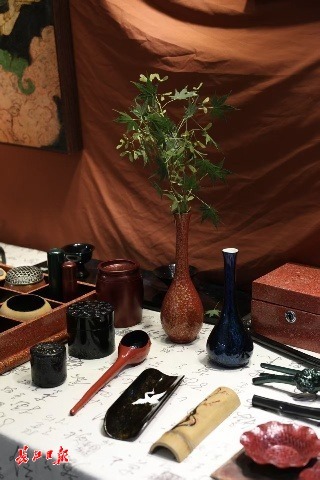
大漆作品

Search documents
一个缤纷的下午
Xin Lang Cai Jing· 2026-01-25 05:55
Group 1 - The article highlights the unique artistic journey of Tang Chenghua, a professor at the Central Academy of Fine Arts, who specializes in lacquer painting, a traditional Chinese art form that has evolved significantly over the years [5][11][22] - Fuzhou, where Tang's studio is located, has a unique climate that is conducive to the growth of lacquer, with an average annual rainfall of 1300 to 1600 millimeters and humidity levels between 70% to 80% [7][9] - The history of lacquer art in Fuzhou dates back thousands of years, with significant developments during the Song and Qing dynasties, leading to the creation of unique techniques such as "脱胎漆器" (脱胎 lacquerware) [9][11] Group 2 - Tang Chenghua's works are characterized by vibrant colors and imaginative forms, which challenge traditional perceptions of lacquer painting, showcasing a new artistic expression [11][19] - The article discusses Tang's family background, including his ancestors' migration from Inner Mongolia to Indonesia and the challenges they faced, which have influenced his artistic perspective [13][15][17] - Tang has received numerous awards and has had his works collected by prestigious art institutions, reflecting his success and recognition in the art world [22][24]


国庆来武汉,他们在市集“淘”到了中式顶流
Chang Jiang Ri Bao· 2025-10-08 01:03
Core Insights - The article highlights the growing popularity of traditional crafts in Wuhan, particularly during the National Day holiday, showcasing the success of young artisans like Zhu Zhongzong and Liu Shuang in attracting tourists and generating sales through their unique products [1][5]. Group 1: Artisan Success Stories - Zhu Zhongzong, a 28-year-old artisan, has been selling his lacquerware at a market, achieving daily sales of around 4,000 to 5,000 yuan, with many tourists showing interest in his work [1][2]. - Liu Shuang, who has been in the pottery industry for 17 years, has innovated traditional Ma Kou kiln pottery by incorporating modern aesthetics and local cultural elements, attracting significant attention from visitors [3]. Group 2: Market Dynamics - The non-heritage themed markets in Wuhan saw a surge in popularity during the holiday, with over 120,000 visitors across two markets, and average daily sales exceeding 2,000 yuan per stall, with peak days reaching 7,000 to 8,000 yuan [5]. - The markets serve as a platform for young entrepreneurs, with over 80% of stall owners being young creators, facilitating engagement with traditional culture and providing a social space for visitors [5]. Group 3: Cultural Engagement Initiatives - The establishment of the "Wu Zao Wu Ji" store in Jianghan District aims to promote traditional crafts by selling non-heritage products and offering creative courses in pottery, lacquerware, and weaving, enhancing public engagement with traditional culture [6].