大豆业务

Search documents
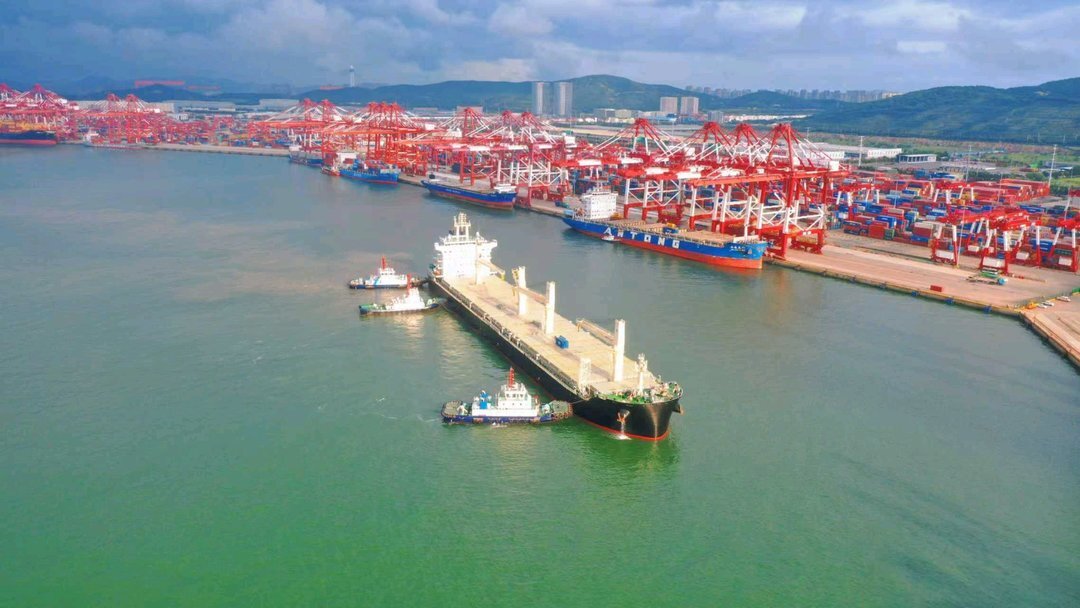
同比增长4.4%!青岛港三季度件杂货吞吐量逆势上扬
Da Zhong Ri Bao· 2025-11-03 03:23
Core Insights - Shandong Port Qingdao Port demonstrated strong resilience in Q3, with general cargo throughput increasing by 4.4% year-on-year, an improvement of 1.5 percentage points compared to Q2 [1] Group 1: Trade Performance - In the first three quarters of 2025, China's goods trade import and export reached 33.61 trillion yuan, a year-on-year increase of 4%, with Q3 growth rate reaching 6%, indicating that the fundamental trend of foreign trade remains positive [3] - Qingdao Port, as China's second-largest foreign trade port, effectively capitalized on policy opportunities, translating benefits into business results [3] Group 2: Specific Cargo Growth - In Q3, Qingdao Port's soybean throughput surged with a year-on-year increase of 15%, ensuring stability in the food supply chain [3] - Pulp throughput increased by 7% year-on-year, playing a significant role in the circulation of the paper industry [3] - Steel throughput grew by over 20%, machinery equipment throughput increased by nearly 10%, and exports of finished vehicles soared by over 50%, supporting the acceleration of China's manufacturing sector's international expansion [3] Group 3: Strategic Initiatives - Qingdao Port's impressive performance is attributed to its strategic initiatives, including the expansion of international shipping routes, adding new routes to regions such as India, Africa, and Southeast Asia, and enhancing the logistics channels of Belt and Road countries [5] - The port focuses on key cargo types, establishing four major distribution and transshipment bases for grain, pulp, steel, and machinery equipment, achieving both efficiency and volume growth through innovative operational models and optimized resource allocation [5] - As a barometer of the national economy, Qingdao Port plays a crucial role in supporting national strategies, contributing to the stability of global industrial and supply chains during a period of structural optimization and transformation in China's foreign trade [5]