天津大米

Search documents
解锁北京年味新地图,这些“天津籍”选手火了!
Bei Jing Ri Bao Ke Hu Duan· 2026-02-05 13:15
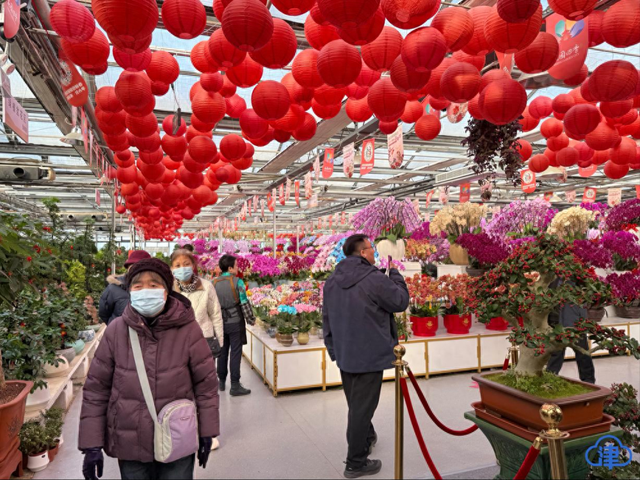
Core Insights - The article highlights the increasing integration of the Beijing-Tianjin-Hebei region, particularly in the floral industry, showcasing how products from Tianjin are gaining popularity in Beijing as the Spring Festival approaches [1][3]. Group 1: Floral Industry Collaboration - The Beijing Flower Trading Center serves as a key hub for floral sales, with 100% of the "Baolian Lantern" flowers sold there sourced from Tianjin, indicating a strong production and sales linkage between the regions [3]. - The collaboration among the Beijing-Tianjin-Hebei floral industry has evolved into a clear development pattern, with Tianjin focusing on production, Hebei on cultivation, and Beijing on distribution and sales [3]. - A digital platform has been established at the Beijing Flower Trading Center, enhancing transaction efficiency and reducing logistics costs, with over 700 merchants registered, 30% of which are from Tianjin [5]. Group 2: Market Dynamics and Consumer Preferences - The "Baolian Lantern" flowers, cultivated in Tianjin, are popular during the Spring Festival, with sales expected to reach three to four times the normal volume during this period [5]. - The trading center has become a modern floral complex, offering various services and experiences, including a flower auction center and a themed night market, enhancing its commercial and recreational appeal [7]. - The center will extend its operating hours during the Spring Festival to accommodate increased consumer demand, with various themed activities planned [8]. Group 3: Local Market Engagement - The article also discusses local vendors from Tianjin participating in the Yongle Market in Tongzhou, showcasing a variety of traditional foods and agricultural products, which are well-received by consumers [10][12]. - Vendors report strong sales, with some achieving daily revenues of up to 6,000 yuan, indicating a robust demand for local specialties [10][15]. - The Yongle Market has undergone renovations to enhance its appeal, attracting a significant number of visitors and facilitating the integration of products from the Beijing-Tianjin-Hebei region [20][22].