
京津冀产业协同

Search documents
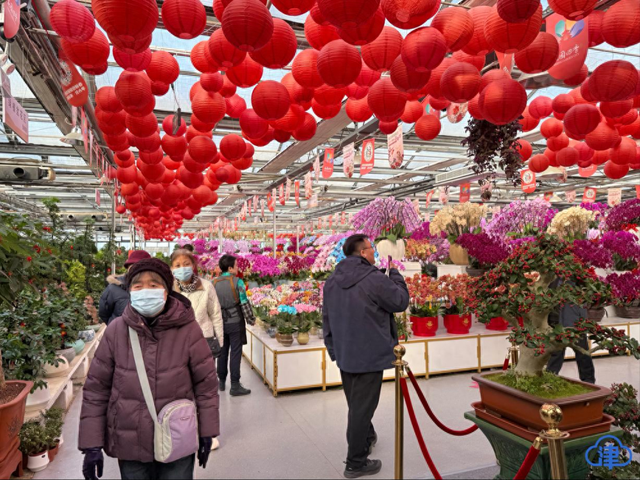
解锁北京年味新地图,这些“天津籍”选手火了!
Bei Jing Ri Bao Ke Hu Duan· 2026-02-05 13:15
Core Insights - The article highlights the increasing integration of the Beijing-Tianjin-Hebei region, particularly in the floral industry, showcasing how products from Tianjin are gaining popularity in Beijing as the Spring Festival approaches [1][3]. Group 1: Floral Industry Collaboration - The Beijing Flower Trading Center serves as a key hub for floral sales, with 100% of the "Baolian Lantern" flowers sold there sourced from Tianjin, indicating a strong production and sales linkage between the regions [3]. - The collaboration among the Beijing-Tianjin-Hebei floral industry has evolved into a clear development pattern, with Tianjin focusing on production, Hebei on cultivation, and Beijing on distribution and sales [3]. - A digital platform has been established at the Beijing Flower Trading Center, enhancing transaction efficiency and reducing logistics costs, with over 700 merchants registered, 30% of which are from Tianjin [5]. Group 2: Market Dynamics and Consumer Preferences - The "Baolian Lantern" flowers, cultivated in Tianjin, are popular during the Spring Festival, with sales expected to reach three to four times the normal volume during this period [5]. - The trading center has become a modern floral complex, offering various services and experiences, including a flower auction center and a themed night market, enhancing its commercial and recreational appeal [7]. - The center will extend its operating hours during the Spring Festival to accommodate increased consumer demand, with various themed activities planned [8]. Group 3: Local Market Engagement - The article also discusses local vendors from Tianjin participating in the Yongle Market in Tongzhou, showcasing a variety of traditional foods and agricultural products, which are well-received by consumers [10][12]. - Vendors report strong sales, with some achieving daily revenues of up to 6,000 yuan, indicating a robust demand for local specialties [10][15]. - The Yongle Market has undergone renovations to enhance its appeal, attracting a significant number of visitors and facilitating the integration of products from the Beijing-Tianjin-Hebei region [20][22].

瓣瓣同心京津冀|北京地铁保定制造,这里有鲜活的协同故事
Xin Lang Cai Jing· 2026-02-03 14:37
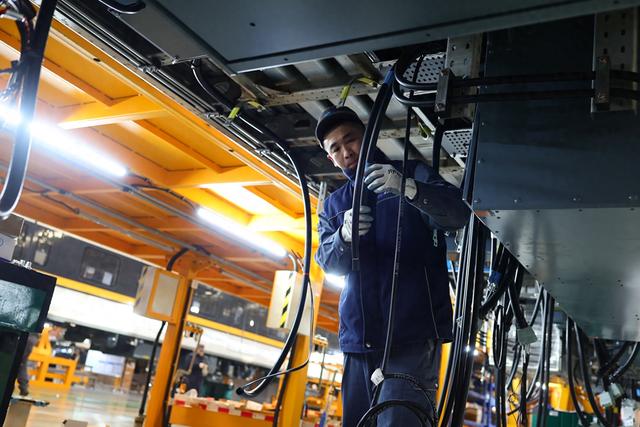
Group 1 - The article highlights the integration of Baoding City into the Beijing-Tianjin-Hebei collaborative development, emphasizing the benefits brought by transportation integration, including the launch of high-speed rail services [2] - Baoding International Medical Base is a key project for relieving non-capital functions from Beijing, with hospitals set to operate by September 2025, providing local residents access to quality medical services [2] - The Beijing-Ke Vehicle Intelligent Manufacturing Base is a significant project for industrial collaboration in the region, producing over 1,000 train cars since its establishment in 2019, including those for Beijing's subway lines [4] Group 2 - The Beijing-Ke Vehicle Intelligent Manufacturing Base employs a "Beijing design + Hebei manufacturing" model, with a total investment of 1.2 billion yuan in R&D, resulting in the transformation of 18 vehicle models in Baoding [4] - The company is focused on expanding its market presence both domestically and internationally, aiming to secure more orders while enhancing its R&D capabilities and smart manufacturing levels [6] - Currently, 70% of the products manufactured by the company are supplied to Beijing, indicating a strong market focus in the region [6]
两会声音 | 齐向东:建议设立京津冀科创担保基金,开通信用修复“绿色通道”
Jin Rong Jie· 2026-01-26 10:09
Core Viewpoint - The financing cost for private technology innovation enterprises averages between 8% and 15%, while state-owned enterprises can secure medium to long-term loans at rates below 3%, creating a disparity that stifles innovation vitality [1] Group 1: Financing Challenges - Private technology innovation enterprises face high financing costs, which are significantly higher than those of state-owned enterprises [1] - The proposal includes establishing a financing guarantee fund for technology innovation in the Beijing-Tianjin-Hebei region to lower financing costs for private enterprises [1] - A mechanism for credit repair for technology innovation enterprises is suggested to prevent non-malicious overdue credit from affecting their financing opportunities [1] Group 2: Policy Recommendations - There is a call to break down administrative barriers and improve the industrial collaboration mechanism among Beijing, Tianjin, and Hebei [2] - The proposal advocates for consensus on industrial management standards, definitions, and approval processes to reduce institutional costs for enterprises operating across regions [2] - The ultimate goal is to facilitate the free flow of resources within the urban agglomeration, transitioning from mere physical assembly to effective collaboration [2]

十一来崇礼,共赴一场“汽车+赛事+文旅+消费”盛宴
Zhong Guo Qi Che Bao Wang· 2025-10-03 07:55
Core Viewpoint - The event serves as a practical implementation of national plans for the development of the new energy vehicle industry, linking the "Winter Olympic City" brand with strategic emerging industries, and setting a new benchmark for sustainable development post-Olympics [1]. Group 1: Event Overview - The 2025 (First) Beijing-Tianjin-Hebei New Energy Vehicle Challenge and "Smart Wilderness Unlimited" Chongli Auto Carnival opened on October 3 in Zhangjiakou Chongli [2]. - The event is a significant milestone in Chongli's development, bringing unprecedented exposure, foot traffic, and collaboration opportunities [4]. - The event includes three main themes: the 2025 New Energy Vehicle Challenge, the Chongli Auto Carnival, and the J3 SHOW New Energy Vehicle Consumer Festival, integrating automotive, sports, cultural tourism, and consumption [8]. Group 2: Competition Highlights - The 2025 New Energy Vehicle Challenge officially commenced on October 2, marking a key platform for the integration of new energy vehicle technology and industrialization [10]. - The competition saw a record participation of over 3,000 individuals, showcasing the first simultaneous competition between traditional fuel vehicles and new energy vehicles [10]. - The event featured diverse participation from various cross-industry clubs, highlighting the multifaceted development of automotive culture [10]. Group 3: Carnival Activities - The "Smart Wilderness Unlimited" Chongli Auto Carnival includes a variety of activities such as off-road experiences, photography contests, family activities, brand markets, and music festivals, providing a rich experience for visitors [12]. - The J3 SHOW New Energy Vehicle Consumer Festival attracted over 30 car models from 12 brands and 13 dealers, including major brands like Xiaomi, NIO, and BYD [14]. - The carnival is set to continue until October 4, promising a green, intelligent, and joyful celebration [14].
