子弟书

Search documents
繁华深处 独守一方最本真的文化原乡
Xin Lang Cai Jing· 2026-01-27 18:56
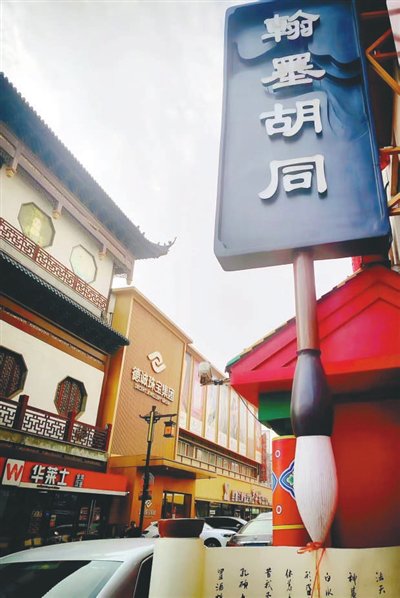
Core Viewpoint - The article highlights the cultural significance and historical evolution of the "Hanmok Alley" in Shenyang, emphasizing its role as a cultural nexus that connects the past with the present through traditional arts and crafts [3][4][5][6]. Group 1: Historical Significance - Hanmok Alley, originally named after a stationery business, reflects the cultural heritage of Shenyang, dating back to the Qing Dynasty [3]. - The alley is part of a grid-like urban structure that historically supported a vibrant commercial network, symbolizing the city's cultural depth [3]. - The alley's name, derived from a classical text, signifies the connection between literature and the arts, inviting reflections on the past [3]. Group 2: Cultural Artisanship - The "Hu Kui Zhang Pen Shop," established in 1823, is recognized as one of China's three major pen shops, preserving traditional craftsmanship [4]. - The pen shop's products have historical significance, having been used in space missions, showcasing the blend of tradition and modernity [4]. - The legacy of pen-making in Shenyang is further enriched by the historical "Li Zhan Zhang Pen Shop," which emphasizes the quality and artistry of traditional writing instruments [4]. Group 3: Literary Contributions - The "Huiwen Mountain House," located in the area, was known for publishing literary works, contributing to the cultural landscape of Shenyang [5]. - The establishment served as a gathering place for literary enthusiasts, fostering a blend of traditional arts and modern literary expression [5]. - Historical documents produced here provide valuable insights into Shenyang's cultural history during the late Qing Dynasty [5]. Group 4: Modern Cultural Landscape - Today, Hanmok Alley has transformed into a hub for musical instrument shops, merging traditional culture with contemporary life [6]. - The alley continues to evoke the essence of Shenyang's cultural heritage, inviting new generations to explore and appreciate its historical roots [6]. - The ongoing evolution of the alley reflects a commitment to preserving cultural memory while adapting to modern societal changes [6].