
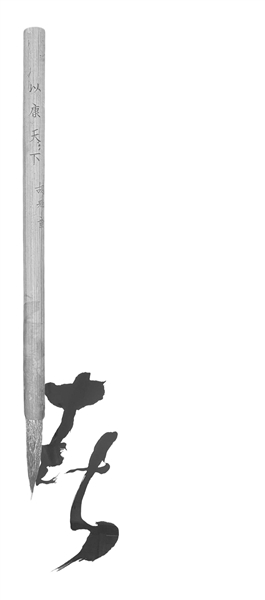
胡魁章毛笔

Search documents
墨香四海,笔颂千秋
Xin Lang Cai Jing· 2026-01-29 18:46
Core Viewpoint - The article highlights the historical significance and craftsmanship of the Hu Kuizhang brush, a renowned calligraphy brush brand in Shenyang, which has been recognized as a cultural heritage and continues to thrive through traditional techniques [3][6]. Group 1: Historical Background - The Hu Kuizhang brush, known for its "northern wolf hair" quality, has a legacy of over 200 years, originally established in 1823 by Hu Kuizhang, who integrated unique northern brush-making techniques [4][5]. - The brush gained prominence in the Qing Dynasty, being used by the inner court and later recognized as a tribute item to the imperial palace [5]. - During the Anti-Japanese War, the brush shop refused to produce propaganda materials for the puppet regime, leading to severe consequences for its workers [5]. Group 2: Craftsmanship and Production - The Hu Kuizhang brush is made using ancient "Wei Dan" techniques, involving 126 meticulous steps in its production process, ensuring high quality and performance [7][8]. - The main production processes include water basin, dry table, and engraving, each critical to achieving the brush's optimal writing condition [7][8]. - The brushes are celebrated for their ability to reflect the writer's skill, with notable calligraphers praising their quality [7]. Group 3: Recognition and Cultural Significance - The Hu Kuizhang brush has received multiple accolades, including being designated as a "Chinese Time-honored Brand" and recognized as a provincial intangible cultural heritage [6]. - In 2023, it was included in the first batch of provincial-level intangible cultural heritage workshops in Liaoning [6].

繁华深处 独守一方最本真的文化原乡
Xin Lang Cai Jing· 2026-01-27 18:56
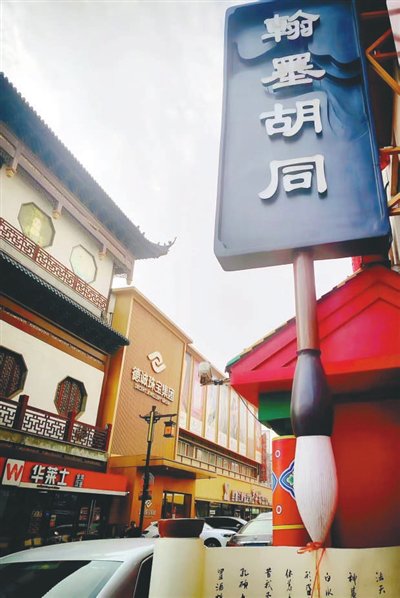
Core Viewpoint - The article highlights the cultural significance and historical evolution of the "Hanmok Alley" in Shenyang, emphasizing its role as a cultural nexus that connects the past with the present through traditional arts and crafts [3][4][5][6]. Group 1: Historical Significance - Hanmok Alley, originally named after a stationery business, reflects the cultural heritage of Shenyang, dating back to the Qing Dynasty [3]. - The alley is part of a grid-like urban structure that historically supported a vibrant commercial network, symbolizing the city's cultural depth [3]. - The alley's name, derived from a classical text, signifies the connection between literature and the arts, inviting reflections on the past [3]. Group 2: Cultural Artisanship - The "Hu Kui Zhang Pen Shop," established in 1823, is recognized as one of China's three major pen shops, preserving traditional craftsmanship [4]. - The pen shop's products have historical significance, having been used in space missions, showcasing the blend of tradition and modernity [4]. - The legacy of pen-making in Shenyang is further enriched by the historical "Li Zhan Zhang Pen Shop," which emphasizes the quality and artistry of traditional writing instruments [4]. Group 3: Literary Contributions - The "Huiwen Mountain House," located in the area, was known for publishing literary works, contributing to the cultural landscape of Shenyang [5]. - The establishment served as a gathering place for literary enthusiasts, fostering a blend of traditional arts and modern literary expression [5]. - Historical documents produced here provide valuable insights into Shenyang's cultural history during the late Qing Dynasty [5]. Group 4: Modern Cultural Landscape - Today, Hanmok Alley has transformed into a hub for musical instrument shops, merging traditional culture with contemporary life [6]. - The alley continues to evoke the essence of Shenyang's cultural heritage, inviting new generations to explore and appreciate its historical roots [6]. - The ongoing evolution of the alley reflects a commitment to preserving cultural memory while adapting to modern societal changes [6].
传承与创新融合展现辽宁文化魅力
Liao Ning Ri Bao· 2025-05-26 01:33
Group 1 - The 21st China (Shenzhen) International Cultural Industries Fair showcased the cultural heritage and innovation of Liaoning through interactive experiences and creative expressions [1][2] - The performance of traditional shadow puppetry attracted significant audience attention, highlighting the charm of traditional culture [1][2] - The Hu Kui Zhang brush, known for its efficiency, aims to promote the understanding and use of traditional brush-making techniques among younger generations [2] Group 2 - The fair featured a variety of cultural and creative products, with over 100 categories presented by Liaoning Museum and Liaoning Dingji Cultural Creative Co., emphasizing both cultural significance and practicality [3] - The integration of traditional culture with modern life resulted in popular creative products, such as lanterns and fridge magnets, which saw high sales [3] - The event facilitated direct interactions between artisans and the audience, allowing for a deeper appreciation of Liaoning's intangible cultural heritage [2][3]