安头屯中幡表演

Search documents
文化中国行|千年文脉 活力运河⑦:一水通联 古运新帆
Xin Lang Cai Jing· 2025-12-27 00:11
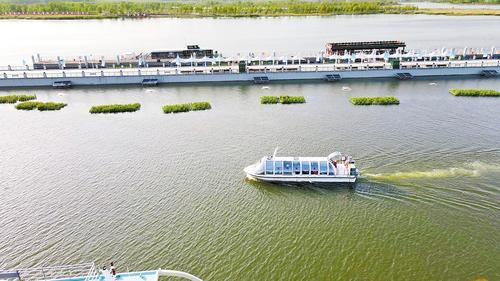
Core Viewpoint - The article highlights the historical significance and current revitalization of the North Grand Canal, particularly the section in Xianghe, Hebei, emphasizing its cultural heritage and tourism potential as part of the Beijing-Tianjin-Hebei coordinated development strategy [1][5]. Historical Significance - The North Grand Canal, historically known as Baihe and Gu Shui, served as a crucial transportation route for grain from the south to the north during the Qing Dynasty, making Xianghe a vital hub for trade and transport [1][2]. - The establishment of water management institutions along the canal, such as the water office in Lujiawu during the Yuan Dynasty, played a significant role in maintaining the canal's functionality and supporting local settlements [2]. Cultural Heritage - The article describes the cultural activities associated with the North Grand Canal, including the performance of the national intangible cultural heritage, the "An Toutun Zhongfan," which attracts tourists and showcases local traditions [5][6]. - The historical sites, such as the Jinmen Dam, reflect ancient water management techniques and continue to inspire modern hydraulic engineering [3]. Tourism Development - The integration of tourism and cultural heritage is emphasized, with the North Grand Canal now serving as a tourist attraction, featuring boat tours and cultural markets that draw visitors from the Beijing-Tianjin-Hebei region and beyond [5][6]. - Recent initiatives, such as the "Beijing-Tianjin-Hebei Meat Pie Competition," aim to enhance the tourism experience by combining various cultural and culinary elements [6].


一水通联 古运新帆
Xin Lang Cai Jing· 2025-12-26 22:03
Core Viewpoint - The article highlights the historical significance and cultural revival of the North Canal in Hebei, emphasizing its role in tourism and local heritage through various activities and events [3][6][7]. Group 1: Historical Significance - The North Canal, flowing from Beijing to Tianjin, is a crucial segment of the Grand Canal, historically serving as a vital transportation route for grain [3][4]. - The canal's segment in Xianghe, only 21.7 kilometers long, has a rich history, once bustling with trade and transport during peak periods [3][4]. Group 2: Cultural Heritage and Tourism - The article discusses the revival of the North Canal's cultural significance, particularly through the "千年文脉·活力运河" initiative, which promotes heritage tourism [3][6]. - Events such as the performance of the national intangible cultural heritage "An Toutun Zhongfan" and the "Beijing-Tianjin-Hebei Meat Pie Competition" are attracting tourists and enhancing local cultural experiences [7]. Group 3: Infrastructure and Connectivity - The completion of the interconnection of the 62-kilometer canal section between Beijing and Hebei marks a new era for the North Canal, facilitating tourism and regional collaboration [6]. - The establishment of five major docks along the canal enhances accessibility and promotes tourism activities [6].