宠物家居

Search documents
消费行业:2025年第四季度新兴品类简报-20260127
千瓜· 2026-01-27 03:10
Investment Rating - The report does not explicitly state an investment rating for the industry. Core Insights - The report highlights emerging trends in various sectors, particularly focusing on the rise of new product categories driven by the younger demographic on platforms like Xiaohongshu. It emphasizes the importance of understanding user needs and content trends to identify growth opportunities and market potential [3][56]. Summary by Sections Section 1: AI Pets - The "AI Pets" category has seen a commercial interaction growth of over 433%, with significant user engagement on products like robotic dogs and companion robots. The appeal lies in meeting young people's emotional companionship needs while offering personalized interactions [12][15][21]. - Popular products include the Disney Olaf robot and various interactive pet robots, which have garnered high user engagement, with individual posts reaching over 100,000 interactions [12][15]. - Brands are encouraged to focus on realistic interactions and emotional connections to enhance user experience and loyalty [15][21]. Section 2: Workwear Jackets - The workwear jacket trend has surged, with a notable increase in related content on Xiaohongshu, including a 1738% growth in posts discussing styles like fleece jackets and parkas. The trend reflects a blend of comfort and practicality that resonates with modern consumers [25][26][27]. - Brands are advised to emphasize the functional aspects of workwear while aligning with the casual and relaxed lifestyle preferences of younger consumers [25][27]. - The report notes that the workwear style is evolving to include high-tech and functional designs, catering to various wearing scenarios such as commuting and outdoor activities [28][31]. Section 3: Healing Body Care - The body care segment is shifting towards a "healing ritual" concept, with significant engagement on topics related to bath rituals and self-care, achieving over 700 million views on related hashtags. This trend indicates a growing consumer interest in emotional well-being through body care products [35][36][37]. - Brands are encouraged to innovate by combining skincare and fragrance benefits, addressing specific emotional needs and situational contexts, such as relaxation after work or preparation for special occasions [35][37]. - The report highlights the emergence of various body care products, including bath oils and scrubs, which cater to the evolving consumer expectations for both functionality and emotional resonance [37][40]. Section 4: Pet Home Products - The pet home category is experiencing a significant rise, with discussions around pet-friendly home designs and products gaining over 4.4 billion views. This reflects a shift in how consumers view pets as family members, leading to increased demand for specialized pet home products [43][45]. - The report suggests that brands should focus on understanding pet behaviors and preferences to create products that enhance the living experience for both pets and their owners [43][45]. - Innovations in product design, such as customizable pet furniture and seasonal items, are recommended to meet the diverse needs of pet owners [47][52].
财经观察:美“小额包裹免税”取消,商家民众影响几何?
Huan Qiu Shi Bao· 2025-09-17 22:36
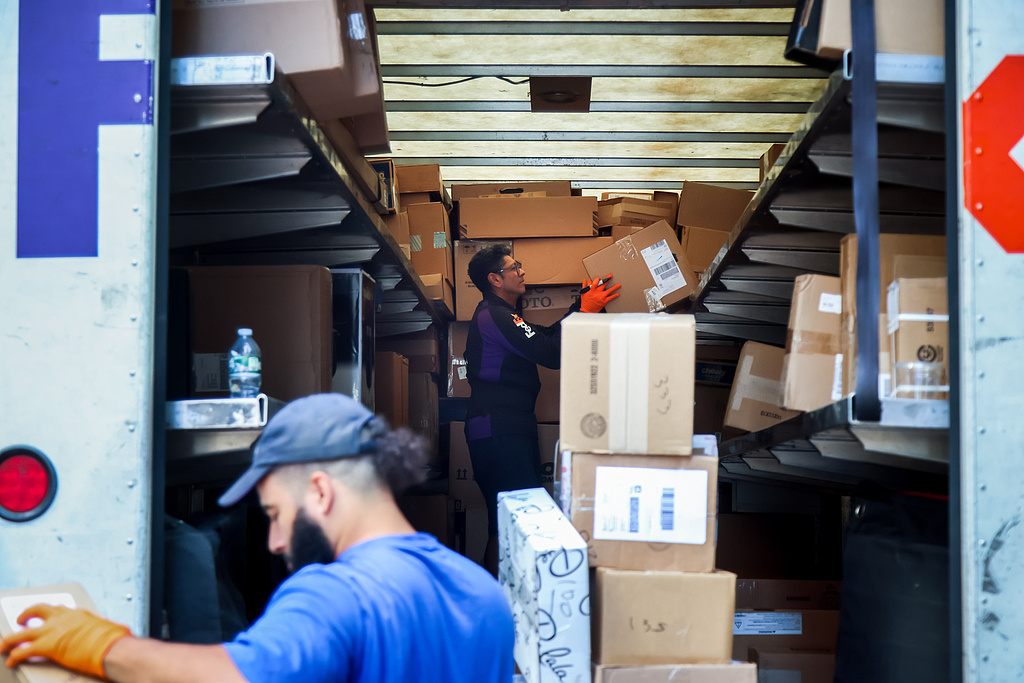
Core Points - The cancellation of the small package tax exemption policy by the U.S. government has led to unexpected tariff bills for American consumers, causing widespread dissatisfaction [1][2][3] - The policy change primarily targets Chinese cross-border e-commerce, but its repercussions are felt across the U.S. economy due to deep economic interdependence [1][4] Consumer Impact - Many American consumers are receiving unexpected tariff bills after online purchases, leading to confusion and frustration [2][3] - A specific case highlighted a consumer receiving a $42.35 bill for a $77 shirt, which was unexpectedly subject to tariffs due to the new policy [2] - The National Bureau of Economic Research estimates that the termination of the small package exemption could result in an additional annual expenditure of at least $10.9 billion for U.S. consumers, equating to $136 per household [9] Business Impact - The new tariff policy has created significant challenges for businesses, forcing them to decide whether to absorb the costs or pass them on to consumers, which could deter potential sales [4][8] - Many foreign merchants have suspended shipments to the U.S., resulting in an 80% decrease in mail flow into the country [4] - U.S. small businesses, particularly those relying on platforms like Etsy and eBay, are expressing concerns about the financial burden imposed by the policy change [8][9] Cross-Border E-commerce Adjustments - Chinese cross-border e-commerce businesses are adapting by shifting from direct shipping to the U.S. to using overseas warehouses, thereby mitigating the impact of the new tariffs [10][12] - The transition to overseas warehouse models allows for quicker delivery to U.S. consumers while avoiding the complications of the small package exemption policy [10][11] - Companies are increasingly focusing on enhancing product value to withstand tariff impacts, indicating a shift away from low-cost competition [11][12]