贸易保护主义

Search documents
EV变局(3)印度塔塔在保护主义下崛起
日经中文网· 2026-03-17 03:07
Core Viewpoint - Tata Motors has achieved significant success in the Indian EV market by leveraging low pricing strategies and benefiting from protective government policies that impose high tariffs on imports, particularly from China [2][9]. Group 1: Tata Motors' EV Strategy - Tata Motors launched the new EV "Punch" at a competitive price of 649,000 INR (approximately 48,000 RMB), positioning it as a game-changer in the market [4]. - To further reduce initial purchase costs, Tata introduced a battery usage fee of 2.6 INR per kilometer, making EV ownership more accessible to consumers [5]. - Tata holds a 40% market share in the EV segment, significantly outperforming competitors like Suzuki, which has only recently entered the EV market [8]. Group 2: Market Dynamics and Competition - Tata's initial pricing strategy for the "Tiago" EV was set at 849,000 INR, with over 10,000 bookings received within a day. The price was later reduced to 799,000 INR in 2024 due to economic factors [8]. - The Indian government imposes tariffs exceeding 100% on imported vehicles, which has hindered foreign competitors like Tesla and BYD from gaining traction in the market [11]. - Tesla's sales in India are minimal, with only 225 units sold in 2025, attributed to high pricing and tariffs [11]. Group 3: Regional EV Developments - In Vietnam, the domestic EV manufacturer VinFast has seen its sales double to approximately 175,099 units, benefiting from low taxes on EVs compared to gasoline vehicles [12]. - Indonesia is planning to develop its own EV brand, with government support aimed at fostering local production and reducing tax burdens on EVs [14]. - The overall market share of Japanese car manufacturers in Indonesia has decreased from 96% in 2020 to 80% in 2025, indicating a shift towards local and Chinese manufacturers [17].


商务部回应美方宣布对中国等60个经济体发起301调查
21世纪经济报道· 2026-03-15 23:54
Core Viewpoint - The article discusses China's response to the U.S. Trade Representative's announcement of a 301 investigation against 60 economies, including China, based on the claim of "not prohibiting the import of forced labor products" [1][2]. Group 1 - The U.S. initiated the 301 investigation as a continuation of its previous investigation regarding "overcapacity," indicating a pattern of unilateral trade actions against China [1]. - China has consistently opposed forced labor and has established a comprehensive legal framework to prevent and combat such practices, being a founding member of the International Labour Organization and having ratified 28 international labor conventions [2]. - The U.S. has not ratified the 1930 Forced Labour Convention and is accused of manipulating the issue of forced labor to create trade barriers, which is seen as a protectionist move [2]. Group 2 - The article highlights that the World Trade Organization (WTO) has previously ruled that U.S. tariffs against China violate international trade rules, and the current investigation is viewed as an abuse of the 301 investigation process [2]. - Ongoing economic consultations between China and the U.S. in Paris are mentioned, with China urging the U.S. to correct its actions and engage in dialogue based on mutual respect and equality [2]. - China reserves the right to take necessary measures to defend its legitimate rights and interests in light of the investigation's developments [2].
商务部就美方宣布对包括中国在内的60个经济体发起301调查答记者问
证券时报· 2026-03-15 23:50
Core Viewpoint - The article discusses China's response to the recent 301 investigation initiated by the U.S. Trade Representative's Office, which targets 60 economies, including China, under the pretext of not banning imports of products made with forced labor [2]. Group 1: U.S. Investigation and China's Response - The U.S. has launched a 301 investigation against China and other economies, following a previous investigation related to "overcapacity" [2]. - China firmly opposes forced labor and has established a comprehensive legal framework to prevent and combat such practices, highlighting its commitment as a founding member of the International Labour Organization [2]. - The U.S. has not ratified the 1930 Forced Labour Convention and is accused of manipulating the issue of forced labor to create trade barriers, which is seen as a unilateral and discriminatory act [2]. Group 2: Impact on Global Trade - The article emphasizes that the U.S. actions are a form of protectionism that undermines global supply chain stability and disrupts international trade order [2]. - A WTO expert group has previously ruled that the U.S. 301 tariffs against China violate international trade rules, indicating a pattern of the U.S. prioritizing domestic law over international agreements [2]. Group 3: Ongoing Negotiations - Ongoing economic consultations are taking place in Paris, where China has raised concerns with the U.S. and urges a correction of its actions [3]. - China calls for mutual respect and equal negotiation principles to resolve issues through dialogue and consultation, while reserving the right to take necessary measures to protect its legitimate rights [3].

永安期货晨会纪要-20260312
Yong An Qi Huo· 2026-03-12 06:18
Group 1: Market Overview - The International Energy Agency (IEA) agreed to release a record 400 million barrels of oil from emergency reserves to stabilize the market amid rising energy prices due to geopolitical tensions [8][12] - The US initiated a Section 301 trade investigation against several economies, including China and the EU, paving the way for new tariffs [12][8] - The Shanghai Composite Index closed up 0.25% at 4133.43 points, while the Hang Seng Index fell 0.24% to 25898.76 points, indicating mixed market reactions [5][8] Group 2: Company Specific Developments - Guanghe Technology, a manufacturer of customized printed circuit boards (PCBs) for computing servers, is set to launch an IPO in Hong Kong, aiming to raise up to HKD 3.31 billion [10] - The company plans to allocate approximately 52.1% of the IPO proceeds for expanding and upgrading its production facilities in Guangzhou [10] - The company reported a net profit of RMB 724 million for the first three quarters of 2025, representing a year-on-year growth of 43.1% [10] Group 3: Industry Insights - The copper cultural product market in China is projected to grow, with a leading company holding a 35% market share as of 2024 [10] - The beverage industry is facing challenges, with China Resources Beverage expected to see a 40% decrease in annual profit due to increased marketing investments and structural adjustments [13] - Cathay Pacific is preparing to raise fuel surcharges due to a doubling of aircraft fuel prices in March compared to January and February [13]
铂钯金期货日报-20260309
Rui Da Qi Huo· 2026-03-09 11:28
1. Report Industry Investment Rating - Not provided in the given content 2. Core View - The platinum and palladium futures market showed a downward trend today. The platinum 2606 contract fell 1.43% to 549.35 yuan per gram, and the palladium 2606 contract fell 2.18% to 412.70 yuan per gram. The dollar has been running strongly recently, and the recent inflation expectations have suppressed the interest rate cut expectations, putting pressure on the precious metals market. Geopolitical tensions have led to high market risk aversion. Fundamentally, platinum inventory remains tight, and the supply side in South Africa is restricted by factors such as power, cost, mine aging, and insufficient capital expenditure. The strategic attractiveness of platinum as an asset has increased. In contrast, although palladium also benefits from geopolitical conflicts and Russian supply risks, its medium - term logic is weaker than that of platinum. Its demand is mainly concentrated in gasoline vehicle catalysts, with a relatively single structure, and it faces dual pressure from the increase in electric vehicle penetration and platinum substitution in the long - term. In the short - term, there are many macro - level disturbances, and high market volatility may continue. It is recommended to conduct light - position range - bound trading [2]. 3. Summary by Relevant Catalogs 3.1 Futures Market - The closing price of the platinum main contract was 549.35 yuan per gram, a decrease of 7.95 yuan; the closing price of the palladium main contract was 412.70 yuan per gram, a decrease of 9.20 yuan. The main contract position of platinum was 10,387 hands, a decrease of 277 hands; the main contract position of palladium was 3,179 hands, an increase of 90 hands [2]. 3.2 Spot Market - The spot price of platinum on the Shanghai Gold Exchange (Pt9995) was 538.93 yuan per gram, a decrease of 13.04 yuan; the average spot price of palladium in the Yangtze River was 384.00 yuan per gram, a decrease of 6.00 yuan. The basis of the platinum main contract was - 10.42 yuan per gram, a decrease of 5.09 yuan; the basis of the palladium main contract was - 28.70 yuan per gram, an increase of 3.20 yuan [2]. 3.3 Supply and Demand Situation - The CFTC non - commercial long positions of platinum were 9,966 contracts, a decrease of 243 contracts; the CFTC non - commercial long positions of palladium were 3,003 contracts, a decrease of 342 contracts. The total supply of platinum in 2025 is expected to be 220.40 tons, a decrease of 0.80 tons; the total supply of palladium in 2025 is expected to be 293.00 tons, a decrease of 5.00 tons. The total demand for platinum in 2025 is expected to be 261.60 tons, an increase of 25.60 tons; the total demand for palladium in 2025 is expected to be 287.00 tons, a decrease of 27.00 tons [2]. 3.4 Macro Data - The US dollar index was 98.95, a decrease of 0.08; the 10 - year US Treasury real yield was 1.80%, a decrease of 0.02%. The VIX volatility index increased by 5.74 to 29.49 [2]. 3.5 Industry News - Iran's clerical leadership announced the appointment of Mojtaba, the son of the late Supreme Leader Khamenei, as a counter - measure against US President Trump. Iranian President Pezeshkian called on the people to unite and defend the country, stating that Iran will not surrender unconditionally and will not attack neighboring countries unless attacked first. China's gold reserves at the end of February were reported at 74.22 million ounces (about 2,308.5 tons), an increase of 30,000 ounces (about 0.93 tons) from January, marking the 16th consecutive month of increase. The US non - farm payrolls in February decreased by 92,000, far lower than the expected increase of 55,000, with private - sector employment decreasing by 86,000 and government employment decreasing by 6,000. The non - farm payrolls in January were revised to an increase of 126,000, and those in December were revised to a decrease of 17,000 [2]. 3.6 Key Points of Attention - On March 9 at 23:00, the US February New York Fed inflation expectations; on March 10 at 18:00, the US February NFIB small business confidence index; on March 10 at 22:00, the US February existing home sales data; on March 11 at 20:30, the US February CPI monthly and annual rates; on March 13 at 20:30, the US January core PCE price index; on March 13 at 22:00, the US January durable goods orders [2].
瑞达期货铂镍金市场周报-20260306
Rui Da Qi Huo· 2026-03-06 12:29
Report Industry Investment Rating - No relevant information provided Core Viewpoints of the Report - This week, the main platinum and palladium contracts on the Guangzhou Futures Exchange weakened significantly. The recent strong performance of the US dollar has suppressed the attractiveness of non - interest - bearing assets, and the market's consensus expectation of a marginal hawkish shift in the Fed's tone has put pressure on the precious metals market. Geopolitical tensions in the US - Iran situation have increased market risk - aversion [7]. - The platinum market is in a continuous shortage, with a significant decline in above - ground inventory. Supply in South Africa is constrained by factors such as power, cost, mine aging, and insufficient capital expenditure. On the demand side, automotive catalysts are the core support, and geopolitical tensions have enhanced platinum's attractiveness as a strategic asset. The medium - term logic of palladium is weaker than that of platinum, with relatively single - structured demand and facing long - term pressure from electric vehicle penetration and platinum substitution [7]. - In the short term, there are many macro - level disturbances, and high market volatility may continue. It is recommended to conduct light - position trading within a range [7]. Summary by Relevant Catalogs 1. Week - to - Week Highlights - The main platinum and palladium contracts on the Guangzhou Futures Exchange weakened significantly. The strong US dollar and the market's expectation of a hawkish Fed have pressured the precious metals market. Geopolitical tensions in the US - Iran situation have kept market risk - aversion high [7]. - The platinum market is in shortage, and South African supply is constrained. Automotive catalysts support platinum demand, and geopolitical factors enhance its attractiveness. Palladium's medium - term logic is weaker due to single - structured demand and long - term pressure [7]. - Short - term market volatility may continue, and it is recommended to trade within a range with a light position [7]. 2. Futures and Spot Markets - The precious metals market declined, and platinum and palladium futures on the Guangzhou Futures Exchange weakened significantly. As of March 6, 2026, the main palladium 2606 contract on the Guangzhou Futures Exchange was at 421.50 yuan/gram, down 9.33% for the week; the main platinum 2606 contract was at 560.50 yuan/gram, down 10.14% for the week [8][12]. - The net long positions of NYMEX platinum and palladium continued to diverge. As of February 24, 2026, the net long position of NYMEX platinum was 19,605 contracts, a 5.77% week - on - week increase; the net long position of NYMEX palladium was - 1,758 contracts, a 7.59% week - on - week decrease [13][15]. - The basis of NYMEX platinum and palladium main contracts weakened this week. As of March 5, 2026, the NYMEX platinum basis was - 23.60 US dollars/ounce, and the NYMEX palladium basis was 7.50 US dollars/ounce, both weakening week - on - week [16][20]. - The basis of the main platinum contract on the Guangzhou Futures Exchange strengthened, while that of the main palladium contract weakened. As of March 5, 2026, the platinum main contract basis was - 9.70 yuan/gram, strengthening week - on - week; the palladium main contract basis was - 23 yuan/gram, weakening week - on - week [21][23]. - NYMEX platinum and palladium inventories both increased. As of March 5, 2026, NYMEX platinum inventory was 583,451.75 ounces, a 0.99% week - on - week increase; NYMEX palladium inventory was 205,097.54 ounces, a 10.11% week - on - week increase [24][28]. - Platinum and gold prices showed strong synchronicity, and the gold - to - platinum ratio remained basically unchanged this week [29]. 3. Industrial Supply and Demand Situation - As of December 2025, the import and export volumes of platinum and palladium both increased [35]. - The demand for platinum and palladium in automotive exhaust catalysts has been declining year by year due to the significant rise in the share of the new energy vehicle market. The total global demand for platinum and palladium has shown a mild slowdown [41][47]. - The supply patterns of platinum and palladium have diverged. Geopolitical tensions have tightened platinum supply [52]. - The price difference between the domestic and foreign markets of platinum and palladium main contracts widened slightly this week [56]. 4. Macroeconomic and Options - This week, the US dollar index and US Treasury yields strengthened simultaneously [60].
巴斯夫CEO:欧洲化工行业重组仍将继续
Zhong Guo Hua Gong Bao· 2026-03-06 06:49
Core Viewpoint - The restructuring process in the European chemical industry is ongoing, and the market has not yet returned to balance, making adjustments necessary to address overcapacity in the region [1] Group 1: Industry Restructuring - The CEO of BASF, Markus Kamieth, stated that there will be more capacity shutdowns, bankruptcies, and restructuring in the future, indicating that the restructuring era in the European chemical industry is not over [1] - Since 2022, nearly 25 million tons of chemical capacity have been shut down, sold, or are under evaluation for shutdown/sale in Europe, which is equivalent to 9% of the region's total chemical capacity in 2021 [1] - Germany has been the most affected country, with approximately 7 million tons of chemical capacity shut down or facing shutdown and sale, followed by the Netherlands [1] Group 2: Impact on Competitiveness - The exit of a large number of petrochemical production facilities and the bankruptcy of several companies are gradually weakening the overall advantages of tightly-knit industrial clusters that have long supported the competitiveness of the European chemical industry [1] - Despite the challenges, the capacity exits are deemed essential for restoring the commercial competitiveness of the European chemical industry [1] - Trade protectionism is viewed as detrimental to the industry, particularly affecting smaller, non-integrated production companies that are likely to struggle amidst the overcapacity issue [1]

亚洲洞察-IEEPA 失效 = 短期缓解,中期迷雾-Asia Insights - Asia_ IEEPA invalidation = Near-term relief, medium-term fog
2026-03-01 17:23
Summary of Key Points from the Conference Call Industry Overview - The conference call primarily discusses the implications of the US Supreme Court's (SCOTUS) ruling on the International Emergency Economic Powers Act (IEEPA) tariffs and its impact on trade policies affecting Asia [1][6][24]. Core Insights and Arguments - **Tariff Changes**: The SCOTUS ruling invalidated all tariffs imposed under IEEPA, leading to a temporary 15% import surcharge on most goods imported into the US under Section 122 of the Trade Act of 1974, effective for 150 days from February 24, 2026 [2][3][4]. - **Effective Tariff Rate Reduction**: The effective tariff rate is expected to decrease significantly for China (from 33.9% to 27.7%), followed by Cambodia, Indonesia, Vietnam, and India, which will benefit from lower tariffs on labor-intensive products [10][16][24]. - **Trade Policy Uncertainty**: Despite the near-term relief from lower tariffs, medium-term trade policy uncertainty is anticipated, particularly with the upcoming US midterm elections and potential future tariff increases under Sections 232 and 301 [6][25][26]. - **Impact on Trade Negotiations**: Trade negotiations between Asia and the US are expected to continue but at a slower pace due to legal uncertainties surrounding existing trade agreements [11][14][26]. Additional Important Content - **Sector-Specific Benefits**: Labor-intensive sectors such as textiles, toys, and electrical machinery are expected to benefit the most from the tariff reductions, while sectors already under Section 232 tariffs will see no changes [17][24]. - **Exemptions from Tariffs**: Certain products, including critical minerals, pharmaceuticals, and specific agricultural products, will be exempt from the new 15% tariff [7]. - **Legal Implications for Trade Deals**: The legality of existing bilateral trade agreements is uncertain, as many were based on the now-invalidated IEEPA modifications. Countries with negotiated tariff rates above 15% may face challenges in finalizing their agreements [12][13]. - **Market Reactions**: The initial market response to the SCOTUS ruling has been mixed, with expectations of a broad outperformance of Asian currencies against the USD, although potential future tariff increases could dampen this effect [27][28][29]. Conclusion - The SCOTUS ruling presents a complex landscape for Asia's trade dynamics, offering short-term relief through lower tariffs while introducing significant uncertainty regarding future trade policies and negotiations with the US. The overall sentiment is cautiously optimistic, with a focus on navigating the evolving trade environment [24][25][26].
特朗普关税,中国要得回来吗?
财富FORTUNE· 2026-02-27 13:07
Core Viewpoint - The recent U.S. Supreme Court ruling declared that the global tariffs imposed by Trump under "emergency powers" were illegal, raising significant questions for governments and companies regarding the validity of previously negotiated tariff agreements and the possibility of reclaiming paid tariffs [1][3]. Group 1: Legal and Financial Implications - Over 900 U.S. companies have filed lawsuits seeking refunds for tariffs paid, with expected total claims exceeding $130 billion [3]. - The U.S. government collected approximately $175 billion in IEEPA tariffs over the past year, which constituted about half of its total tariff revenue during that period [4]. - The likelihood of the government returning the full amount of collected tariffs is considered low due to the substantial financial burden it would impose [4]. Group 2: Chinese Companies' Involvement - Chinese companies can potentially join the refund claims through various avenues, with 20% of U.S. imports from China being registered as eligible for refunds [3][6]. - There are three scenarios where Chinese exporters could claim refunds: sharing refunds with U.S. importers, using DDP (Delivered Duty Paid) shipping terms, or having U.S. branches that can apply for refunds [6][8]. - The trend of Chinese companies registering as U.S. importers has increased significantly, from 9% to 20% of trade volume by the end of the year [8]. Group 3: Impact on U.S.-China Trade Relations - The Supreme Court ruling has enhanced China's negotiating position in trade discussions with the U.S., especially with Trump's upcoming visit to China [10]. - The ruling resulted in a 7.1% decrease in the trade-weighted average tariff on China, while some countries with prior agreements may face increased tariffs [11]. - Despite the short-term reduction in tariffs, long-term uncertainties remain as Trump indicated intentions to continue imposing tariffs through other legal frameworks [11][12]. Group 4: Future Tariff Strategies - Trump may utilize Section 232 and Section 301 tariffs, which do not require congressional approval, to impose new tariffs on various sectors, including electric batteries and telecommunications [12][13]. - The White House has indicated plans to investigate and potentially impose new tariffs on industries related to intellectual property theft and market distortions [14]. - The Supreme Court ruling has created structural constraints that may hinder the rapid imposition of new tariffs, suggesting a temporary period of stability for Chinese exporters [14].
高市闯下大祸,丰田暴跌43%,换帅也没用,美国关税才是“真凶”
Sou Hu Cai Jing· 2026-02-27 08:56
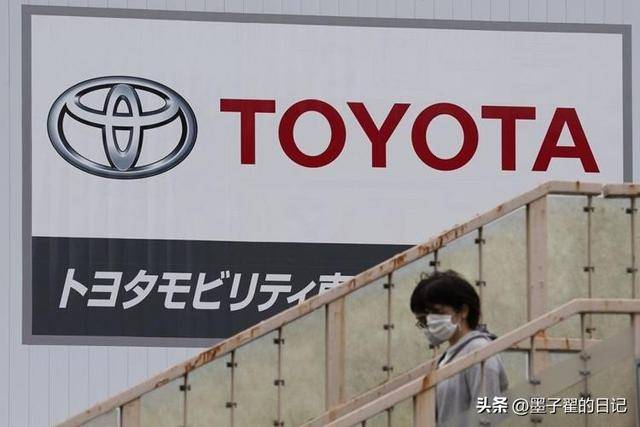
Core Insights - Toyota, the global automotive sales leader for six consecutive years, faces a significant crisis with a 43% drop in net profit, leading to a management shakeup [1][3][13] - The company has appointed CFO Koji Sato as the new president and CEO, marking the second leadership change in less than three years, reflecting urgency and challenges within the organization [5][7][25] Financial Performance - Despite achieving record sales of 11.32 million vehicles in 2025, Toyota's net profit plummeted to 1.2 trillion yen (approximately 81 billion RMB), the largest quarterly decline in five years [13][21] - The company's revenue for the third quarter reached 13.4 trillion yen (approximately 859.6 billion RMB), a year-on-year increase of 8.6% [11][13] - Profit forecasts for the fiscal year 2025 have been significantly downgraded, with expected net profit dropping by 44% to 2.66 trillion yen [13][21] Challenges Faced - The primary reason for the profit decline is attributed to a 15% tariff imposed by the U.S. on Japanese automobiles, which has severely impacted profit margins, costing Toyota approximately 1.2 trillion yen (around 61 billion RMB) in losses [16][19] - Additional factors include currency fluctuations, particularly the depreciation of the yen, and rising production costs due to global supply chain disruptions, including semiconductor shortages [21][23][24] Strategic Adjustments - The new leadership aims to establish a robust profit structure and reduce the breakeven point, focusing on cost control and sustainable growth [25][38] - Toyota plans to leverage its expertise in hybrid technology, positioning itself advantageously as competitors shift away from electric vehicles due to high costs [27][31] - The introduction of agile development practices from its subsidiary, Woven by Toyota, is intended to enhance innovation and responsiveness to market changes [29][33] Industry Context - The ongoing U.S. tariff policies pose a long-term challenge for Toyota, with expectations that these will not ease in the near future [34][40] - The automotive industry is experiencing a shift towards electric vehicles, and Toyota's heavy investment in hybrid technology may risk missing out on this trend [31][42] - The broader Japanese automotive sector is facing innovation challenges, with increasing competition from Western manufacturers in both hybrid and electric vehicle markets [42]