寄卖

Search documents
经营黄金寄卖,水贝“云点当”遭三波挤兑,有人驱车千里来提现,工作人员:在其他平台有3000多万元的单,但对方爆雷!有人已接受四折兑付
Mei Ri Jing Ji Xin Wen· 2026-02-03 16:20
Core Viewpoint - The "Yun Dian Dang" platform is facing liquidity issues due to the impact of other platforms, particularly after the "Jie Wo Rui" platform encountered a payout crisis, leading to significant customer withdrawals and a cash shortfall [1][2]. Group 1: Current Situation - Customers from various regions have traveled to the "Yun Dian Dang" office to request withdrawals, indicating a high level of concern and urgency among users [1]. - The company has acknowledged a cash shortfall caused by hedging operations with other platforms, which has resulted in a liquidity crisis [2]. - "Yun Dian Dang" has proposed three payout plans to address the situation, including a six-month payout plan and a one-time payment option [2]. Group 2: Customer Reactions - Some customers have successfully withdrawn their funds before the crisis escalated, while others are still waiting for their payouts [5][6]. - There is a mix of responses from customers regarding the proposed payout plans, with some opting for immediate cash while others prefer to wait for full repayment [6][7]. Group 3: Business Model - "Yun Dian Dang" operates as a national chain platform combining consignment and internet services, focusing on the recovery and sale of luxury items such as gold, diamonds, and watches [4]. - The platform utilizes a price-locking recovery model, allowing customers to secure current gold prices for their transactions, which can lead to risks if not properly hedged [11][14]. Group 4: Market Context - The precious metals market has experienced significant volatility, with gold prices recently hitting a historical high before a sharp decline, reflecting broader market uncertainties [14][15]. - The changing dynamics in global risk pricing are influencing gold prices, suggesting a continued upward trend in the long term despite short-term fluctuations [15].


信任难题与流量困局:转转关停起家业务的无奈与转型
Sou Hu Cai Jing· 2025-09-24 15:21
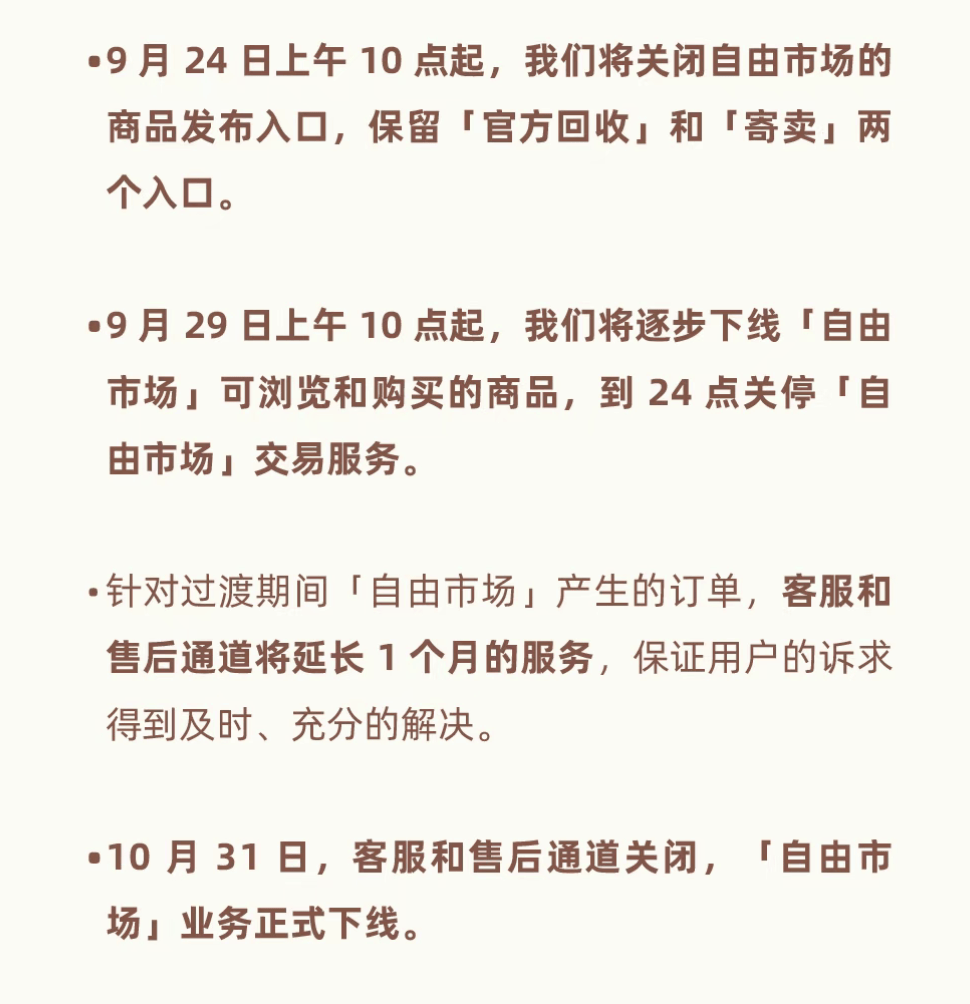
Core Viewpoint - The second-hand business has significant potential, but the second-hand e-commerce platform faces challenges, leading to strategic shifts in companies like Zhuanzhuan, which is transitioning from C2C to C2B2C models [2][11]. Group 1: Zhuanzhuan's Strategic Shift - Zhuanzhuan has decided to strategically withdraw from its C2C trading business, closing the "Free Market" feature and focusing on "Official Recycling" and "Consignment" services [2]. - The CEO of Zhuanzhuan, Huang Wei, acknowledged that the "Free Market" has facilitated online fraud and disputes, making it difficult to manage [2][11]. - Zhuanzhuan's C2C business now accounts for less than 3% of its total operations, indicating a significant decline in this segment [2]. Group 2: Competitive Landscape - Zhuanzhuan faces stiff competition from Xianyu, which has over 600 million registered users and daily GMV exceeding 1 billion yuan, making it a formidable rival in the second-hand market [4]. - Despite initial backing from 58.com and Tencent, Zhuanzhuan has struggled to maintain user engagement, with active users dropping significantly after aggressive marketing ceased [6][8]. - The competitive dynamics are shifting as Zhuanzhuan pivots to a model that emphasizes quality assurance, but it still needs to build a reliable "traffic pool" to sustain its operations [11][14]. Group 3: Financial Backing and Investments - Zhuanzhuan has received substantial investments, including $200 million from Tencent in 2017 and an additional $300 million in 2019, followed by $390 million in subsequent rounds [6][8]. - The influx of capital allowed Zhuanzhuan to invest heavily in marketing, but user retention has been a challenge once spending decreased [6][8]. Group 4: Quality Assurance and Trust Issues - Following a trust crisis related to inconsistent quality reports, Zhuanzhuan has implemented a "7-day no-reason return" policy and expanded its quality inspection team significantly [12][14]. - The company has established three major quality inspection centers across the country, aiming to enhance consumer trust in its services [12]. Group 5: Future Competition - Zhuanzhuan's shift to a C2B2C model may lead to direct competition with Aihuishou, which has a strong offline presence and has expanded its business model to include various categories of second-hand goods [15][17]. - The offline market is becoming increasingly competitive, with Aihuishou leading in store coverage, while Zhuanzhuan is also expanding its physical store presence [17].