二手电商

Search documents
从涨价风口到消费基建,二手电商的周期红利刚开始
美股研究社· 2026-03-12 11:07
Core Viewpoint - The article highlights a significant shift in the technology industry, focusing on the rising value of the second-hand market as new device prices increase, indicating a structural change in consumer behavior and market dynamics [3][6][32]. Group 1: Market Dynamics - The second-hand market is rapidly expanding as new device prices rise, with consumers increasingly viewing second-hand products as preferred options rather than just alternatives [6][12]. - The smartphone industry has shifted from a price competition model to one focused on high-end experiences, leading to a widening price gap between new and second-hand devices [8][12]. - IDC forecasts that the second-hand smartphone market in China will exceed 100 million units by 2026, growing by 20% year-on-year, while new smartphone shipments are expected to decline [8][11]. Group 2: Company Performance - Wanwu Xinxing reported a total revenue of 21.05 billion yuan for 2025, a year-on-year increase of 28.9%, with a significant rise in profitability, achieving a non-GAAP operating profit of 560 million yuan, up 35.5% [5][12]. - The company’s self-operated product sales reached 19.38 billion yuan, growing by 30.6%, indicating increased consumer trust in refurbished products [12][20]. - The fourth quarter saw a 90.8% year-on-year increase in revenue from compliant refurbished products, showcasing the effectiveness of the company's supply chain integration [19][20]. Group 3: Consumer Behavior - A shift in consumer attitudes towards second-hand products is evident, with the younger generation embracing a "new frugality," leading to a significant increase in the total transaction volume of idle goods in China, surpassing 3 trillion yuan in 2025 [26][32]. - The range of products in the second-hand market is expanding beyond electronics to include luxury items, with a 125.7% year-on-year growth in multi-category recovery GMV [27][28]. Group 4: Policy and Industry Trends - Government policies are increasingly supportive of the second-hand market, with significant funding allocated for consumption upgrades and specific subsidies for electronic products [30][32]. - Regulatory changes are tightening standards for data security and product information clearance, which will benefit compliant platforms like Wanwu Xinxing [30][32]. - The second-hand market is evolving into a broader circular consumption market, indicating a shift from merely an electronic recycling industry to a more comprehensive economic model [28][32].



记录资本撤退:五年前后,中国创投27大衰退赛道全景分析
3 6 Ke· 2026-01-19 14:04
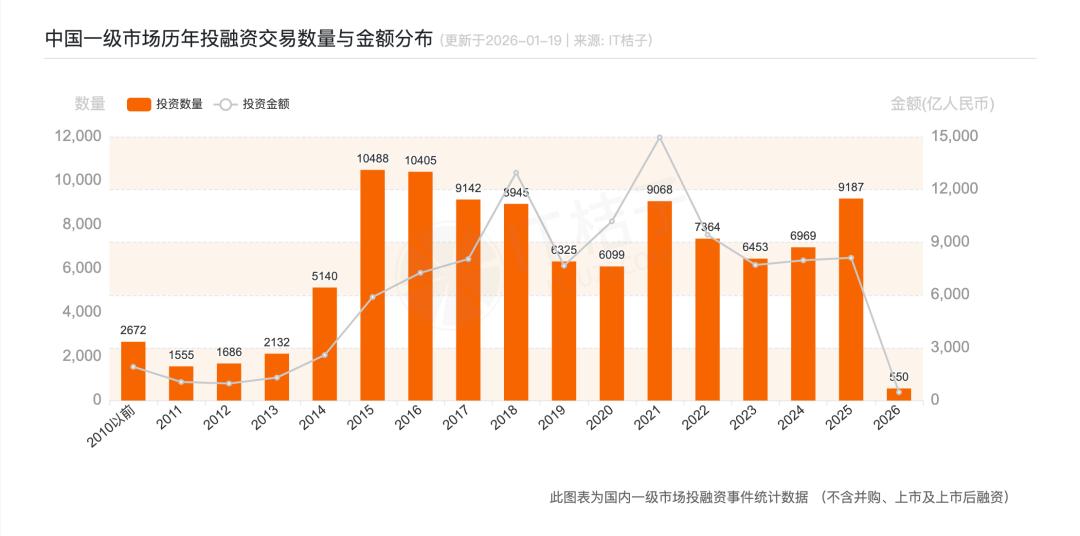
Core Insights - The Chinese venture capital market has experienced a significant retreat from previously favored sectors, with a collective decline in financing events and amounts exceeding 50% by 2025 [3][4] - This retreat is driven by multiple factors including macroeconomic conditions, policy changes, consumer trends, and technological transformations [3][4] Sector Analysis Extreme Decline - Ten sectors have seen financing amounts drop by over 95%, indicating a near-total capital withdrawal, including second-hand e-commerce (99.83% drop) and same-city logistics (99.65% drop) [6][7] - These sectors faced fundamental challenges such as unproven business models and intense competition, leading to a complete abandonment by investors [6][7] Deep Decline - Eight sectors experienced a financing drop of 90-95%, reflecting the impact of consumer downgrade on the economy, with the restaurant industry seeing a 93.30% decline [9][10] - The decline in these sectors is attributed to changing consumer habits and increased price sensitivity, particularly in first-tier cities [9][10] Significant Decline - Five sectors faced a decline of 70-80%, indicating substantial transformation pressures, including specialized medical services and data services [12] - These sectors still show some investment activity, but the scale of financing has significantly reduced, reflecting a cautious investor sentiment [12] Horizontal Comparison - The consumer retail sector, including clothing, food and beverage, and dining, saw a total financing drop from 1,080.99 billion to 78.21 billion, a decline of 92.77% [13] - The enterprise services sector also faced a significant decline, dropping from 400.07 billion to 71.10 billion, a decrease of 82.23% [14] Policy Impact - The healthcare sector's decline is closely linked to policy changes, with financing dropping from 415.58 billion to 48.66 billion, an 88.29% decrease [15][40] - Ongoing policies such as cost control in healthcare have compressed profit margins, impacting investment in this sector [40] Key Findings - The most severe declines in financing amounts were observed in second-hand e-commerce, same-city logistics, and automotive services, all facing significant operational challenges [18] - The overall trend indicates a shift in capital from consumer-driven sectors to hard technology and sustainable business models, reflecting a more cautious investment landscape [45][58]
二手电商线下争夺白热化 门店在成本管控、供应链管理、选品能力等方面接受更多考验
Shen Zhen Shang Bao· 2026-01-08 18:08
Core Insights - The second-hand e-commerce industry in China is transitioning from rapid growth to a more refined phase, with a significant focus on offline expansion as a competitive battleground [1] Group 1: Offline Expansion - Xianyu plans to establish 100 offline stores within five years, having opened its first store in Hangzhou in early 2024, with over 20 stores operational or in preparation across nine cities by the end of 2025 [2] - Zhuanzhuan has accelerated its offline presence, opening its first multi-category second-hand store, "Super Zhuanzhuan," in Beijing, covering over 3000 square meters with more than 30,000 SKUs across 200 categories by the end of 2025 [2] - Ai Huishou, a competitor, reported having 2,195 offline stores across 298 cities, with a 95% year-on-year increase in multi-category recycling transaction volume [2] Group 2: Addressing Trust and Market Demand - The shift to offline stores is driven by the need to address trust issues and market demands, as customers prefer in-person transactions to mitigate concerns about product quality and seller credibility [3] - Over 60% of users visiting offline stores for consignment services are inactive users of the Xianyu app, indicating a successful outreach to demographics less engaged online [3] Group 3: Policy Support - Continuous policy support, such as the "Action Plan for Promoting Large-Scale Equipment Replacement and Trade-in," reinforces the integration of online and offline second-hand transactions, boosting confidence in offline expansion [4] Group 4: Operational Challenges - The offline store model is capital-intensive, requiring enhanced cost control, supply chain management, and product selection capabilities, pushing the industry towards a more refined operational approach [5] - The presence of new products in Xianyu's flagship store indicates a reliance on factory surplus to fill shelves, highlighting the challenges of establishing a consistent inventory [5] - Ai Huishou faces challenges in extending its services to high-value non-standard items, necessitating significant investment in professional appraisal capabilities [5] Group 5: Strategic Recommendations - Experts suggest that despite high initial investments, offline stores can enhance brand image, provide immediate service experiences, and build consumer trust, which are critical advantages [6] - Implementing multi-channel strategies to drive online traffic to offline experiences and exploring value-added services like repairs and appraisals can enhance the attractiveness and profitability of offline stores [6]
QuestMobile报告:00后月活1.79亿,闲鱼增速超综合电商平台
Guan Cha Zhe Wang· 2025-12-10 15:06
Core Insights - The report by QuestMobile indicates that by October 2025, the monthly active user base of post-00s on Taobao is expected to reach 155 million, reflecting a year-on-year growth of 11.6%, significantly outpacing other e-commerce apps [1] - The overall monthly active user count for post-00s across the mobile internet is projected to hit 179 million, with a year-on-year increase of 10.1%, representing 14% of all internet users [3] User Engagement and Consumption Trends - Post-00s exhibit a high level of internet engagement, with an average monthly usage time of 217.6 hours and 3,296.7 sessions, both showing increases of 3.7% and 4% respectively compared to the previous year [3] - The willingness to consume among post-00s remains stable, with nearly 95% falling into the high willingness and capability categories, primarily spending between 1,000 to 2,999 yuan, indicating strong consumption potential and a mature consumption structure [3] Interest and Consumption Characteristics - Post-00s show significant interest in sharing, food, and anime/culture, with their e-commerce consumption extending beyond mere shopping to include cyclical and emotional spending [5] - The demand for IP-linked products in the gold jewelry sector has surged, with numerous brands launching thousands of new IP collaboration products on Tmall, driven by the purchasing power of the post-95 and post-00 demographics [5] - The "Guzi economy" is identified as a key driver for post-00s, particularly in the areas of trendy toys and IP culture, with substantial growth in sales during events like Double 11, where over 300,000 new toy products were released [5] Platform-Specific Insights - On the Xianyu platform, there has been explosive growth in both the Guzi and trendy toy markets, with the trading volume for Guzi reaching a historical high and a 167% increase in sales for national style Guzi [5] - The second quarter saw a more than 300% increase in trendy toy trading volume, with a 43.4% year-on-year growth in the number of monthly consumers, and an average spending of 218 yuan per transaction [5]

以旧换新与智性消费共振,二手电商进入“结构化增速”
美股研究社· 2025-11-21 07:36
Core Viewpoint - The article highlights the significant growth of the second-hand electronics market driven by the new smartphone release cycle and government subsidy policies, positioning second-hand e-commerce as a crucial player in the circular economy [3][5][18]. Group 1: Market Dynamics - The upcoming releases of flagship smartphones like Xiaomi 17 and iPhone 17 are expected to trigger a new wave of device upgrades, benefiting the entire consumer electronics supply chain [3]. - The second-hand e-commerce sector, particularly companies like Wanwu Xingsheng (Ai Huishou), reported a total revenue of 5.15 billion yuan in Q3, a year-on-year increase of 27.1%, with non-GAAP operating profit reaching 140 million yuan, up 34.9% [3][5]. - The demand for second-hand devices is being fueled by a combination of AI advancements and the accelerated turnover of old devices, with consumers increasingly willing to trade in their old devices as part of a rational spending strategy [3][5]. Group 2: Policy and Consumer Behavior - The introduction of national subsidies for mobile and other 3C products has stimulated upgrade demand, with retail sales of communication devices increasing by 19.9% year-on-year in the first three quarters [5][6]. - Young consumers are shifting their perception of second-hand transactions from a sign of financial struggle to a rational decision that reflects environmental consciousness and consumer intelligence [6][20]. - Following the launch of the iPhone 17, search volume for second-hand Apple phones surged by 150%, and inquiries for device recycling increased by 210% [6]. Group 3: Industry Transformation - Second-hand e-commerce is evolving from a supplementary role in the consumer electronics market to a strategic hub for product circulation, supported by government initiatives to standardize second-hand goods transactions [7][9]. - The industry is expected to transition from reliance on subsidies to sustained demand driven by consumer habits and technological advancements [7][9]. - The second-hand market is becoming a vital part of the modern consumption system, necessitating platforms to enhance their capabilities in supply chain management and quality assurance [9][12]. Group 4: Technological Advancements - The integration of AI and automation in quality inspection and pricing processes is crucial for scaling the second-hand market, with Wanwu Xingsheng's Matrix system recognized for its contribution to waste reduction [13][15]. - The company has expanded its offline presence to 2,195 stores across 298 cities, enhancing its delivery capabilities and customer experience [12][15]. - The growth of the second-hand market is also reflected in the significant increase in compliance refurbishment revenue, which rose by 102% year-on-year [16]. Group 5: Circular Economy and Future Outlook - The second-hand market is positioned as a structural winner in the dual trends of a "stock society" and a circular economy, with the potential for significant growth as consumer awareness of resource efficiency increases [18][19]. - The expansion of multi-category recycling services has led to a 95% year-on-year increase in transaction volume for high-value items like luxury goods [19][23]. - The article emphasizes that the second-hand e-commerce sector is not just a business but a narrative about resource efficiency, consumer rationality, and sustainable growth [23].

小红书“杀”进闲鱼后院
Guan Cha Zhe Wang· 2025-11-13 15:42
Core Insights - Xiaohongshu has acquired 100% control of Dongfang Payment for approximately 148 million yuan, obtaining a payment license, which is seen as a significant step in its commercialization strategy [1] - The platform's entry into the second-hand e-commerce market, projected to reach a transaction scale of 645.02 billion yuan in 2024, is unique as it adopts a reverse path from content to transaction [1][2] - The acquisition of the payment license allows Xiaohongshu to enhance its e-commerce ecosystem by integrating payment solutions, thereby improving user experience and retention [2][6] Group 1: Strategic Implications of Payment License - The payment license enables Xiaohongshu to manage high-frequency transaction scenarios, enhancing merchant engagement through features like revenue sharing and automatic settlement [2] - Control over the payment process provides threefold value: data tracking from content to purchase, significant cash flow potential from transaction conversions, and improved user retention through seamless experiences [2] - The payment license is essential for Xiaohongshu's second-hand trading business, addressing trust issues that have historically plagued the platform [2][5] Group 2: Challenges in Second-Hand Trading - Second-hand trading presents unique operational challenges, including the uniqueness of each item, lack of standardization, and complex pricing systems [5] - Dispute resolution in second-hand transactions is complicated due to the absence of standards, necessitating robust platform capabilities for handling conflicts [5] - Xiaohongshu's payment license allows it to offer secure transaction services, which could mitigate trust issues in second-hand trading [5] Group 3: Market Positioning and Competitive Landscape - The second-hand e-commerce market is at a turning point, with competitors like Zhuanzhuan exiting certain business models, allowing Xiaohongshu to enter with a compliance advantage [6] - Xiaohongshu's unique content-driven approach may allow it to capture a niche market between high-end and general second-hand platforms, focusing on categories like beauty and fashion [9][11] - The platform's "Million Commission-Free Plan" aims to attract sellers by eliminating fees on the first 1 million yuan of transactions, contrasting with competitors like Xianyu [10] Group 4: Integration of Content and Commerce - Xiaohongshu's content-driven model provides a competitive edge in second-hand trading, as users are more likely to purchase items they have seen positively reviewed [7][9] - The platform's community culture encourages detailed sharing of product experiences, enhancing transparency compared to traditional second-hand platforms [7] - However, integrating content and commerce poses challenges, requiring a balance between maintaining content quality and driving transaction habits among users [8][10] Group 5: Future Market Potential - The second-hand e-commerce market in China is expected to exceed 1.5 trillion yuan by 2025, with a compound annual growth rate of over 20% [11] - Xiaohongshu's strategy may not aim to completely replace Xianyu but rather to establish a differentiated position in high-end and niche markets [11] - The success of Xiaohongshu in leveraging its content ecosystem for transactions will be crucial in determining its competitive stance against Xianyu [11]

小红书做二手、闲鱼做内容社区,互联网尽头是跨界“偷塔”?
3 6 Ke· 2025-11-10 23:47
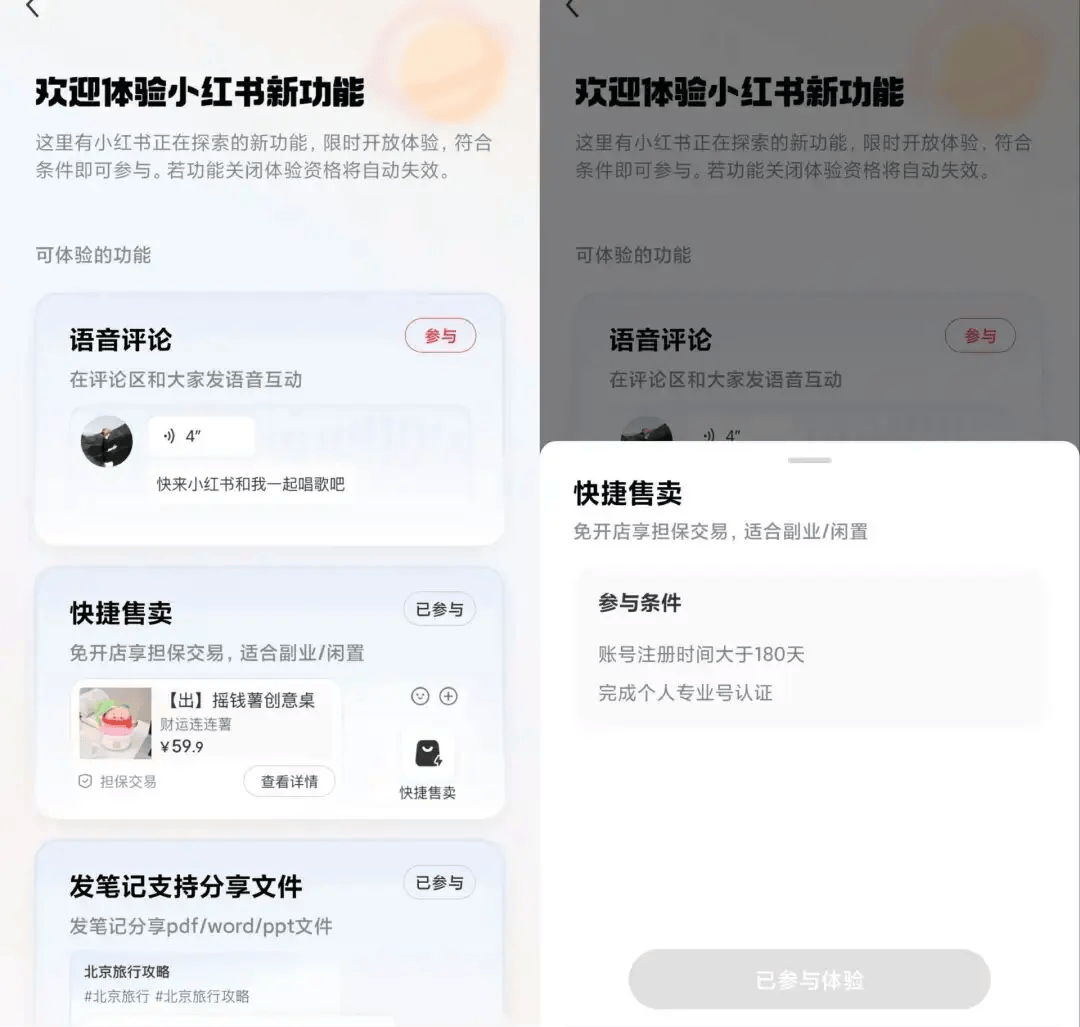
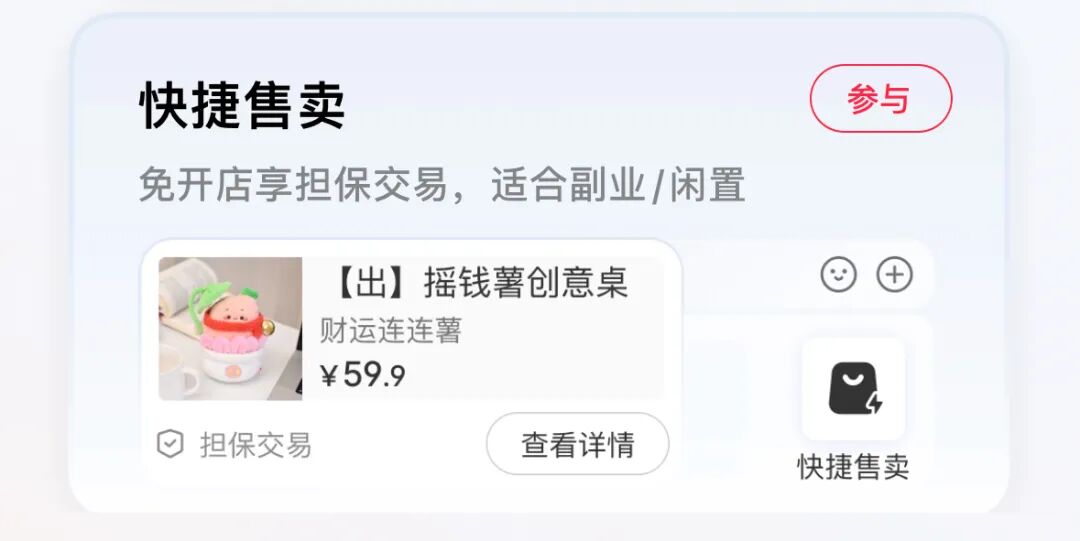
Core Insights - Xiaohongshu is testing a new feature called "Quick Sale" that allows users to sell personal items directly within their notes, simplifying the selling process compared to previous methods [1][3][4] - The introduction of this feature indicates Xiaohongshu's strategic move to enter the second-hand market, competing with established platforms like Xianyu [3][24] - The second-hand market is experiencing significant growth, with projections indicating a transaction scale of 645 billion yuan in 2024, reflecting a 17.56% year-on-year increase [41][44] Group 1: Xiaohongshu's New Feature - The "Quick Sale" feature allows users to list items for sale directly in their notes without the need for a complicated store setup or deposit [1][4][7] - Users can set item details such as name, price, quantity, delivery method, and shipping costs, streamlining the selling process [7][12] - The platform charges a 0.6% service fee per transaction, similar to Xianyu's model [12] Group 2: Market Dynamics - Xiaohongshu's entry into the second-hand market is seen as a strategic move to target areas where Xianyu is less dominant, particularly in content-driven e-commerce [24][48] - The second-hand market is projected to grow significantly, with user numbers increasing from 252 million in 2020 to 660 million [41][44] - Xianyu is also evolving, introducing community features and charging transaction fees, indicating a shift in its operational model [25][39] Group 3: Competitive Landscape - Xiaohongshu's unique community-driven approach may allow it to thrive in niche markets, focusing on higher-value items like designer bags and limited-edition products [48][49] - Xianyu remains the dominant player in broader categories like electronics and household goods, maintaining its competitive edge [48][49] - The market may see a diversification where Xiaohongshu, Xianyu, and other platforms like Zhuanzhuan cater to different segments of the second-hand economy [49]

低门槛、0保证金:小红书能“复制”闲鱼吗?
3 6 Ke· 2025-10-27 11:06
Core Insights - Xiaohongshu has launched an internal test of the "Quick Sale" feature, allowing users with accounts older than 180 days and verified professional accounts to sell items without a deposit, marking its entry into the second-hand e-commerce market [1][2][4] - The "Quick Sale" feature simplifies the selling process, enabling users to embed links to second-hand items directly in their posts, thus keeping transactions within the platform and enhancing user experience [1][5] Group 1: Market Context - The second-hand e-commerce market in China is projected to reach a transaction scale of 645 billion yuan in 2024, with a year-on-year growth of 17.56% and an increase in user base from 252 million in 2020 to 660 million [5] - Major players in the second-hand e-commerce space include Xianyu, Zhuanzhuan, and others, with no clear market leader currently established [5][11] - Zhuanzhuan has recently exited the C2C market due to low profitability, indicating a shift in market dynamics that Xiaohongshu aims to capitalize on [6][11] Group 2: Xiaohongshu's Competitive Advantages - Xiaohongshu's community-driven model provides a trust foundation for second-hand transactions, enhancing conversion rates compared to traditional platforms [7] - The platform's data-driven approach allows for precise targeting of potential buyers, even for content with low engagement [7] - Xiaohongshu is also focusing on niche markets, such as the ACG (Anime, Comic, and Games) community, by encouraging users to sell related products through the "Quick Sale" feature [8] Group 3: Challenges Ahead - Xiaohongshu faces challenges related to the uncontrollable supply in the C2C model, which can lead to quality disputes and customer dissatisfaction [9][10] - The platform must balance community engagement with commercial objectives, as an influx of professional sellers could disrupt the existing ecosystem [10] - Competition from established players like Xianyu, which has advanced AI features and a robust credit system, poses a significant challenge for Xiaohongshu as it seeks to establish itself in the second-hand market [11]

小红书不愿再为闲鱼作嫁衣
3 6 Ke· 2025-10-23 09:09
Core Insights - The second-hand trading platform Zhuanzhuan has strategically retreated from the C2C market, closing its personal trading business and "free market" product listing, shifting to a C2B2C model that offers quality inspection and guarantees for second-hand goods [1][3] - Xiaohongshu has begun internal testing of a "Quick Sale" feature, allowing users to link idle goods for sale in their posts and chat, indicating a direct competition with Zhuanzhuan and a shift in the second-hand trading landscape [1][3][4] Market Overview - According to iiMedia Consulting, the domestic second-hand e-commerce transaction scale is expected to reach 614.49 billion yuan in 2024, with a year-on-year growth of 12.0%, and a user base of 286 million, growing by 9.8% [3] - By 2030, the transaction scale is projected to reach 911.43 billion yuan, with a user base of 389 million [3] Competitive Landscape - Xiaohongshu's entry into the second-hand trading market is seen as a natural progression, with significant user engagement in second-hand categories, but most transactions have historically occurred on platforms like Xianyu [4][9] - Xianyu remains dominant in the C2C segment, benefiting from Alibaba's ecosystem and a robust personal credit system, while Xiaohongshu must address how to build consumer trust in its new trading feature [3][11] Business Model Shift - Zhuanzhuan's exit from the C2C business highlights the challenges of sustaining profitability in this segment, as it struggled to compete with Xianyu, which has a much larger user base and transaction volume [12][14] - The transition to a C2B2C model signifies a shift towards a more structured and trust-based trading environment, which requires higher operational costs for quality assurance and customer service [17][15] User Experience and Trust - Xiaohongshu's "Quick Sale" feature aims to enhance community engagement and streamline the trading process, but it faces challenges in ensuring a secure and trustworthy trading environment [11][17] - The platform's current requirements for sellers, such as account age and professional certification, may not be sufficient to establish the necessary trust for effective second-hand transactions [17][12]
转转离场C2C,小红书盯上了闲鱼的万亿“二手电商”蛋糕?
Sou Hu Cai Jing· 2025-10-17 10:50
Core Insights - Xiaohongshu is expanding its business into the C2C second-hand e-commerce sector, directly competing with Xianyu, which has over 600 million registered users [3][4] - The platform has launched various initiatives, including a "Million Commission-Free Plan" and a local life membership card, to enhance user engagement and drive sales [1][4] - Xiaohongshu's entry into the second-hand market is seen as a strategic move to increase traffic conversion rates and accelerate its e-commerce growth [3][4] Group 1: Business Expansion - Xiaohongshu has made significant moves in e-commerce, including the introduction of a local life membership service priced at 168 yuan, offering discounts at selected stores [1] - The platform is testing a "Quick Sale" feature, allowing users to sell second-hand items directly through the app, with a price cap of 10,000 yuan [1][4] - The browsing volume for "second-hand items" on Xiaohongshu has exceeded 1.77 billion, indicating a strong user interest in this category [4] Group 2: Market Context - The second-hand e-commerce market in China is projected to reach a transaction scale of 645.02 billion yuan in 2024, with a year-on-year growth of 17.56% [4] - Xiaohongshu's user base is increasingly overlapping with that of Xianyu, as both platforms cater to young consumers and foster community engagement [3][4] - The rise of second-hand trading is driven by changing consumer attitudes towards sustainability and cost-saving [13] Group 3: Competitive Landscape - Xiaohongshu's entry into the second-hand market comes at a time when Xianyu is facing challenges, including user dissatisfaction with new service fees [12][13] - The competitive landscape is evolving, with other platforms like Douyin and JD also expanding their second-hand offerings [13][14] - Xiaohongshu aims to differentiate itself by leveraging its community-driven content and interest-based engagement strategies [11][12] Group 4: Challenges and Strategies - Xiaohongshu faces potential challenges related to transaction safety and user trust, as highlighted by issues experienced by competitors like Xianyu and Zhuanzhuan [15][16] - The platform is implementing measures such as user verification and platform guarantees to enhance transaction security [16][18] - As a new player, Xiaohongshu's success in the second-hand market will depend on its ability to build a robust ecosystem for transactions and user interactions [18]